Costa Rica Wildlife Watching: Where to See Sloths, Monkeys and More
Costa Rica is one of the densest wildlife destinations on earth, but seeing the animals is a skill as much as a location. Here is where each headline species lives, why a guide changes everything, and how to watch without doing harm.
Costa Rica is roughly the size of West Virginia, yet it holds a share of the planet's living things wildly out of proportion to its map. That is the promise that pulls wildlife travelers here. The catch, and it is a friendly one, is that abundance is not the same as visibility. The forest hides its animals well, and whether you go home with a memory card full of sloths and squirrel monkeys or a lot of pretty green photographs comes down to where you go, when you look, and who is looking with you.
Quick answer: Costa Rica is widely reported to hold around 5% of the world's species, and it protects roughly a quarter of its land in parks and reserves. Sloths, four monkey species, toucans, frogs and more are spread across the country's regions, and a naturalist guide is the single biggest factor in how many of them you actually see.
Where to see Costa Rica's headline wildlife
Regions and species drawn from the itineraries of the site's own tours and the park descriptions in this guide. A filled dot marks a region where the species is a reliable highlight; an open dot marks a possible sighting. Blank means it is not a signature spot, not that the animal is absent.
Why is Costa Rica such a wildlife destination?
Costa Rica is widely reported to contain roughly 5% of the world's biodiversity on less than a third of a percent of its land area, and it protects about a quarter of its national territory in parks and reserves. That mix of tropical position, dramatic elevation range and serious conservation is what concentrates so many species into one small, accessible country.
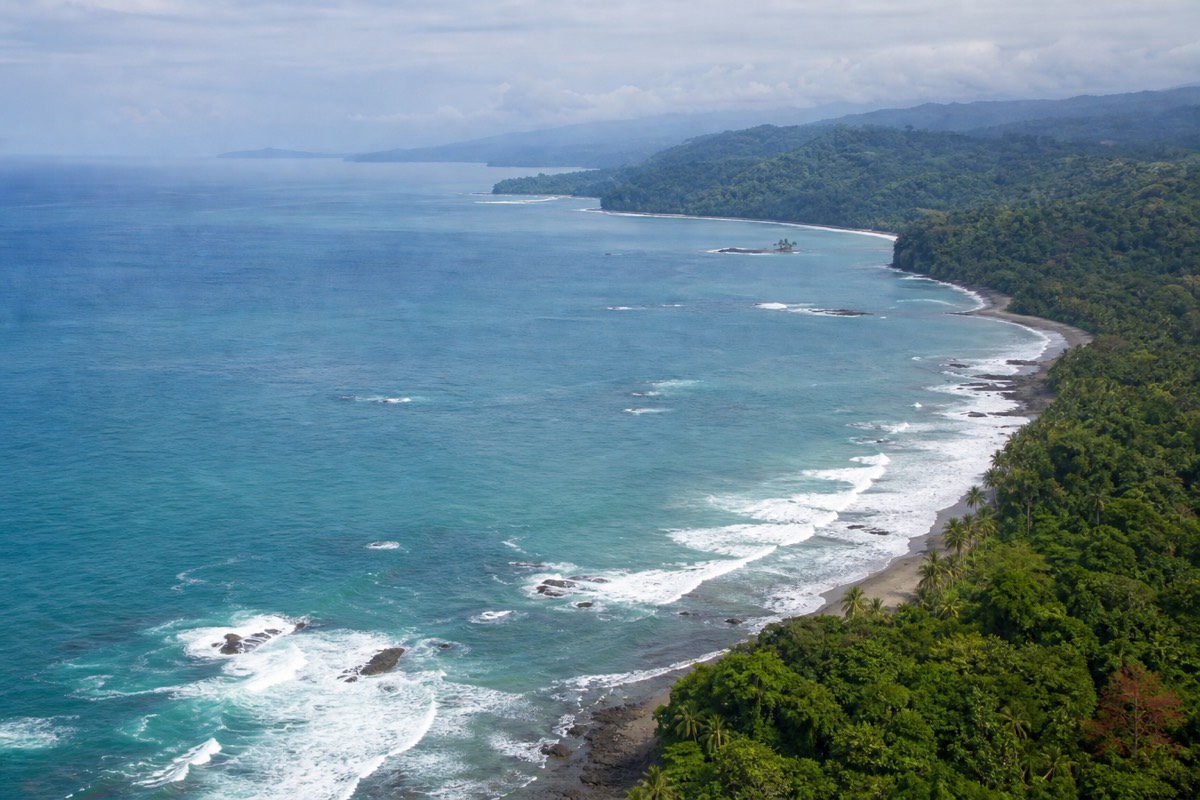
The country sits in the narrow bridge between two continents, where species from North and South America overlap, and it stacks ecosystems vertically as well as horizontally. In a single day's drive you can pass from Caribbean lowland rainforest to high cloud forest to dry Pacific coast, each with its own residents. That range in a compact space is why a well-planned trip can show you sloths, monkeys, toucans and frogs without ever feeling like a forced march.
The conservation piece is not decoration. This site's own homepage notes that Costa Rica abolished its military in 1948 and redirected that spending toward education and conservation over the following decades, a shift widely credited as the root of today's national park system. Protecting close to a quarter of the country's land gave the wildlife somewhere to persist, and gave travelers gated, ranger-managed places to see it.
The upshot for a visitor is that you do not have to choose one animal and chase it across the country. A standard loop through the volcano country, the cloud forest and the central Pacific coast, the shape most of this site's tours follow, passes through several distinct habitats and their signature species along the way. The rest of this guide is about turning that geographic luck into actual sightings.
Where do you see each headline species?
Sloths and monkeys turn up across most forested regions, so they are the easiest wins. Toucans favor the lowlands and forest edges, the resplendent quetzal belongs to the cloud forest, sea turtles nest on the coasts in season, and frogs come out on humid-forest night walks. Matching the animal to its habitat is most of the battle.
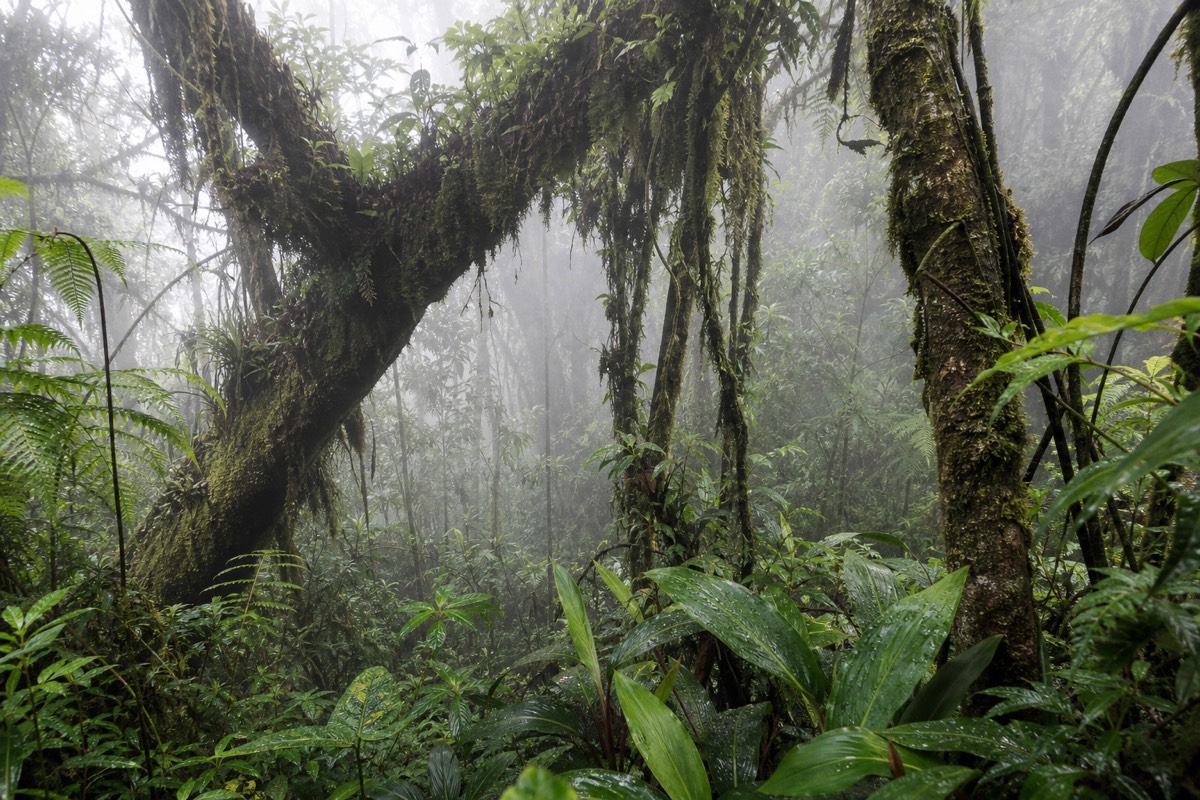
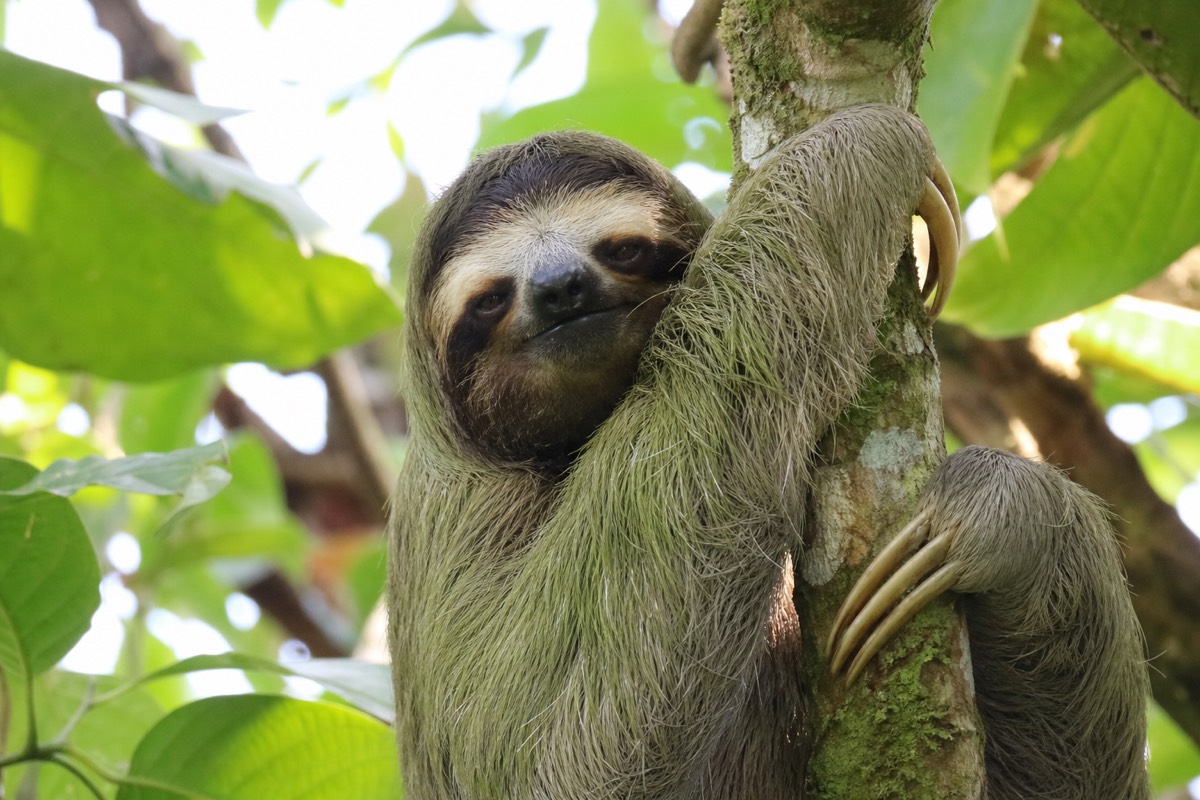
Some species are generalists you can hope for almost anywhere with trees. Sloths, both the two-toed and three-toed kinds, live throughout the forested regions and are a highlight at Arenal, Monteverde, Manuel Antonio and Tortuguero alike. Monkeys are similar: Costa Rica has four species, the mantled howler, the white-faced capuchin, the Central American squirrel monkey and Geoffroy's spider monkey, and between them they cover most of the country's protected forest. The squirrel monkey is the pickiest, largely limited to the central and southern Pacific, which makes Manuel Antonio one of its best-known haunts.
Other species are tied hard to one habitat, and that is what the table below sorts out. Toucans favor lowland and mid-elevation forest and edges, showing well around Arenal, the Caribbean lowlands and the fringes of Monteverde. The resplendent quetzal, the bird many birders travel for, is a cloud-forest specialist, and Monteverde is its signature Costa Rican home. Sea turtles are a coastal, seasonal event rather than an anywhere-anytime sighting. Frogs, from the iconic red-eyed tree frog to translucent glass frogs, are creatures of warm, wet nights and are best found on a guided night walk.
| Species | Best regions to look | On which of the site's tours |
|---|---|---|
| Sloths (two and three-toed) | Arenal, Monteverde, Manuel Antonio, Tortuguero | Quest, Experience, Classic, Essential |
| Monkeys (four species) | Most forested parks; squirrel monkeys on the central Pacific | Quest, Experience, Classic, Essential |
| Toucans | Arenal, Caribbean lowlands, Monteverde edges | Quest, Experience, Classic |
| Resplendent quetzal | Monteverde cloud forest | Every tour reaches Monteverde |
| Scarlet macaws | Central Pacific and the Osa Peninsula (off the standard loop) | Not on the standard Golden Triangle routes |
| Sea turtles (nesting) | Tortuguero on the Caribbean; Pacific beaches in season | Essential (Tortuguero) |
| Frogs (night walks) | Humid lowland and cloud forest, after dark | Classic night safari, Quest and Volcanoes night walks |
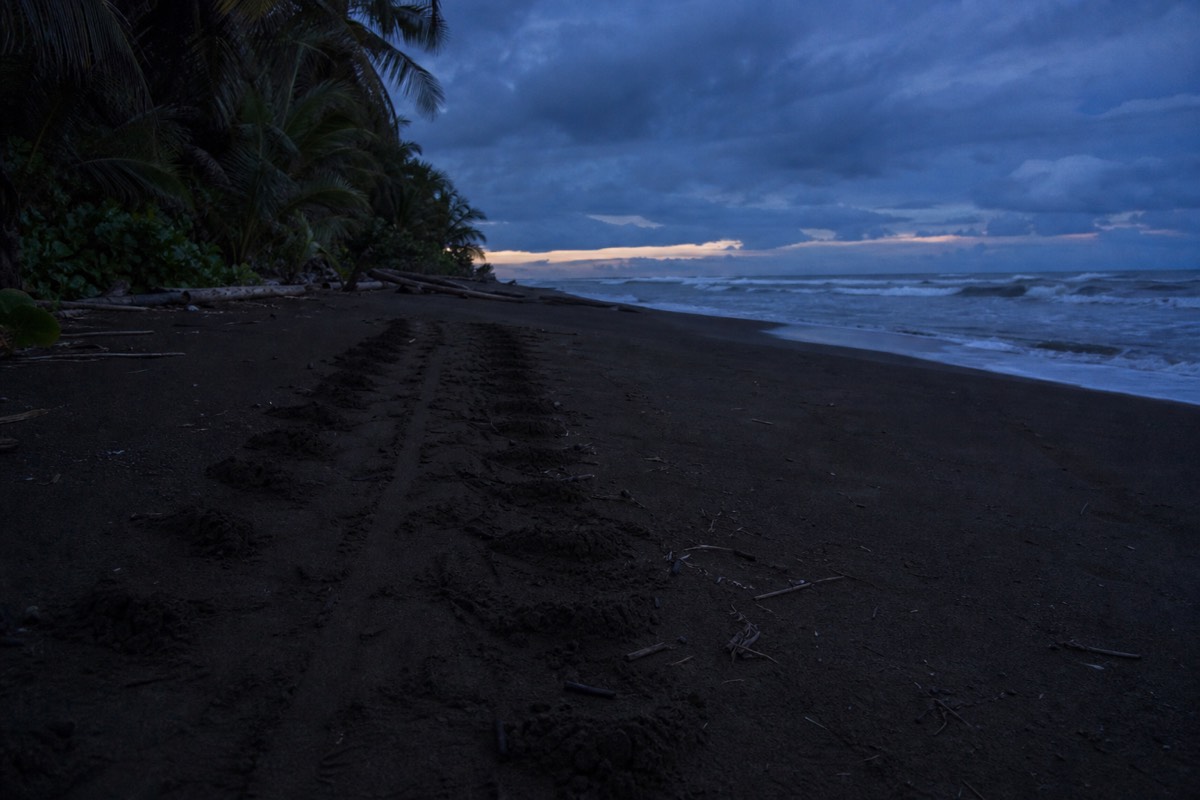
Two honest notes on that table. Scarlet macaws, the big red-and-blue parrots, are most reliably seen around the central Pacific and the Osa Peninsula, neither of which sits on the standard cloud-forest-and-volcano loop, so treat a wild macaw as a bonus rather than a promise on those routes. And sea turtles are a timing story as much as a place: nesting runs mainly from July to October across both coasts, which is when a Tortuguero visit can include a nesting watch.
Why does a naturalist guide matter so much?
A naturalist guide is the biggest single factor in how much wildlife you see, more than the season, the region or your camera. They spot the still, camouflaged animals you would walk past, carry scopes that turn a distant shape into a clear face, and read behavior to put you in the right place. This site's own advice is that guides dramatically outperform independent spotting.
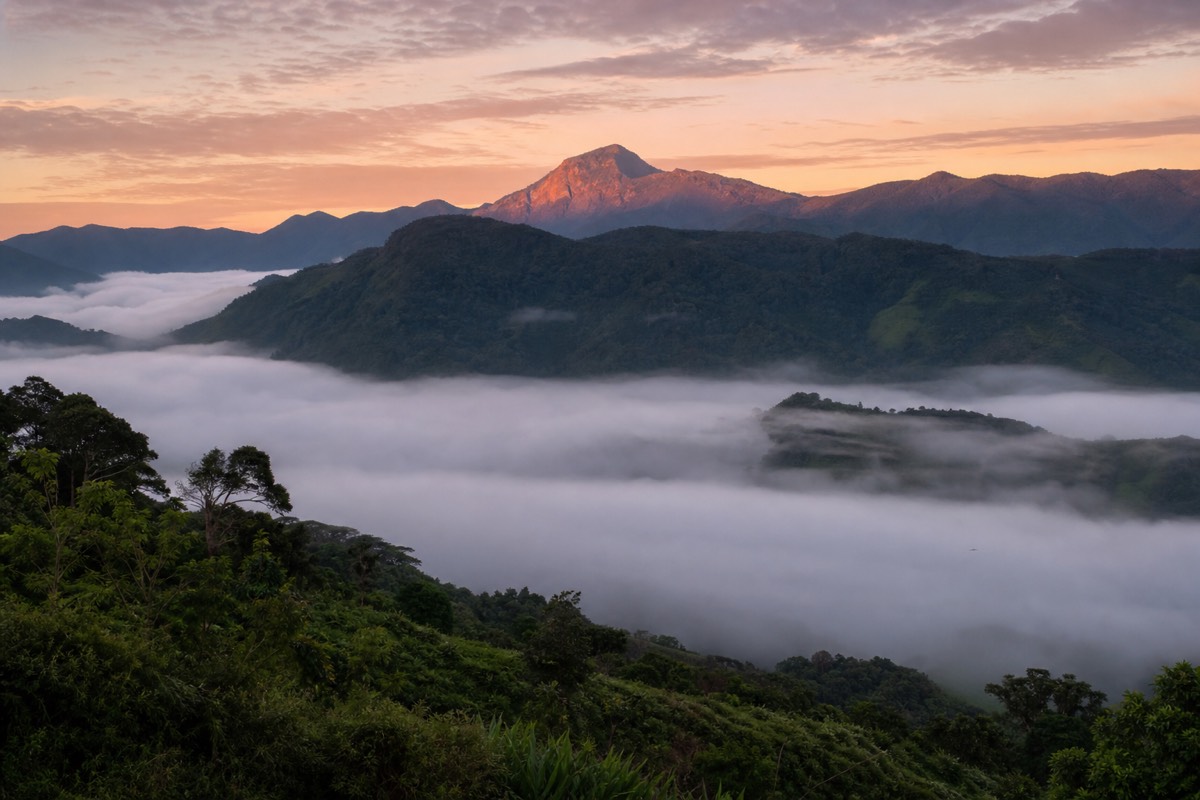
The reason is that most rainforest animals survive by not being seen. A sloth is a mossy lump high in a cecropia. A pit viper is a coil the color of dead leaves. A roosting owl is a knot in a trunk. An untrained visitor sees a green wall and a few obvious movers, while a guide who reads this forest daily sees a working list of animals hiding in plain sight and knows exactly which trees the local residents favor.
Equipment is part of it. A good spotting scope resolves a sloth's face forty metres up or a distant quetzal into something you can actually enjoy and photograph, which no phone camera does on its own. Behavior is the other part: a guide knows when the howler troop moves, how the tide changes a mangrove, and which trail bends reward patience at dawn. Put together, that knowledge routinely turns a handful of self-found animals into a couple of dozen.
This is exactly why the wildlife-focused tours on this site are built around guided walks rather than free time in the parks. The Costa Rica Quest and the Costa Rica Experience both put naturalist-led walks at the center of the trip, and the Costa Rica Classic 12-Day tour adds a ranger-led night safari through the cloud forest, where guides turn up snakes, tarantulas, sleeping toucanets and more that a lone visitor would never find in the dark. The guide is not a nicety on these trips. It is the product.
What is the best time of day and year to look?
Early morning is the prime window, with a smaller burst of activity near dusk. Animals feed and move in the cool hours and go quiet in the midday heat. Across the year, the December to April dry season gives the easiest access and driest trails, while the green season brings lush forest, active frogs and thinner crowds. Turtle nesting peaks from July to October.
The daily rhythm matters more than most first-timers expect. In the first hours after dawn the forest is loud and busy: birds feed, monkeys travel, and even sloths shift enough to give themselves away. By early afternoon much of that stops as the heat pushes animals into shade, and a trail that thrilled at six can disappoint at one. Night is its own separate world, when frogs, snakes, kinkajous and insects come out, which is why a guided night walk is one of the best things you can add to a trip.
The seasonal picture is a set of trade-offs rather than a single best answer. The dry months from December to April, peaking in January to March, bring reliable weather, easier trails and the clearest access, which is why they are the busiest and often the priciest. The green season from May to November trades regular afternoon rain for a greener forest, breeding frogs, and fewer people, with mornings usually reliable and rain arriving later in the day.
Some sightings are calendar events in their own right. Sea turtle nesting concentrates from July to October on both coasts, so a trip built around turtles has to be timed. The resplendent quetzal is generally easier to find in the early-year cloud-forest breeding months. If a particular animal is the whole reason for your trip, plan the dates around it; if you simply want a lot of wildlife, almost any month rewards an early start and a good guide.
How do you watch wildlife ethically?
The rules are short and firm: do not touch, feed or bait animals, keep your distance, and never handle a sloth or a monkey for a photo. Feeding changes animal behavior and health, habituated monkeys and coatis turn aggressive, and crowding a nesting turtle or a sloth stresses it. Watch quietly, follow your guide and the park rules, and leave nothing behind.
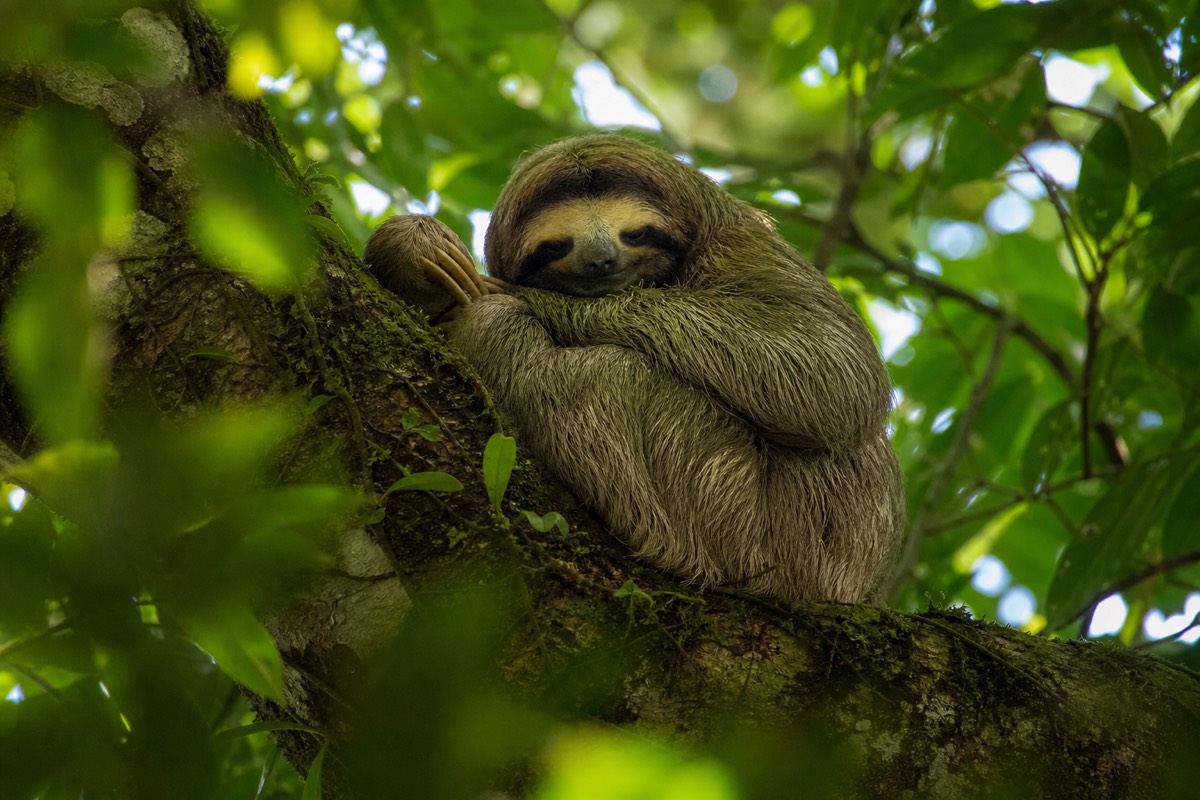
Feeding is the biggest and most common harm, and it is often done with good intentions. A monkey that learns to associate people with food becomes bolder, raids bags, loses its natural foraging, and can end up aggressive or sick, which is bad for the animal and for the next visitor. The same goes for coatis and raccoons at the beaches. Keep your food sealed, do not offer anything, and do not reward the ones that come begging.
Distance and calm protect the animals and improve your view. Use a scope or a zoom rather than pushing in close, keep your voice down, and skip flash photography, which distresses nocturnal animals in particular. Around sea turtles, the etiquette is stricter still: no lights, no flash, no touching, and follow the guide's lead exactly, since a disturbed female may abandon a nesting attempt. Reef-safe sunscreen and staying on marked trails round out the basics.
This ethical baseline is not separate from the guided-tour approach; it is baked into it. The operators behind this site's wildlife tours build in conservation-minded practices, from ranger-led walks that keep groups on-trail to community and rescue-center stops that put money into protection rather than exploitation. Choosing a guided naturalist experience over a photo-with-a-sloth roadside attraction is itself the ethical choice, and it happens to be the one that shows you more real wildlife anyway.
Which of the site's tours are built around wildlife?
The Costa Rica Quest and the Costa Rica Experience are the two most wildlife-forward tours on the site, both naming wildlife in their titles and centering naturalist-led walks. The Costa Rica Classic 12-Day tour adds a ranger-led night safari and a wildlife rescue-center visit. All three thread the cloud forest, the volcano country and the Pacific coast, each with its own signature species.
The Costa Rica Quest, a nine-day trip and the most-booked tour on the site with more than 2,295 bookings, runs guided cloud-forest and coastal walks through Arenal, Monteverde and Manuel Antonio, with an optional night walk to catch the after-dark residents. The Costa Rica Experience, an eight-day tour with the smallest group cap on the site at fourteen, leans hard into guided time: naturalist walks in Monteverde and Manuel Antonio, plus mangrove kayaking on Damas Island, a habitat all its own for birds and reptiles.
The Costa Rica Classic 12-Day Tour by One Life Adventures is the deepest wildlife itinerary of the three. Beyond the usual regions, it adds a ranger-led night safari in the cloud forest, where guides turn up snakes, tarantulas, sloths and toucanets after dark, and a stop at a wildlife rescue center in the Sarapiquí lowlands. For travelers who want the animals to be the trip rather than a highlight within it, that combination of day walks, a night safari and a rescue visit is the fullest wildlife experience on offer here.
Whichever you lean toward, the wildlife you actually see will owe more to the guiding than to the brochure. Every one of these tours puts a trained naturalist between you and the forest, which is the whole reason they work. Compare their lengths, group sizes, prices and live availability on each tour's own listing, then pick the route whose regions and pace suit you, knowing the core promise, more animals seen because someone knew where to look, is shared across all three.