Monteverde Cloud Forest: The Complete Travel Guide
Clouds do not float above this forest, they move through it. Here is what sets a cloud forest apart, how the Monteverde and Santa Elena reserves differ, and which tours reach the canopy and what they do there.
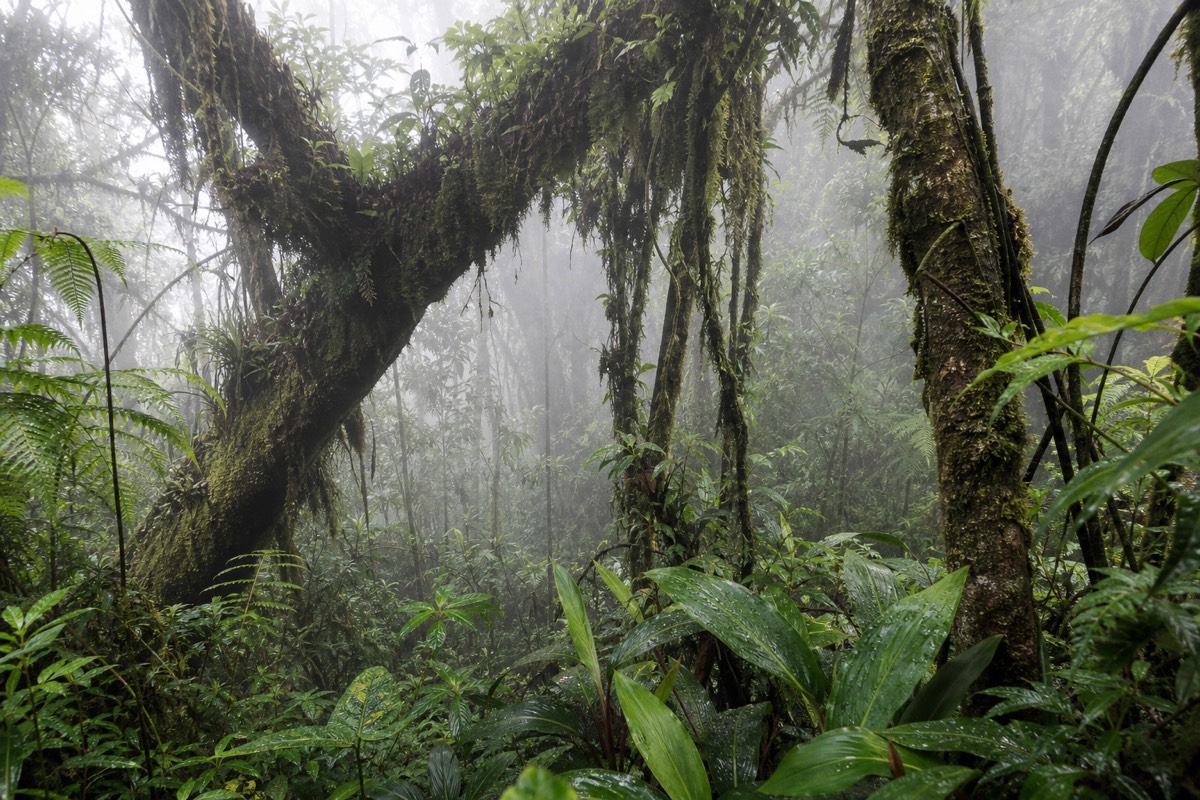
Come up out of the lowlands and the air changes before the scenery does. It cools, it thickens, and by the time the road tops out near 1,200 meters the cloud is not overhead but around you, drifting between the trunks and beading on every leaf. That is the whole idea of Monteverde. It is one of the reasons the region draws travelers who have already seen plenty of rainforest, and it is a stop on every tour this site runs. This guide covers what a cloud forest actually is, the reserve you should pick, what to do in the canopy, the wildlife, how long to stay, and how the tours get you there.
Quick answer: Do Monteverde as a full day with two nights. Walk the hanging bridges in the morning before the mist burns off, take a guided reserve hike midday, and join a night walk after dark. The site's own advice is blunt about it: both the morning bridges and the night tour are worth doing, and neither replaces the other.
A Monteverde planner: what each experience and night gives you
Built from the site's own itineraries and its published advice that Monteverde's morning hanging bridges and its night tour are both worth doing and neither replaces the other.
What makes Monteverde a cloud forest, not a rainforest?
Altitude is the difference. Monteverde sits high enough, around 1,200 meters, that the clouds form at the level of the treetops rather than above them. The forest lives inside near-constant mist, which keeps it cooler and wetter and coats the branches in mosses, ferns and orchids that a hot lowland rainforest never grows the same way.
A lowland rainforest is warm, low and drenched by rain that falls from clouds passing overhead. A cloud forest is higher, cooler, and fed as much by the mist it sits inside as by rainfall, so moisture arrives horizontally, condensing straight onto leaves and bark. That single shift in how water reaches the plants changes everything you see. Branches disappear under a shag of epiphytes, air plants that grow on other plants, and the canopy holds so much life that the interesting action happens up in the trees rather than only on the ground.
Costa Rica sorts its terrain into a handful of tourism zones, and Monteverde headlines the cloud-forest zone alongside neighboring Santa Elena. The country protects roughly a quarter of its territory in parks and reserves and holds about five percent of the world's biodiversity in an area the size of West Virginia, and the cloud forest is where a lot of that density concentrates. The cooler temperatures also make Monteverde a comfortable place to hike compared with the sticky lowlands, which is part of its appeal on a longer trip.
The practical upshot for a visitor is simple. You dress differently, cooler and often damp, you expect the views to come and go as the cloud moves, and you spend more of your attention up in the canopy. It is a genuinely distinct ecosystem, not just a rainforest at elevation, and understanding that is half of what makes a guided walk here pay off.
Monteverde Reserve or Santa Elena: which should you visit?
Monteverde and Santa Elena are two separate cloud-forest reserves a short distance apart, and most tours center on the larger, better-known Monteverde Cloud Forest Biological Reserve. Santa Elena is a distinct reserve nearby that several of our trips offer as an optional guided hike, and the two make a natural pair rather than a strict either-or.
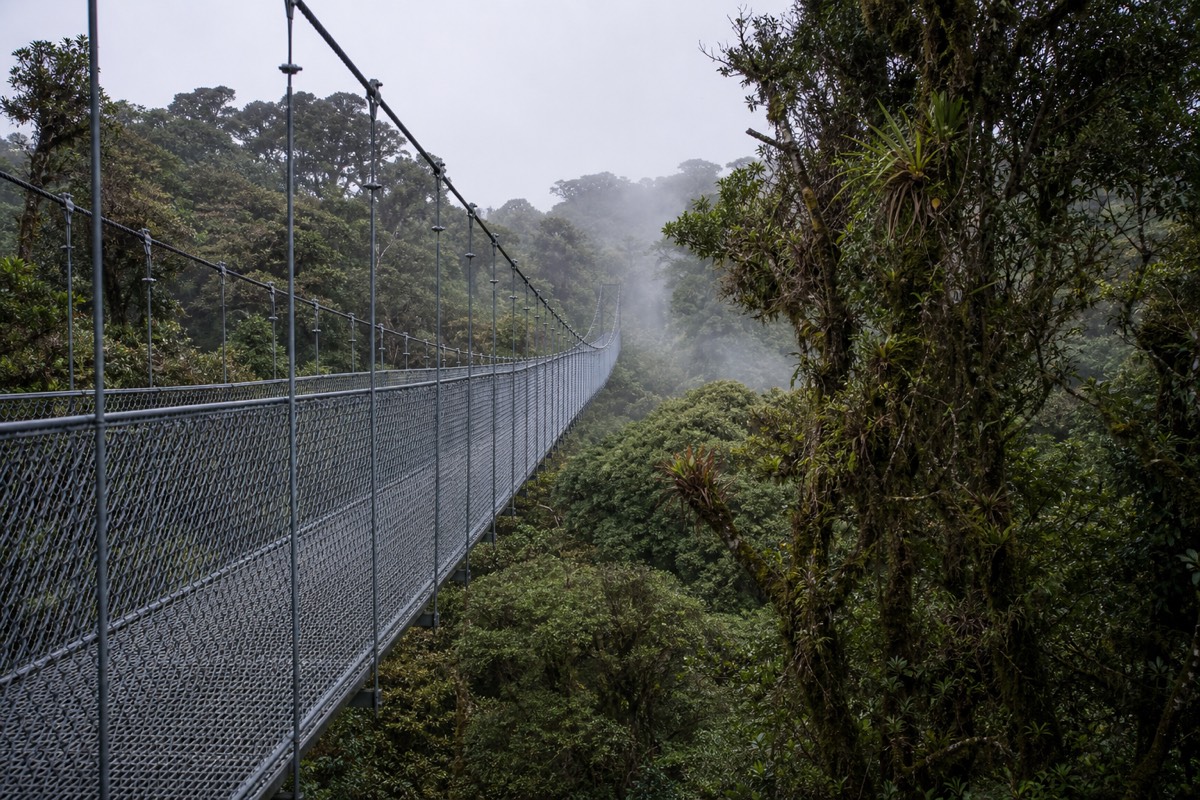
The Monteverde reserve is the headline name, the one the tours build their guided walks around, and the place most associated with the resplendent quetzal and the classic misty-trail scenery. When a traveler pictures Monteverde, this is usually the forest in their mind. Our tours that include a guided cloud-forest hike, the Costa Rica Experience among them, run it here.
Santa Elena is its own reserve, offered on the nine-day Costa Rica Quest and the six-day Volcanoes, Cloud Forests and Zip-Lines trip as an optional guided hike priced around €50. It sits close enough to combine with a Monteverde stay, and travelers weighing the two often go for a different trail experience or to spread out on a busy day. Because access rules, hours and conditions at both reserves change with the season, the sensible move is to confirm the current details with the official Costa Rica tourism board or the reserve directly before you commit.
| Reserve | What it is | On our tours |
|---|---|---|
| Monteverde Cloud Forest Biological Reserve | The larger, best-known reserve, home to the classic guided quetzal walks | Guided hikes on the Experience, Essential and Classic trips |
| Santa Elena Cloud Forest Reserve | A separate reserve a short distance away, a good complement or alternative | Optional guided hike (around €50) on the Quest and Volcanoes trips |
If you only have time for one, the Monteverde reserve is the safe default because the tours are built around it and its guides know exactly where the quetzals feed. If you have a full extra half-day and want to escape a crowd, adding Santa Elena is a fair call. Either way you are in the same remarkable ecosystem, so there is no wrong pick.
What can you do in Monteverde's canopy?
The canopy is the point in Monteverde, and there are three main ways to get into it: zip-lines that fly you between platforms, hanging bridges that let you walk through the treetops at your own pace, and guided night walks that reveal a completely different set of animals after dark. Most visitors do at least two of the three.
Zip-lining is Monteverde's calling card. The six-day Volcanoes, Cloud Forests and Zip-Lines Adventure builds an included high-velocity canopy zip-line run right into its schedule, and the Quest and the Raft, Hike and Explore trips carry zip-line options too. Flying across a cloud-forest valley with the mist below you is the region's signature thrill, and it is the one activity here that reliably gets even reluctant travelers grinning.
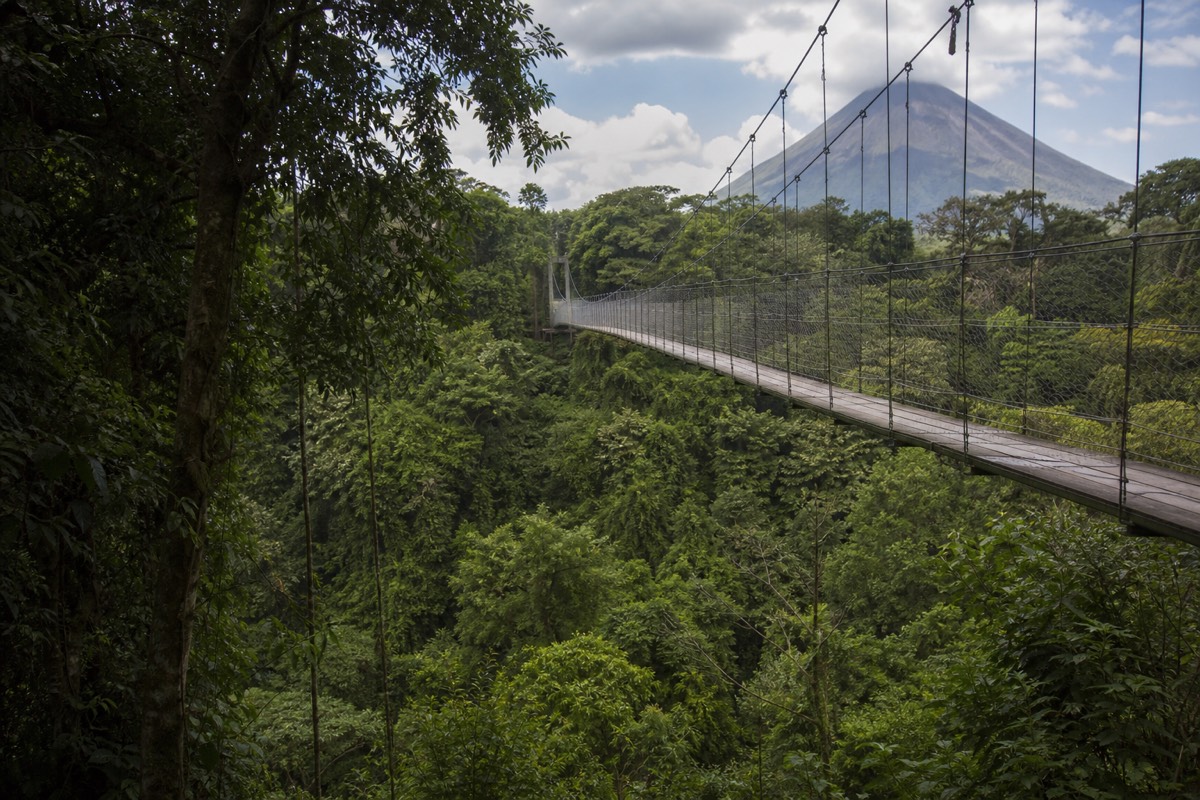
Hanging bridges are the calmer, arguably richer alternative, and they are not a substitute for the zip-line so much as a different way to read the same forest. A suspension-bridge circuit, whether a Monteverde bridges walk or the Selvatura treetop walkway with its long runs of suspended bridges, puts you level with the branches where the birds and monkeys actually live. Do it in the morning, before the mist thickens, which is exactly when the wildlife is most active. Several tours offer these bridges as options in the range of €56 to €60, sometimes paired with resplendent quetzal viewing.
The third canopy experience happens after sunset. A guided night walk turns the forest inside out, trading the daytime birds for kinkajous, glass frogs, tarantulas, sleeping toucans and the occasional snake, all found by a guide who knows where to point the light. The nine-day Costa Rica Quest includes a guided cloud-forest night walk in its base itinerary, and the twelve-day Classic runs a ranger-led night safari. Doing both a daytime canopy experience and a night walk is how you actually see the range of what lives here.
What wildlife will you actually see in Monteverde?
Monteverde is one of Costa Rica's best places to see the resplendent quetzal, the region's most sought-after bird, along with monkeys, sloths, toucans and coatis on daytime guided walks. After dark the cast changes to kinkajous, glass frogs and tarantulas. A naturalist guide is the difference between walking past all of it and actually spotting it.
The quetzal is the headline. Its long green tail feathers and crimson breast make it the bird travelers most hope to see here, and Monteverde's guides know the fruiting trees it favors and the times of day it feeds. Sightings are never guaranteed with any wild animal, but few places give you better odds, and the reserve's guided walks are built around finding it.
Beyond the quetzal, a daytime hike through the reserve turns up howler and capuchin monkeys, both two-toed and three-toed sloths moving slowly through the canopy, toucans, and the white-nosed coatis that patrol the trails. The value of a guide here is hard to overstate. They carry spotting scopes, they read the calls, and they catch the still, camouflaged animals that an unaided visitor walks straight past. On the site's own trips, the naturalist walk is consistently what travelers rate highest.
Night is when the forest shows its stranger residents. The nocturnal cast includes kinkajous in the branches, translucent glass frogs on the underside of leaves, tarantulas at their burrows, sleeping birds and, if you are lucky, a snake the guide spots before you do. Because these animals are small, quiet and mostly hidden, the night walk is the single experience where a guide matters most. Doing one daytime walk and one night walk is how you cover the full spread of what Monteverde protects.
How many nights do you need in Monteverde?
Give Monteverde a full day and two nights. That lets you walk the hanging bridges in the morning, take a guided reserve hike, and still join a night walk after dark, which is the combination the region rewards. A single overnight forces you to choose between the morning canopy and the night tour, and both are worth doing.
The reasoning comes straight from how the forest works across a day. The best light and the calmest mist are early, which is when the bridges and the wildlife are at their best. The reserve hike sits comfortably in the middle of the day. The night walk, by definition, needs the evening. Try to compress all three into a rushed overnight and you end up dropping one, usually the night walk, which is a shame because it shows a side of the forest nothing else does.
| Time in Monteverde | Trade-off | What fits |
|---|---|---|
| 1 night | You pick one canopy experience | Either the morning bridges or the night walk, plus a short reserve visit |
| 2 nights (1 full day) | The recommended balance | Morning bridges, midday reserve hike and an evening night walk |
| 3 nights | Room to add a second reserve | All of the above plus an optional Santa Elena hike or a coffee-farm tour |
Most of the tours settle on the two-night shape for exactly this reason, pairing it with a stop in Arenal before and a coastal park after. If you have the days to spare and want to slow down, a third night lets you add the Santa Elena reserve or a coffee, cacao and sugarcane farm tour without cramming, but two nights is the honest minimum for doing the place justice.
How do you get to Monteverde, and what is the Lake Arenal crossing?
Monteverde sits at the end of a famously slow mountain road, steep and partly unpaved, which is part of why it stays less developed than the lowlands. From the Arenal side, the tours skip the long drive with a jeep-boat-jeep transfer across Lake Arenal, a scenic water crossing that every trip on this site uses to link the two regions.
The approach road to Monteverde is legendary for the wrong reasons. Long unpaved sections mean an independent traveler generally needs a four-wheel-drive, and the climb is slow going no matter what you drive. The upside is that the rough road has kept the area from overdeveloping, so the cloud forest around the town still feels like a mountain retreat rather than a resort strip.
Coming from Arenal, though, there is a smarter way in, and the tours all take it. Instead of doubling back on mountain roads, they cross Lake Arenal by boat, a short and pretty water leg with the volcano behind you, then transfer to a vehicle on the far shore for the final climb. It is faster, more comfortable and better scenery than the road route, and it turns a transfer day into part of the trip. This is the same crossing described in the Arenal Volcano and La Fortuna travel guide, run in the opposite direction.
If you are arranging things yourself, factor in that the slow road eats time on either end of a Monteverde stay, which is one more argument for the two-night minimum. On a guided package the driver handles the climb and the crossing is booked in advance, so you arrive with your energy saved for the canopy rather than spent on the wheel.
Which tours include Monteverde, and what do they offer there?
Every tour on this site visits Monteverde, which makes the cloud forest, along with Arenal, one of only two regions all six itineraries share. The eight-day Costa Rica Experience, the nine-day Costa Rica Quest and the ten-day Essential Costa Rica Tour each build a guided reserve walk into the region, with canopy options layered on top.
The eight-day Costa Rica Experience, around $1,364 with a small-group cap of fourteen, runs a guided hike through the Monteverde Cloud Forest Biological Reserve and offers optional zip-lining at around €90 and hanging bridges at around €47. The nine-day Costa Rica Quest, the site's most-booked trip with more than 2,295 bookings, includes a guided cloud-forest night walk in its base price and stacks options on top: the Santa Elena reserve, Monteverde hanging bridges in the €56 to €60 range, zip-lining and horseback riding.
The ten-day Essential Costa Rica Tour with Manuel Antonio National Park runs its Monteverde stop at the reserve too, with an optional Selvatura treetop walkway of roughly three kilometers of suspension bridges or a coffee, cacao and sugarcane estate tour as alternatives. The other three tours all reach the forest as well: the twelve-day Classic pairs Monteverde with a ranger-led night safari and hands-on trail work, the six-day Volcanoes trip actually ends here with its included canopy zip-line, and the Raft, Hike and Explore trip closes with suspension bridges and a zip-line run.
So the question is rarely whether a tour reaches Monteverde, but what shape you want your visit to take. If a night walk matters most, the Quest builds one in. If an included zip-line is the draw, the six-day Volcanoes trip leads with it. And if you want the reserve folded into a longer loop that also hits the Tortuguero canals and the coast, the Essential Costa Rica tour carries it. Whichever you pick, the misty trails and the quetzal-hunting guides are the constant, and they are exactly why the cloud forest earns its place on every itinerary.