Manuel Antonio National Park: The Complete Guide
It is Costa Rica's smallest flagship park and its busiest, and that combination is the whole point. Here is what you actually see, how the closed day and timed entry work, and why a naturalist guide changes the visit.
A three-toed sloth can hang forty metres up in a cecropia tree, motionless, the same green-brown as the canopy around it, and you will walk straight under it and never know. That gap between what is there and what you notice is the reason Manuel Antonio rewards a slow, guided visit more than almost any park in the country. It is small, it is easy to walk, and it is packed. Below is the honest picture: the wildlife, the beaches inside the gates, how the access rules work, how many nights to give it, and why the morning matters so much.
Quick answer: Manuel Antonio is one of Costa Rica's most-visited national parks and its smallest headline park. Expect sloths, up to four monkey species, coatis and more than 350 recorded birds along an easy loop that ends at protected Pacific beaches. Go early, book timed entry ahead, and check the current closed day before you travel.
What to see at Manuel Antonio, and when
Species and access notes drawn from the site's own tour itineraries and the park descriptions in this guide; wildlife activity by time of day is shown schematically, following the widely repeated advice to arrive early before the afternoon beach crowds.
What makes Manuel Antonio National Park special?
Manuel Antonio packs an unusual amount into a small, walkable space: rainforest that runs right down to white-sand Pacific coves, with a density of sloths, monkeys and birds that larger parks make you hike hours to reach. You can see headline wildlife and swim at a protected beach in a single easy morning, which no other flagship park in the country quite matches.
The park sits on the central Pacific coast near the town of Quepos, and its size is the feature rather than a limitation. A main loop of roughly two miles carries most visitors, and it stays flat and manageable enough that families with young children and travelers who are not strong hikers can do it comfortably. That accessibility is why it draws such crowds, and also why the wildlife feels so close: the animals here are used to a steady stream of people and carry on feeding, grooming and dozing at eye level and just overhead.
What you get is a compressed version of the Costa Rican rainforest experience. Primary and secondary forest, mangrove edges, rocky headlands and calm swimming coves all sit within a short walk of one another. The homepage of this site describes four distinct monkey species, two-toed and three-toed sloths, white-nosed coatis and more than 350 bird species sharing the trails with visitors, and that concentration in such a small footprint is exactly the draw. You are not trading wildlife for beach time here. You get both in the same visit, which is rare.
Manuel Antonio does ask something in return for all that convenience, and it is worth setting expectations early. It is busy, it runs on rules that an independent visitor can trip over, and the best of it happens in the first hours after opening. Get those three things right and it earns its reputation. Ignore them and you can end up shuffling a hot midday trail behind a crowd, wondering what everyone else saw.
What wildlife will you actually see there?
The reliable headliners are sloths, monkeys, coatis and birds. The park is one of the best places in the country to see the small Central American squirrel monkey, alongside white-faced capuchins and howlers, with two-toed and three-toed sloths overhead and white-nosed coatis working the trail edges. More than 350 bird species have been recorded across the park.
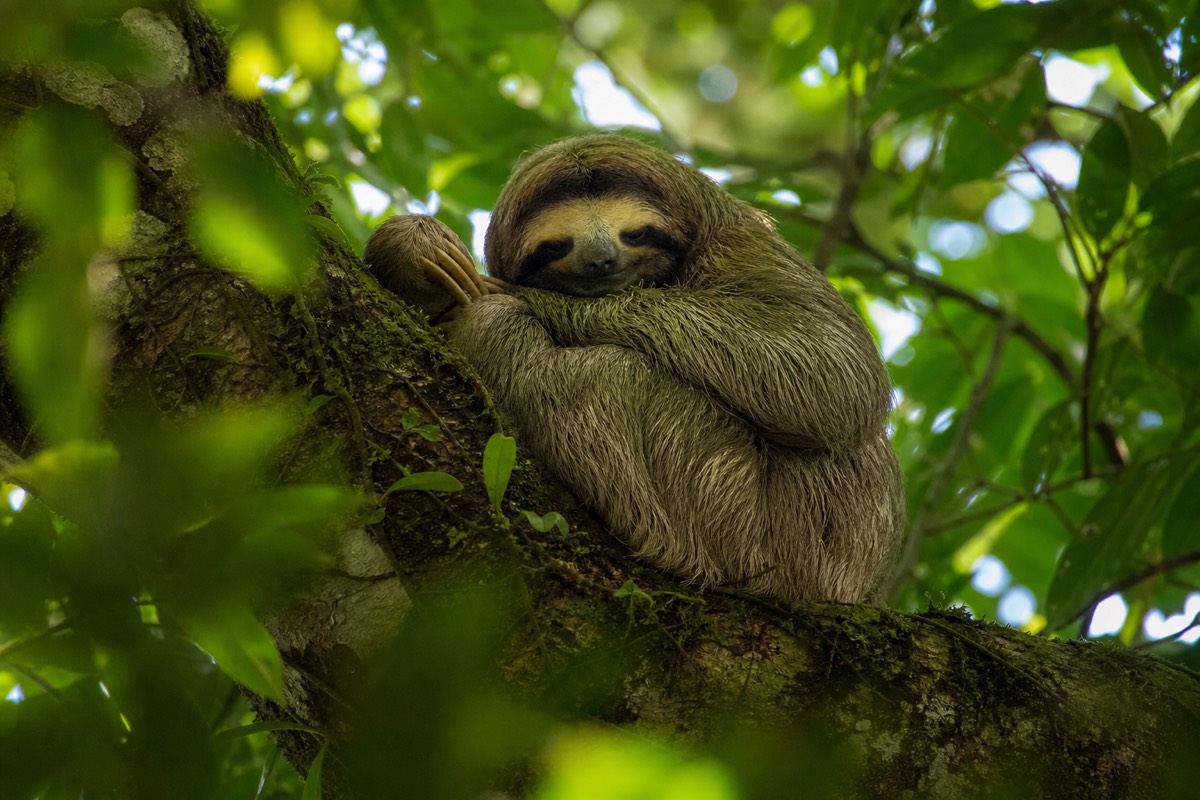
Sloths are the animal most people come hoping to see, and Manuel Antonio delivers them about as dependably as anywhere. Both the two-toed and the three-toed species live here. The trick is that they barely move and they blend in, so you are looking for a shape and a slight shift high in the trees, not an obvious animal. This is precisely where a trained eye pulls ahead of a hopeful one, a point the next section returns to.
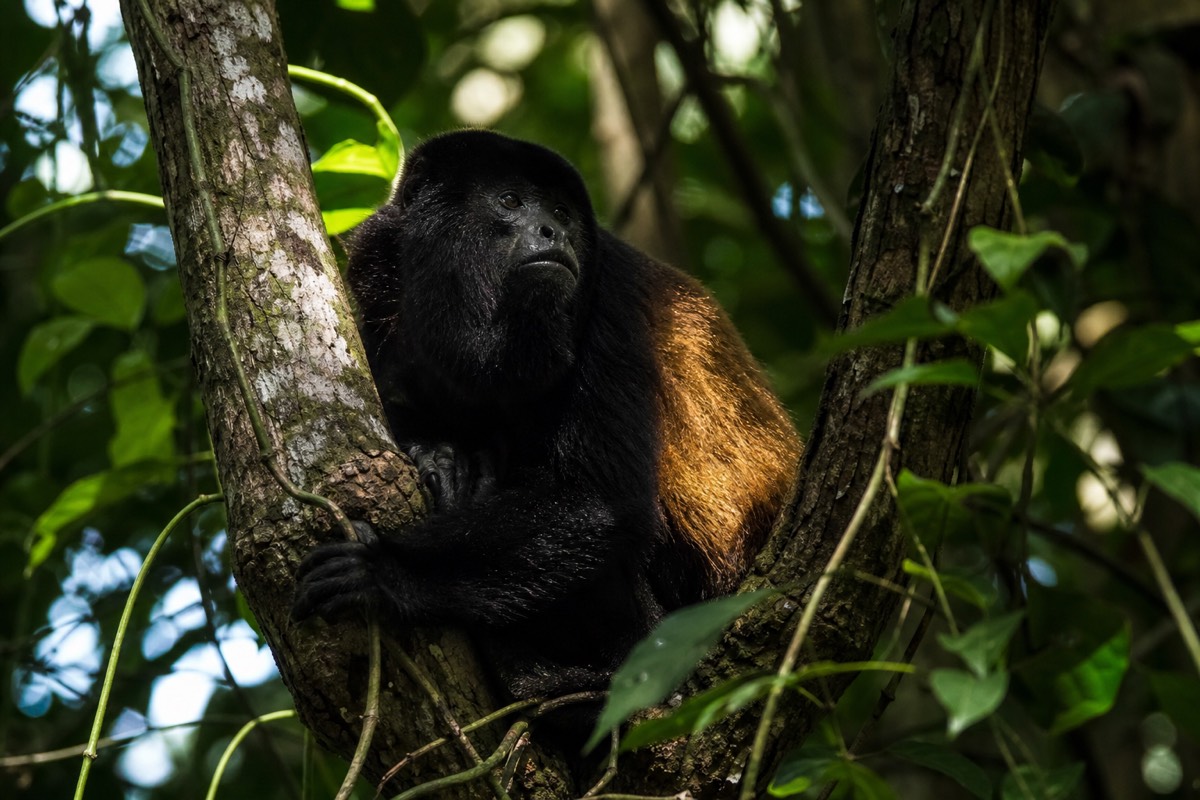
Monkeys are the liveliest presence. The park hosts as many as four of Costa Rica's monkey species, and the one travelers get most excited about is the Central American squirrel monkey, a small, fast, rust-and-cream primate whose range is limited to the central and southern Pacific. White-faced capuchins are bolder and more visible, sometimes a little too bold near the beaches, and troops of howlers announce themselves with a roar you feel more than hear. Keep your food zipped away and your distance kept, since habituated monkeys and coatis will help themselves given the chance.
Down at ground level, white-nosed coatis patrol for scraps, iguanas bask on the rocks, and the birdlife runs from toucans and trogons to tanagers and pelicans over the water. For all of it, the pattern holds: the animals are here, but many are quiet, still and camouflaged. Whether you see a handful or a couple of dozen species comes down less to luck than to how you walk the trail and who is walking it with you.
A realistic expectation helps. On a good guided morning you might tick off sloths, two or three monkey species, coatis, iguanas and a dozen birds, but no two visits are the same and the forest owes you nothing on any given day. The smaller residents are the easiest to overlook and often the most charming once pointed out: land crabs sidestepping across the path, basilisk lizards sprinting over roots, and, along the humid edges, tiny frogs that a guide's eye finds where yours never would.
Do you need a guide, or can you go on your own?
You can enter on your own, and plenty of people do. But a naturalist guide is the single biggest upgrade to the visit, because so much of the wildlife is small, still and camouflaged. Guides carry spotting scopes, know the resident sloths' favorite trees, and turn a quiet walk past hidden animals into a steady run of sightings you would otherwise miss entirely.
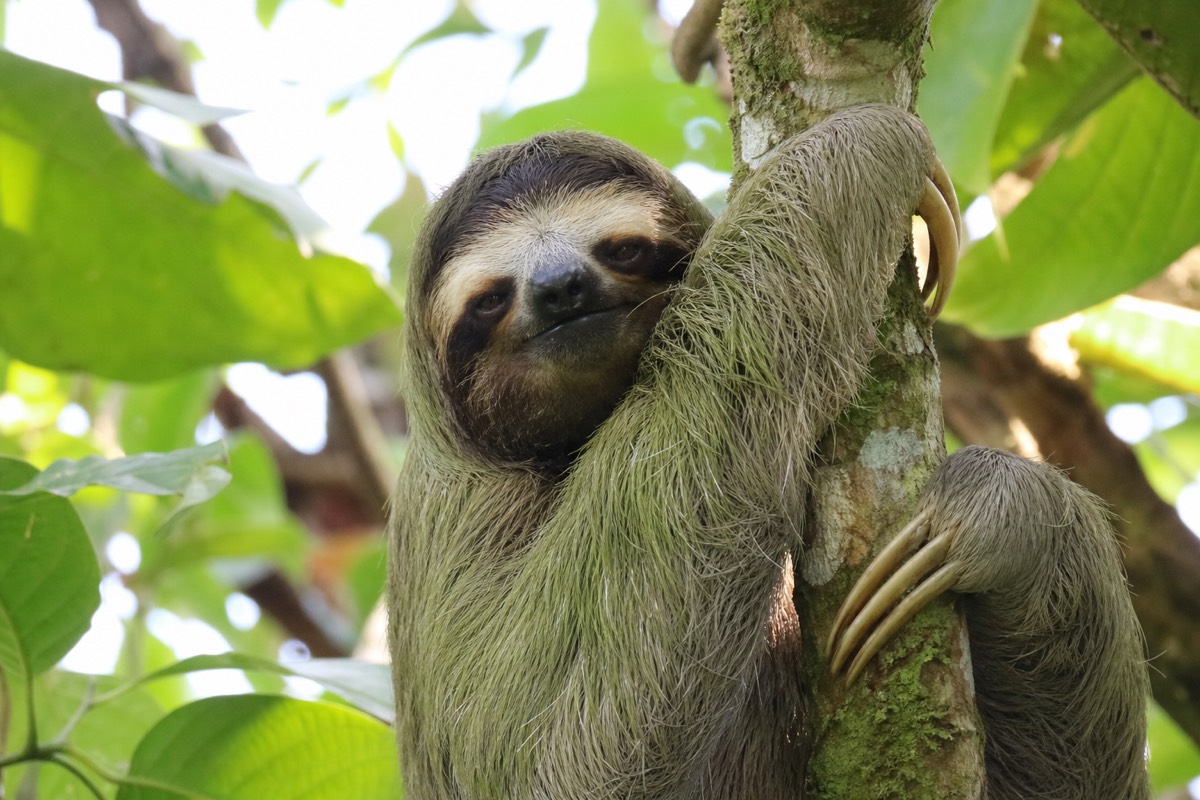
The honest math is simple. Left to yourself, you will see the obvious animals: a capuchin crossing the path, a coati at your feet, an iguana on a warm rock. What you tend to miss is everything that relies on stillness and camouflage, which in this park is most of the interesting list. The sleeping sloth, the roosting owl, the pit viper coiled off the trail, the tiny frog on the underside of a leaf. A guide spends every working day reading this exact forest and knows where to point the scope.
Those spotting scopes are the difference maker. A sloth forty metres up reads as a lump of moss to the naked eye and as a clear, whiskered face through a good scope trained on it. Guides also share the troops' routines, the tide's effect on the beaches, and the small behaviors that tell you an animal is about to move. It is the reason this site's own guidance is blunt about it: naturalist guides dramatically outperform independent wildlife spotting, and the park is the clearest case of that anywhere in the country.
This is also where a guided multi-day tour quietly pays off. The Essential Costa Rica Tour with Manuel Antonio National Park runs its park visit as a guided two-mile loop walk with spotting scopes and telescopes, and the Costa Rica Experience tour includes a naturalist-led Manuel Antonio walk as well. You are not gambling on hiring a good freelance guide at the gate on the day. The naturalist is arranged, the park fee is handled, and your only job is to look where the scope is pointed.
What are the beaches inside the park like?
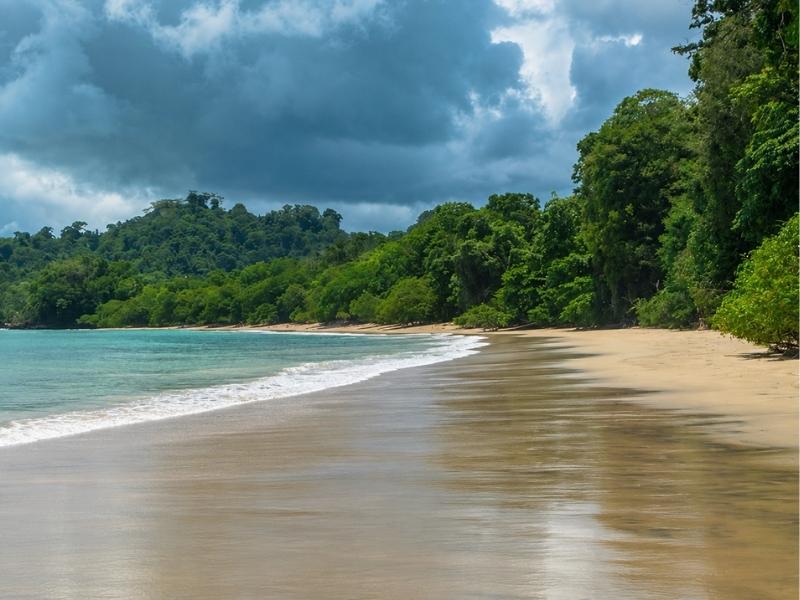
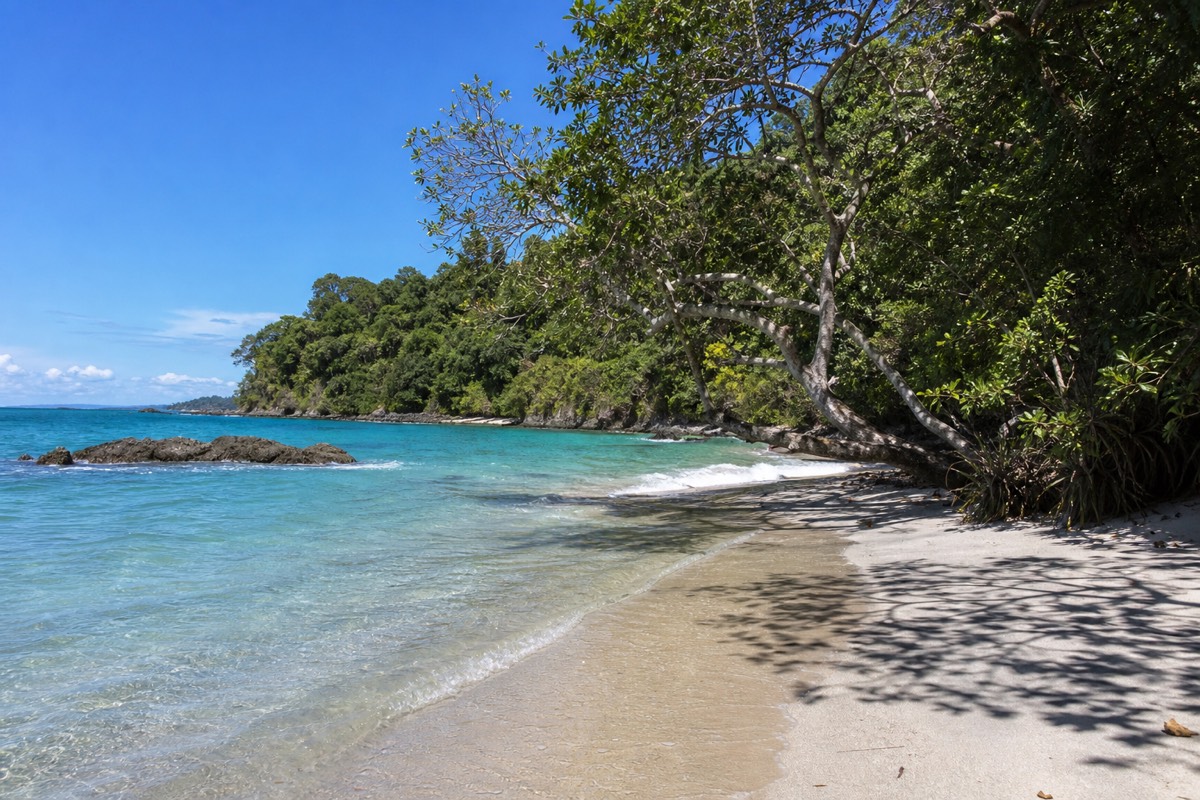
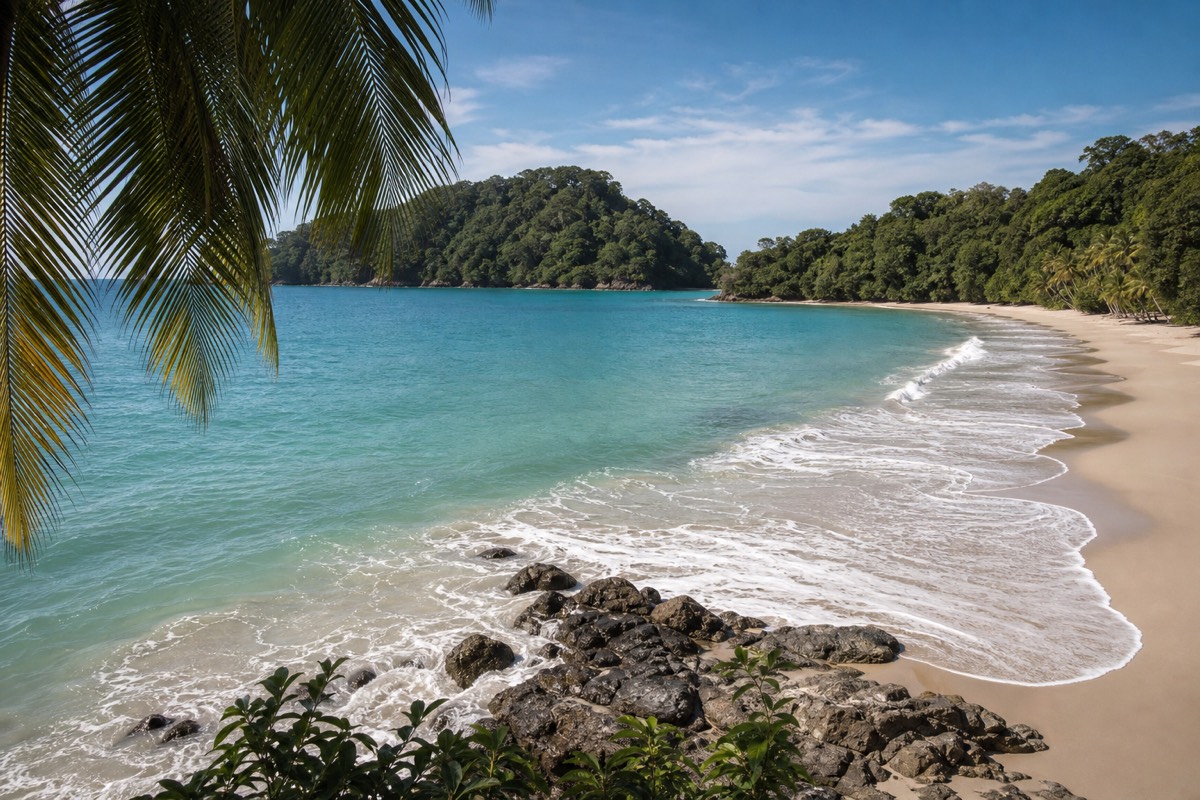
The beaches are the reward at the end of the trail, and they are the reason the park feels like two trips in one. Inside the gates sit calm, protected white-sand coves backed by forest, cleaner and quieter than the busy town beach outside. You finish the wildlife loop and step onto sand where monkeys sometimes raid the treeline behind sunbathers.
The classic pairing is a morning on the loop followed by a swim, and it works because the park's beaches are sheltered coves rather than exposed surf. The itineraries on this site reference the park's Third Beach as a turnaround point, and there are a small number of these protected strands within the boundary, framed by headland and jungle. The water tends to be calmer than the open Pacific beaches nearby, which makes them friendly for a cooling swim after a hot walk.
A few realities keep the beach time honest. Because the beaches sit inside a national park, they follow the park's hours and rules, so this is not an all-day-into-sunset beach scene. Wildlife does not stop at the sand: capuchins and coatis patrol the treeline looking for an unattended bag or a dropped snack, so guard your food and do not feed anything. And the same crowd logic applies here as on the trail, which is that the coves are at their best earlier, before the day-trippers arrive and the sun is at its hardest.
If you want long, open, surf-and-sunset beach days, those live outside the park, along the town's own beach and the wider central and northern Pacific coast. Inside the gates, treat the beaches as the calm, wildlife-fringed finish to a nature walk rather than a full beach day in themselves. Take reef-safe sunscreen, a dry bag for valuables, and enough water, and the swim becomes the best possible full stop on the morning.
How do the reservations and the closed day work?
Manuel Antonio runs on a daily visitor cap and timed entry tickets bought in advance, and it closes one weekday each week. Independent visitors have been caught out by both. Because the specific closed day, the cap and the fee all change from time to time, buy ahead and confirm the current rules close to your travel date rather than trusting an old blog.
The reason the system exists is the park's popularity. To protect a small area from being loved to death, the park limits how many people enter each day and sells timed slots, so turning up on spec at a busy time can mean a sold-out day. The fix is to book your entry in advance for a set time, ideally the first slot, which lines up neatly with the wildlife being most active anyway.
The closed day is the other classic trip-up. This site's Essential Costa Rica tour notes plainly that the park is closed to the public one day a week and that its own itinerary shifts if that day would fall on the park visit, which is exactly the kind of local knowledge an independent traveler has to source for themselves. Show up on the wrong day without checking and you find locked gates. Since parks periodically adjust which day they close, treat any single stated day as something to verify rather than a fixed fact.
For current fees, caps, the closed day and any seasonal rules, the official Costa Rica tourism board is the right first stop; you can start at visitcostarica.com and confirm the specifics before you travel. This is one more area where a guided tour removes the friction: the operator tracks the park's calendar, holds the entry, and reworks the day if the closed day gets in the way, so you never lose a morning to a rule you did not know about.
How many nights should you spend near the park?
Most travelers do well with one to three nights in the Quepos and Manuel Antonio area. One night lets you hit the park at opening and move on. Two adds a proper beach afternoon and a mangrove or catamaran outing. Three suits families and anyone who wants unhurried mornings, a second wildlife walk, and time to simply slow down on the coast.
The town of Quepos and the strip up toward the park entrance form the base for a visit, with a spread of places to stay, eat and arrange add-ons like mangrove kayaking and catamaran trips. How long you linger depends on what you want the coast to be: a quick wildlife hit slotted into a bigger loop, or a genuine wind-down at the end of a busy itinerary. Neither is wrong, and the table below lays out the trade.
| Nights near the park | Best for | What you can fit |
|---|---|---|
| 1 night | Tight itineraries passing through | Early park entry and the wildlife loop, then onward travel the same afternoon |
| 2 nights | Most first-time visitors | The guided park morning, a beach afternoon, plus a mangrove kayak or catamaran outing |
| 3 nights | Families and slower travelers | Two relaxed park or beach mornings, an add-on tour, and real downtime on the coast |
On a guided multi-day tour, this decision is usually made for you, and sensibly. The park tends to sit near the end of a route as the coastal payoff after the volcanoes and cloud forest, with a night or two on the central Pacific built in. If you are planning independently, two nights is the safe default: it guarantees you a fresh, early park morning without the risk of a travel-day arrival eating your only shot at the gate.
What is the best time of day to visit?
Go at opening. The first hours after the park opens are cooler, quieter and far more active for wildlife, before the midday heat pushes animals into the shade and the afternoon beach crowds arrive. This site's own guidance is explicit that the park is best experienced in the morning, and the difference between a dawn start and a mid-afternoon one is dramatic.
Wildlife runs on temperature and light. In the cool of early morning, monkeys feed and move, sloths shift position, and birds are vocal and visible. By the middle of a hot Pacific day, much of that activity drops off as animals settle into shade and stillness, and a trail that was alive at seven can feel empty at one. The people follow the opposite curve, thinning at opening and swelling by late morning, so an early start buys you both more animals and fewer other visitors.
There is a rhythm to a good visit. Enter at opening, walk the loop slowly with your guide while the forest is busy, then use the protected beaches as the day warms and the wildlife quiets. That sequence gets you the best of the trail and the best of the sand without fighting the heat or the crowds for either. Late afternoon can offer a second, smaller window of activity as the day cools, but the morning is the one that matters, and it is the one to protect.
Timing across the year follows the country's broader pattern. The December to April dry season brings the most reliable conditions on this coast, with January to March the peak, while the green season from May to November trades occasional afternoon rain for lush forest and thinner crowds. Whatever the month, the daily advice holds: the animals keep a morning schedule, so the traveler who is awake and at the gate early is the one who goes home with the sightings.
Which Costa Rica tours include Manuel Antonio?
Four of this site's six tours reach Manuel Antonio: the Essential Costa Rica Tour with Manuel Antonio National Park, the Costa Rica Experience tour, the Costa Rica Quest, and the Costa Rica Classic 12-Day tour. Each runs the park as a guided walk with a naturalist, so the spotting and the park logistics are handled for you.
The Essential Costa Rica Tour builds the park into its name and its finale, closing a ten-day loop that also threads the Tortuguero canals, Arenal and Monteverde, with a guided two-mile park walk using spotting scopes. The Costa Rica Experience tour, an eight-day trip with the smallest group cap on the site, pairs its Manuel Antonio naturalist walk with mangrove kayaking on nearby Damas Island. Both make the park a proper guided highlight rather than a rushed stop.
The Costa Rica Quest, the most-booked tour on the site by a wide margin with more than 2,295 bookings, runs its Manuel Antonio visit out of Quepos as part of a nine-day route through Arenal and Monteverde. The Costa Rica Classic 12-Day Tour by One Life Adventures reaches the park at the far end of the country's longest itinerary here, after Pacific beach time on the Nicoya Peninsula. The two tours that do not visit are the six-day Volcanoes, Cloud Forests and Zip-Lines tour, which ends in Monteverde, and the Raft, Hike and Explore Costa Rica Adventure.
Any of the four solves the same problem in the same way. The park fee, the timed entry, the closed-day calendar and a genuinely good naturalist are all arranged before you arrive, and the park sits inside a wider route that already covers the volcanoes and cloud forest. You can compare their lengths, prices and live availability on each tour's own listing, and pick the one whose overall shape fits your trip. The park experience itself, the part people remember, is essentially the same guided morning on all four.