Guanacaste and the Nicoya Peninsula: Costa Rica's Beach Guide
The Pacific northwest is where most Costa Rica beach trips happen, and the choice of town matters more than most people expect. Here is how Guanacaste and the Nicoya Peninsula's main beach bases compare, when to go, and how to bolt a beach week onto a tour.
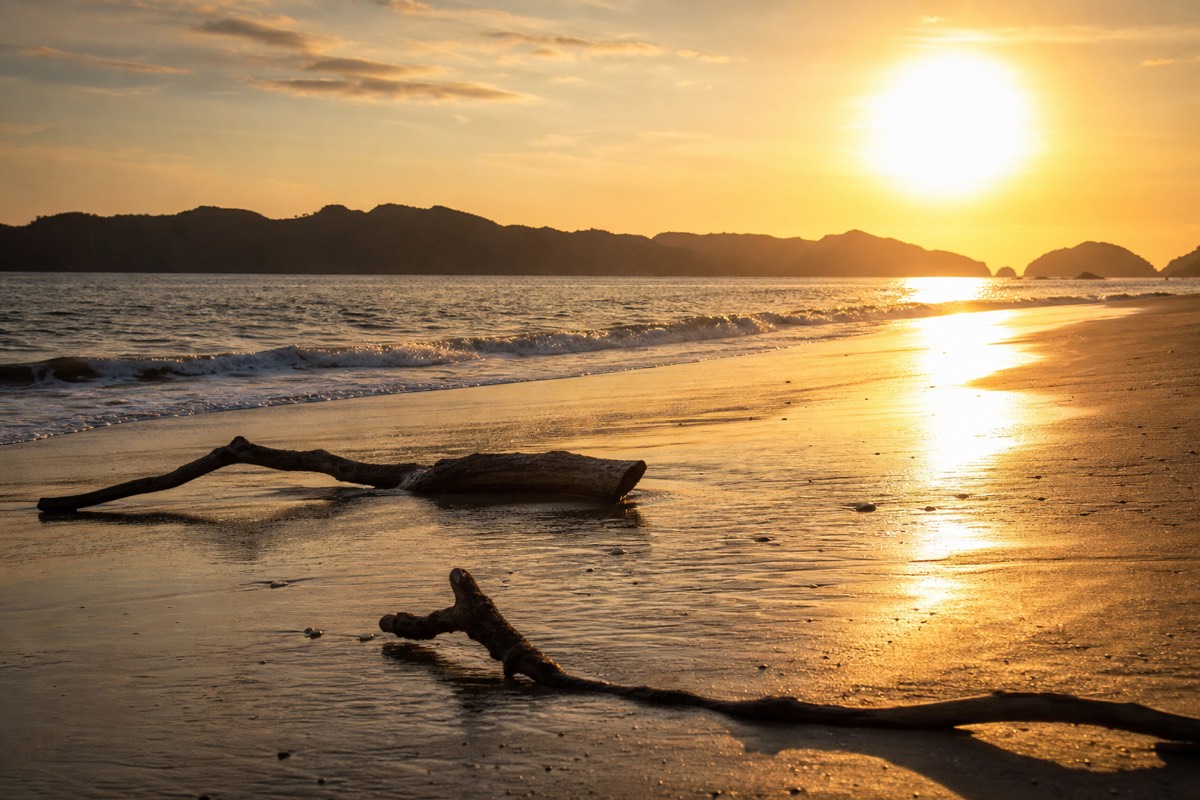
Ask ten travelers where Costa Rica's beaches are and most will point to the same stretch of coast: the dry, sun-baked northwest, where Guanacaste province and the Nicoya Peninsula hold the country's densest run of famous beach towns. This is the region people mean when they picture Costa Rica as a beach destination, and it is the part of the country with the most reliable sunshine. It is also less a single place than a menu of very different towns, and choosing the wrong one for your trip is the classic misstep. This guide sorts them out.
Quick answer: Guanacaste and the Nicoya Peninsula are Costa Rica's Pacific northwest beach region, widely regarded as the country's driest and sunniest. The main bases run from luxury Papagayo and surf-town Tamarindo to family-friendly Samara and bohemian, surf-driven Santa Teresa. Liberia airport, LIR, serves the region, and a beach week pairs naturally after a wildlife or volcano tour.
Guanacaste and Nicoya beach towns compared
Town reputations are widely reported characterizations to help travelers choose a base, not measured rankings. Access notes reflect that the northern towns sit near Liberia airport while southern Nicoya is often reached via San Jose and the Nicoya Gulf ferry.
Where are Guanacaste and the Nicoya Peninsula?
Guanacaste is Costa Rica's northwest province, running along the Pacific from the Nicaraguan border south, and the Nicoya Peninsula is the long finger of land that hangs off its southern end. Together they form the country's main beach region, a coastline of dry tropical forest, long Pacific beaches and a string of resort and surf towns served by Liberia's international airport.
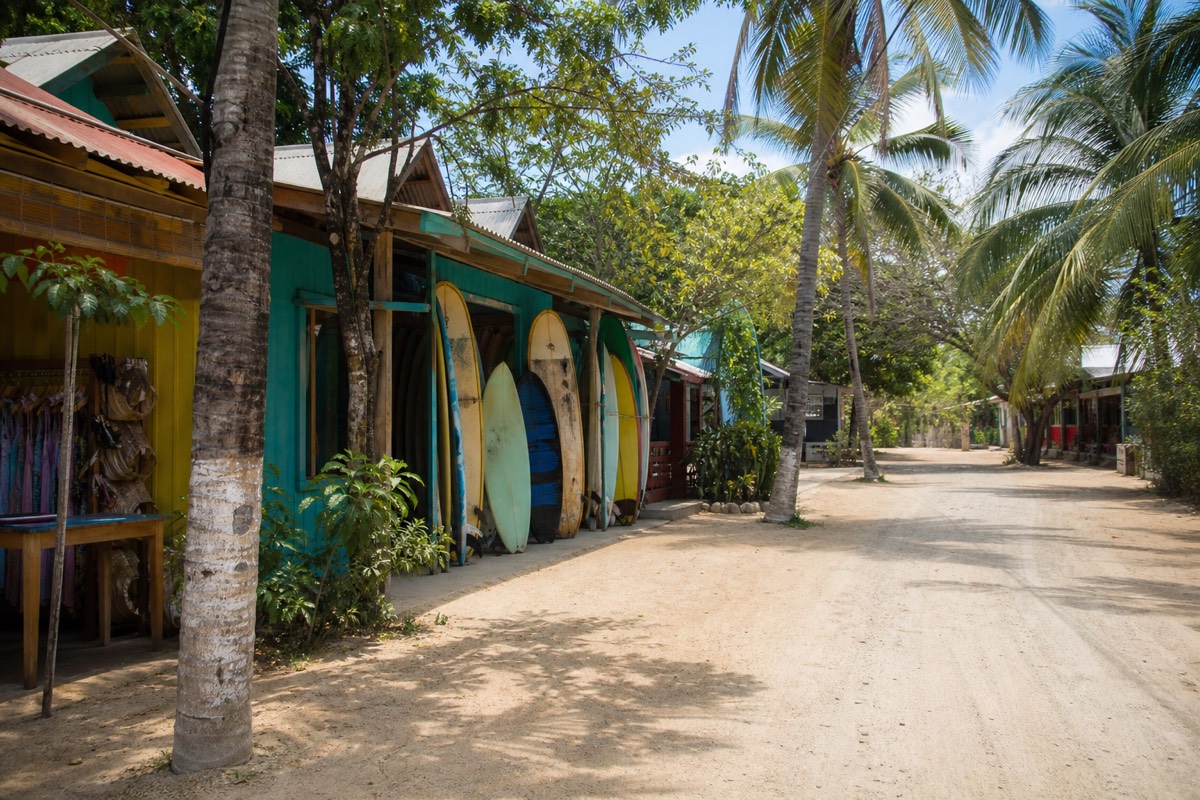
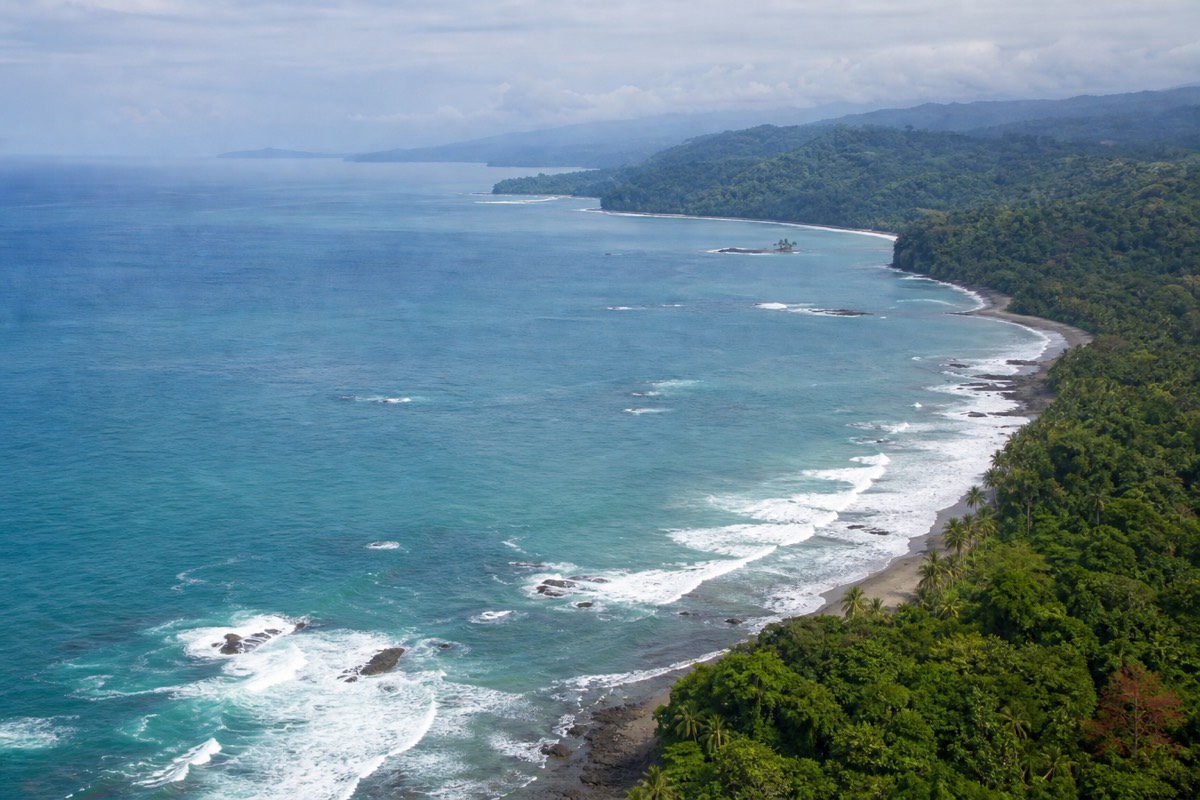
Geographically this is the driest, most sun-reliable corner of the country, a landscape of golden dry forest and open coast that looks and feels different from the humid green interior. That climate is the region's calling card. While the rest of Costa Rica trades in rainforest and cloud, the northwest trades in beach days, which is why the resorts and surf schools cluster here rather than elsewhere.
The practical gateway is Daniel Oduber Quirós International Airport in Liberia, known by its code LIR, which this site's own materials describe as serving the Pacific resort coast. LIR puts you within a short drive of the northern Guanacaste beaches and cuts out the long overland haul from the main San José airport, which is a big part of why the region works as a stand-alone beach trip or a beach add-on.
The Nicoya Peninsula complicates the map in a good way. Its northern beaches are reached overland from the Guanacaste side, but its southern tip, where Santa Teresa sits, is more often approached from San José by road and the Nicoya Gulf ferry, the same crossing this site's Costa Rica Classic tour uses to reach the coast. So while it is fair to talk about Guanacaste and Nicoya as one beach region, getting to its different corners can mean quite different journeys, which the town-by-town section below keeps in view.
Which beach town should you choose?
Match the town to the trip. Papagayo is the luxury-resort enclave, Tamarindo the lively, surf-and-nightlife hub with beginner-friendly waves, Nosara a surf-and-wellness town known for yoga, Samara a calmer, reef-sheltered bay with a family reputation, and Santa Teresa a remote, bohemian, surf-driven strip on the southern peninsula. They are genuinely different places, so the choice shapes the whole stay.
Start with what you want your days to feel like. If you want polished resorts, spa time and an easy transfer from the airport, the Papagayo area in northern Guanacaste is built for exactly that, with high-end properties on a sheltered gulf. If you want a town with restaurants, bars, surf schools and a steady buzz, Tamarindo is the region's most developed beach hub and a common first-timer's pick, with waves gentle enough for beginner lessons and a nightlife the quieter towns lack.
For something calmer, the peninsula has options with distinct personalities. Nosara has built a reputation around surfing and wellness, with a well-known yoga scene and a deliberately low-key, protected feel. Samara is widely regarded as one of the gentler, more family-friendly bays on this coast, with a reef that calms the water and a walkable town that suits travelers who want the beach without the party. Each trades Tamarindo's energy for more space and quiet.
Santa Teresa is the outlier and, for many, the draw. On the southwestern tip of the Nicoya Peninsula, it has grown from a remote surf outpost into a bohemian strip of beach hotels, surf breaks, sunset yoga and long, wild beaches, while keeping a rougher, end-of-the-road feel because it genuinely is harder to reach. It is the beach stop on this site's Costa Rica Classic 12-Day tour, which reaches it after ocean kayaking in Paquera Bay, and its surf-and-yoga character is why it tends to reward travelers who want the coast to feel a little untamed.
How do the beach towns compare at a glance?
The quickest way to choose is to line the towns up by vibe, best-fit traveler and how you get there. Papagayo skews luxury and sits closest to LIR, Tamarindo and Nosara are surf-forward, Samara leans family and calm, and Santa Teresa is surf-driven but on the far southern peninsula, most often reached via San José and the Nicoya Gulf ferry rather than from Liberia.
The table below is a starting frame rather than a verdict, since every town has quiet corners and lively ones, and reputations shift as places grow. Use it to shortlist, then read up on your top pick close to your travel date. For current, official regional information, the Costa Rica tourism board's site is a good reference; you can begin at visitcostarica.com and check specifics like access and conditions before you commit.
| Town | Vibe | Best for | Getting there |
|---|---|---|---|
| Papagayo | Polished resort enclave on a sheltered gulf | Luxury, spas, easy transfers | LIR, very close |
| Tamarindo | Lively, developed, surf and nightlife | First-timers, beginner surf, social trips | LIR, close |
| Nosara | Surf and wellness, yoga scene, low-key | Surfers, yoga and wellness travelers | LIR, medium drive |
| Samara | Calm reef-sheltered bay, walkable town | Families, gentle swimming, quiet stays | LIR, medium drive |
| Santa Teresa | Bohemian, surf-driven, end-of-the-road feel | Surfers, yoga, travelers wanting wild coast | SJO plus the Nicoya Gulf ferry |
One honest caveat runs through the whole table. These are broad reputations meant to help you shortlist, not fixed facts, and the right base also depends on your season, your budget and how far you are willing to drive on the peninsula's slower roads. If surf is the priority, weigh the specific break and swell; if calm water for kids matters most, favor a sheltered bay like Samara; if you want to be steps from a lot of restaurants, Tamarindo earns its popularity.
When is the best time to visit this coast?
The northwest is Costa Rica's driest region, so it has the most reliable beach weather. The December to April dry season brings sun and warm, calm conditions, peaking from January to March, while the green season from May to November trades regular afternoon rain for lush landscapes, fewer crowds and lower prices. Mornings usually stay reliable even in the wet months.
This region's dryness is exactly why it became the country's beach capital. Where the Caribbean side and the southern Pacific can be wet for long stretches, Guanacaste and the northern Nicoya coast get a long, dependable dry season, which is what makes the resorts and surf camps viable and the beach days consistent. If your trip is built mostly around sun and sand, this coast is the safest weather bet in the country.
The dry season is the postcard version and the busy one. From December through April, and especially January to March, you get sun, warm water and the classic dry-forest golden light, along with the highest prices and the fullest towns. This site's own guidance notes that the best-rated ecolodges and resorts fill months ahead for this window and around North American school holidays, so a dry-season beach trip rewards booking early.
The green season is not the compromise many assume. From May to November the landscape turns green and the crowds and prices ease, and while afternoons often bring rain, mornings are frequently clear and calm, which suits a beach-and-nap rhythm well. The shoulder months of May and November in particular tend to pair decent weather with thinner crowds. Whichever season you choose, the northwest's relative dryness means it handles the green months better than most of the country.
Surf, family beaches or luxury: which suits you?
This coast serves three very different beach trips. Surfers gravitate to Tamarindo, Nosara and Santa Teresa for their breaks and surf-town culture. Families and gentle swimmers do best in sheltered, reef-calmed bays like Samara. Luxury travelers head for the resort enclaves around Papagayo. Knowing which of the three you are is the fastest way to pick a base.
For surf, the region is one of the country's best classrooms and playgrounds. Tamarindo is a popular place to take a first lesson thanks to forgiving beginner waves and a wall of surf schools, while Nosara and Santa Teresa draw more committed surfers to their more consistent breaks and dedicated surf-and-yoga culture. If riding waves is the point of the trip, choose the town for the surf first and let everything else follow.
Families and travelers who want calm water should weigh the shape of the beach as much as the town. Sheltered bays with reef or headland protection, of which Samara is the widely cited example on this coast, give you gentler water for kids and weaker swimmers than the open, surf-exposed beaches. Look for a walkable town, a protected swimming area and a short transfer, and the trip gets a lot easier with young children in tow.
Luxury travelers are well served in the north. The Papagayo area concentrates the region's high-end resorts, spas and golf on a calm gulf a short drive from LIR, which makes it the low-effort choice for a polished, low-hassle beach stay. Across all three styles, remember the surf that thrills a surfer is the same surf that can create dangerous rip currents for a casual swimmer, so ask locally where it is safe to swim, favor beaches with other people in the water, and never fight a current if one pulls you out.
How does a beach week fit after a tour?
A northwest beach stay is the natural wind-down after a wildlife or volcano tour. Most guided routes loop the interior and the central Pacific, then either build in a beach finish or leave you well placed to add one. It is the classic way to end a Costa Rica trip: cover the parks and volcanoes first, then decompress on the Guanacaste or Nicoya coast before flying home.
Of this site's tours, the one that actually threads a Nicoya beach stay into its route is the Costa Rica Classic 12-Day Tour by One Life Adventures. After the volcanoes, cloud forest and wildlife stops, it crosses the Nicoya Gulf by ferry and lands at Santa Teresa for beach time, with optional surf lessons and sunset yoga, before finishing at Manuel Antonio. If you want the beach built into the tour rather than tacked on, the Classic is the route that does it.
Most other itineraries leave the beach as an add-on, which is easy to arrange. The Essential Costa Rica Tour with Manuel Antonio National Park loops the interior and the central Pacific and returns to San José without a Guanacaste leg, so it pairs naturally with a beach week booked before or after the tour, flying in or out of LIR to save the overland time. The six-day Volcanoes, Cloud Forests and Zip-Lines tour makes the point explicitly: it ends in Monteverde and tells travelers to arrange their own onward travel to the Nicoya Peninsula beaches, which is practically an invitation to bolt on Santa Teresa or a northern Guanacaste town.
The logistics favor this order. Doing the wildlife and volcanoes first means you are alert and early for the parks when it matters, then unwinding on the coast when a slower pace is welcome, and flying home relaxed rather than road-weary. Whether you choose the built-in beach finish of the Classic or add your own days after another tour, the northwest coast is where a Costa Rica trip is designed to end. Compare the routes and live availability on each tour's listing, and slot the beach time where it fits your flights.