Tortuguero National Park and Sea Turtles: A Visitor's Guide
You cannot drive to Tortuguero, and that is the point. Reached only by boat or small plane, this Caribbean-coast park protects one of the most important green-turtle nesting beaches in the hemisphere. Here is how to plan a visit.
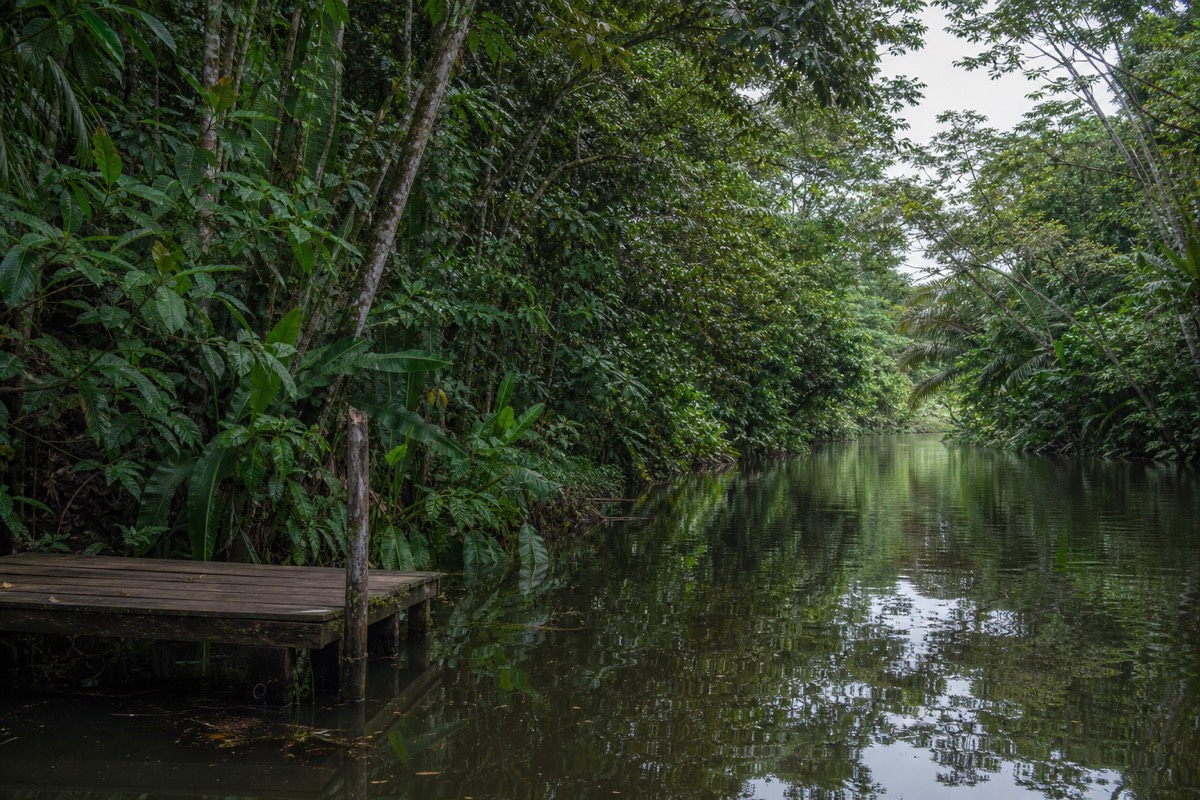
Tortuguero has no road. You cannot rent a car and pull up outside your lodge, and no bus runs to the door. Every visitor arrives one of two ways, by boat along a chain of jungle canals or by small plane onto a single airstrip, and that hard-won isolation is exactly what has protected the sea turtles the park is named for. What follows is the full planning picture: how to get in, when the turtles come ashore, the rules that keep the beach dark and quiet, and what else moves through the water and the trees while you are there.
Quick answer: Tortuguero sits on the remote northeast Caribbean coast, reachable only by boat or small plane. Its headline event is green-turtle nesting, which generally peaks from around July into October and can only be watched with a certified guide at night. Of the packages here, the Essential Costa Rica tour is the one that includes a Tortuguero canal safari.
Planning a Tortuguero visit at a glance
Access and nesting window reflect this site's own tour corpus and homepage season framing (turtle nesting July to October); month shading marks the main green-turtle window, not measured counts.
Where is Tortuguero, and why can't you drive there?
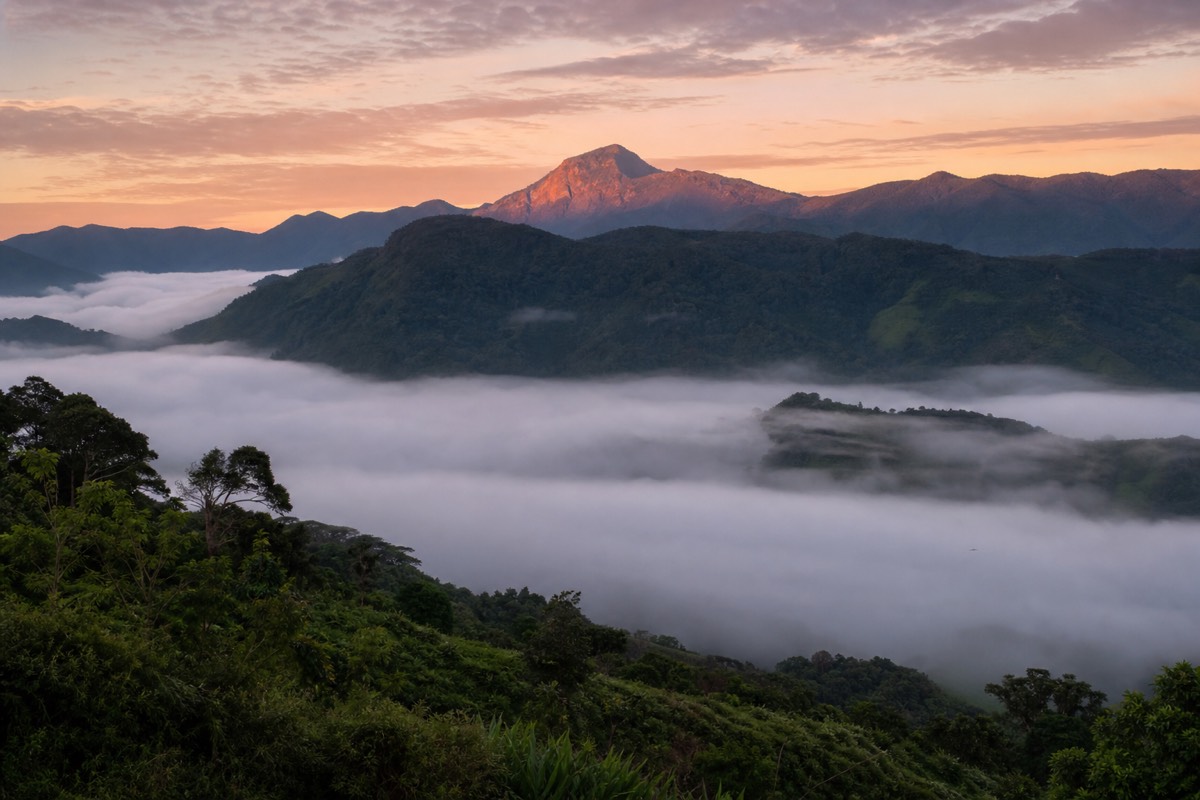
Tortuguero sits on Costa Rica's northeast Caribbean coast, in Limón province, a thin ribbon of rainforest pinned between a freshwater canal system and the open sea. No road reaches it. Travelers arrive by boat after a drive to a river dock, or by small plane onto the village airstrip, and that cut-off geography is what keeps the park so quiet.
The land here is a maze of lagoons, rivers and swamp forest. A paved road through it was never realistic, and building one would have destroyed the very thing that makes the place work. So the park stayed wild. There is a small village, also called Tortuguero, sitting on a sandbar between the canals and the Caribbean, and it runs on foot traffic and boat motors rather than cars. You will not hear traffic. You will hear howler monkeys at dawn and the slap of water against a hull.
That remoteness shapes everything about a visit. You experience the park from the water far more than on foot, because the canals are the highways and the trails are short. It also means Tortuguero is rarely a place travelers pass through by accident. Getting here takes real intent, which filters the crowds and keeps the wildlife relaxed. For anyone weighing whether the detour is worth it, the honest answer is that the trip out is a big part of what you are paying for: a corner of Costa Rica that still feels genuinely hard to reach.
What makes Tortuguero "Costa Rica's Amazon"?
The nickname comes from how you see the park, which is almost entirely by boat along a network of jungle canals and lagoons. Small craft glide between walls of rainforest, and wildlife lines the banks. There is no Amazon River here, but the feeling of drifting through dense, water-threaded forest is close enough that the comparison stuck.
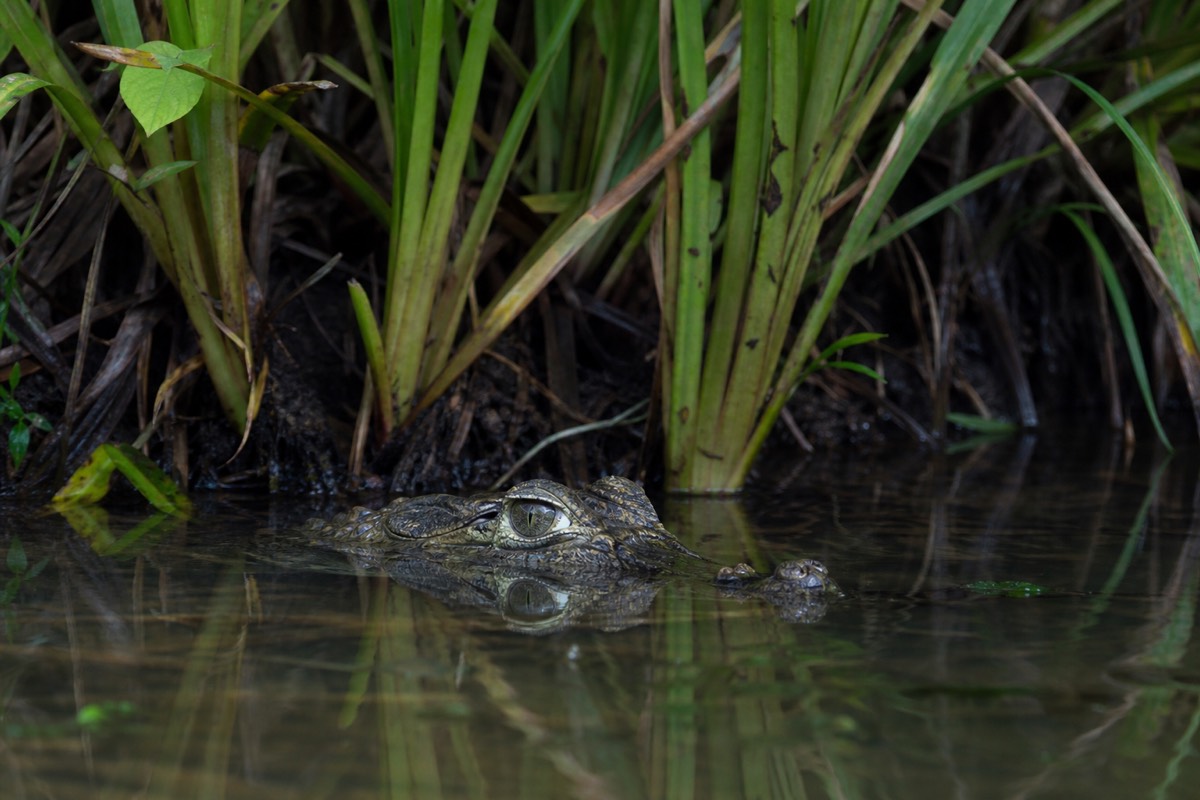
A typical day is built around slow boat safaris, usually one at dawn and another in the late afternoon when animals are most active. Guides cut the motor and paddle into narrow side channels where the canopy closes overhead. From that low, quiet vantage you spot things a road would never show you: a caiman half-submerged along the bank, a green iguana draped across a branch, a family of monkeys crossing overhead, herons and kingfishers working the shallows.
The waterways connect a string of habitats, from wide lagoons to tight blackwater creeks, and each holds different wildlife. Because so much of the park is only reachable by boat, a good naturalist guide matters more here than almost anywhere else in the country. They know which channels the manatees favor, where the sloths hang, and how to read a ripple on the water. The Essential Costa Rica Tour with Manuel Antonio National Park builds its Tortuguero visit around exactly this kind of guided canal wildlife safari, tracking hundreds of protected bird species along with crocodiles, iguanas, sloths and howler monkeys, plus a guided rainforest hike on foot.
When do sea turtles nest, and which species will you see?
The park's signature event is green-turtle nesting, and the main season generally runs from around July into October, the window this site's own tour corpus uses. The name Tortuguero itself points to turtles. Other sea-turtle species use this coast at different times of year, so exact timing shifts by species and season.
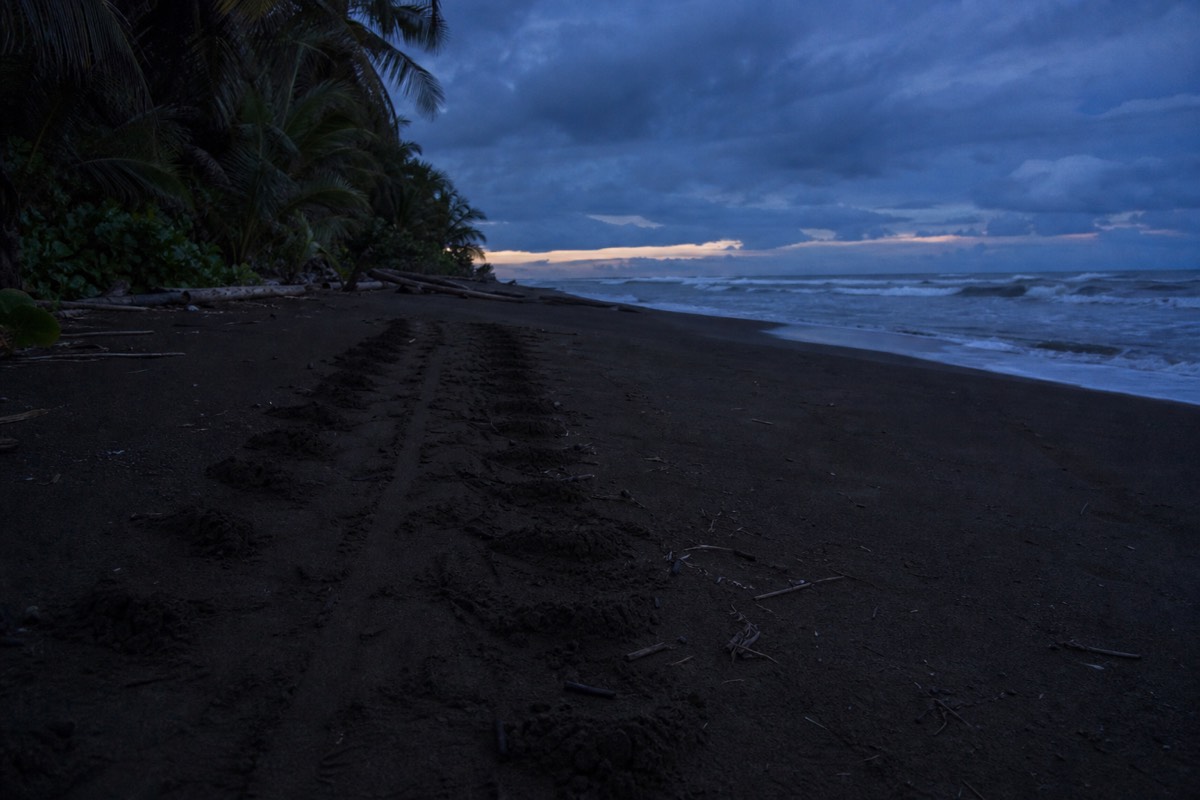
Green turtles are the headline. Tortuguero's dark, protected beach is one of the most important green-turtle rookeries in the western hemisphere, and during the peak months females haul out at night to dig nests and lay eggs above the tide line. The Essential Costa Rica tour offers an optional green-sea-turtle nesting night watch, and its departures for that experience run July through September, which lines up with the heart of the season.
Because timing is the single most-asked turtle question, this guide keeps the season overview short on purpose and leaves the month-by-month detail to the dedicated coverage of the best time to see sea turtles. The short version to plan around: aim for the mid-year-into-autumn window if watching a nesting turtle is your priority, treat any specific week as weather- and season-dependent, and confirm the current nesting calendar before you lock in dates rather than assuming a fixed start. Nature does not run to a printed timetable, and reputable operators will tell you honestly that a sighting is likely, never promised.
What are the rules for watching turtles nest?
Turtle-watching in Tortuguero is guided-only and tightly regulated. You go at night in a small group led by a licensed guide, on a timed schedule, with no white flashlights and no flash photography. Red light only, if any. You stay back and quiet, behind the turtle, and you never touch, ride or crowd a nesting animal.
These rules are not bureaucratic fussiness. A nesting female is easily spooked by light and movement, and a startled turtle will abandon her nest and return to the sea without laying. Bright light is worse still for hatchlings, which navigate toward the ocean by the natural glow of the horizon and can be fatally disoriented by a phone screen or a headlamp. The dark beach is the whole conservation strategy, so guides enforce it strictly.
In practice, night walks are limited in group size and released in staggered windows so the beach is never crowded. Guides carry a permit and coordinate with spotters so groups only approach once a turtle has settled into laying, the one phase where she is least likely to bolt. Photography of nesting turtles is generally prohibited outright. The official Costa Rica tourism board and park authorities set the framework, and rules can tighten from season to season, so follow your guide's instructions to the letter. The reward for playing by them is one of the most quietly moving wildlife encounters in Central America, watched the way it should be, in the dark and without a camera between you and the animal.
What else lives in Tortuguero besides turtles?
Plenty. Even outside nesting season, Tortuguero is a first-rate wildlife destination. The canals and forest hold caimans and crocodiles, three monkey species, both two-toed and three-toed sloths, river otters, and an exceptional bird list. Guides on this route track more than 350 protected bird species, from herons and kingfishers to toucans and the great green macaw.
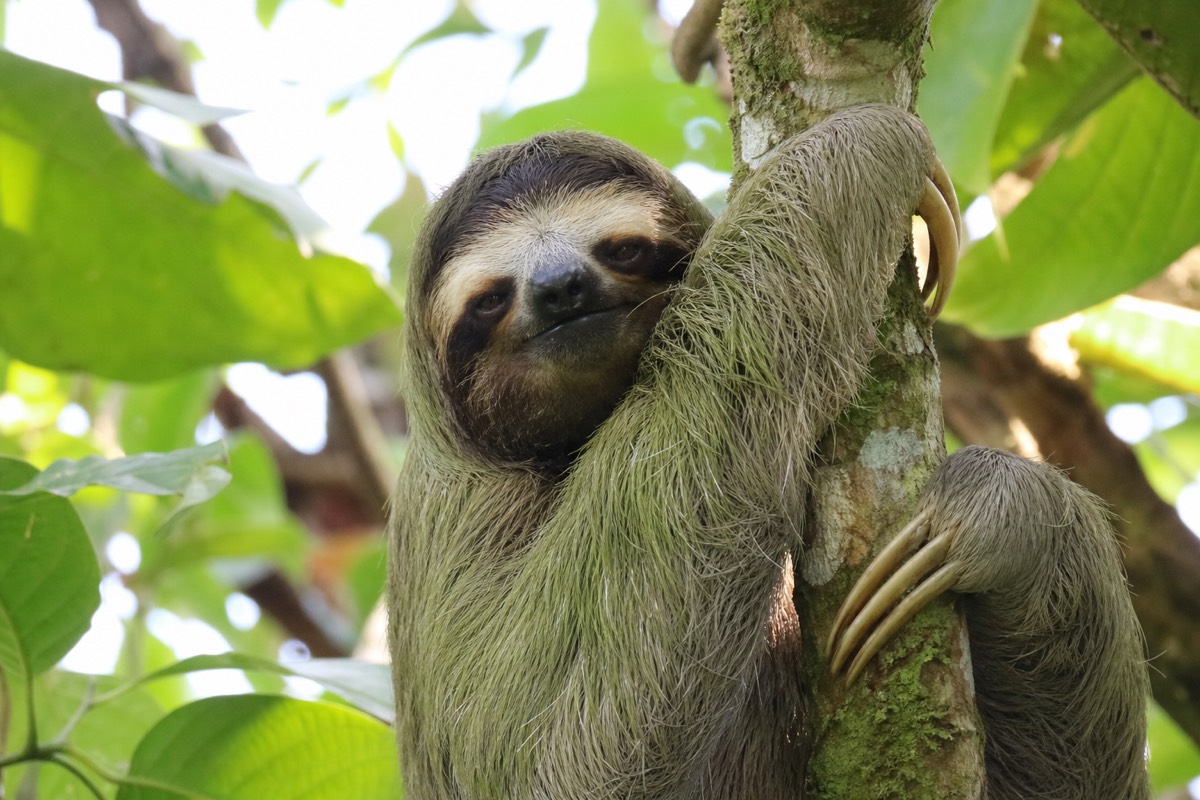
The water itself is the main stage. Spectacled caimans sun along the banks, and larger crocodiles patrol the river mouths. Green iguanas and smaller basilisks, the lizards famous for sprinting across the surface of the water, cling to overhanging branches. In the trees, howler monkeys announce the dawn, spider monkeys travel the high canopy, and white-faced capuchins work the mid-story. Sloths are common if you have a guide who knows where to look.
Birdlife is the quiet standout. Because the habitats stack so tightly, from open lagoon to flooded forest, the species count is enormous, and even a casual boat trip turns up herons, anhingas, jacanas and a rotating cast of kingfishers. Lucky visitors spot the West Indian manatee, an endangered gentle giant that browses the canals but shows itself rarely. None of this depends on the turtle calendar, which is a useful thing to know: if your dates fall outside the nesting window, Tortuguero still delivers as one of the best pure-wildlife stops in the country.
How many nights should you spend in Tortuguero?
Most visitors stay one or two nights, and two is the sweet spot. Because the park is boat-access only and the best wildlife activity happens at dawn and dusk, a single overnight lets you catch one good early-morning safari, while a second night adds the turtle night walk in season and a second boat trip, without the long trip in feeling wasted on a rushed day.
A day trip is possible from nearby, but it burns most of the good hours in transit and misses the two things that make Tortuguero special: the pre-dawn canal safari and, in season, the nighttime turtle watch. Both happen when day-trippers are on the road. Staying over is what turns a boat ride into an actual Tortuguero experience.
Here is a simple way to match your time to what you want out of the park.
| Time in Tortuguero | What you realistically get | Best for |
|---|---|---|
| Day trip | One boat safari, lots of transit, no night walk | Tight schedules, a quick look |
| 1 night | One dawn safari plus an afternoon trip; turtle walk only if timing lines up | Most package itineraries |
| 2 nights | Two full days of safaris, a guided forest hike, and the turtle night watch in season | The balanced, recommended stay |
| 3 or more nights | Repeat safaris in different channels, higher odds on manatees and rarer birds | Dedicated wildlife and photography trips |
For most travelers folding Tortuguero into a wider Costa Rica trip, one or two nights slots in cleanly and covers the highlights. Serious wildlife watchers and photographers are the ones who benefit from a longer stay, because more time on the water simply means more chances at the animals that only show up now and then.
How do you get to Tortuguero from San José?
Two routes get you there. The common one is overland then by boat: a drive of roughly three to four hours from San José through the Braulio Carrillo highway to a river dock, then a boat ride of about an hour and a half through the canals. The faster option is a short domestic flight onto the village airstrip. There is no way in by car alone.
On the overland-and-boat route, groups usually drive northeast out of the Central Valley, crossing the mountains through Braulio Carrillo National Park, then continue to a launch point such as La Pavona or a similar river dock before transferring to a covered boat for the final leg. That boat ride is not just transport; it is the first wildlife safari of the trip, with caimans and birds along the banks. The Essential Costa Rica tour uses exactly this approach, transiting the scenery of Braulio Carrillo National Park and then reaching the park by canal boat.
The flight option trades the scenic boat approach for speed, landing you near the village in a fraction of the time, which suits travelers short on days or prone to carsickness on winding roads. Either way, plan Tortuguero as an overnight rather than a same-day dash, since the whole appeal lives in the early-morning and after-dark hours that a round trip would skip. Build in a buffer for weather too, because this is one of the wettest regions in the country and boats run on the rivers' terms.
Which Costa Rica tour actually reaches Tortuguero?
Of the packages featured here, the Essential Costa Rica Tour with Manuel Antonio National Park is the one that includes Tortuguero, threading its canal wildlife safari and an optional turtle night watch into a wider route. The Costa Rica Classic 12-Day Tour runs the Pacific circuit instead and does not reach Tortuguero, so pick by which coast you want.
The Essential tour, a 10-day, 9-night route operated by Destination Services Costa Rica with a rating of 4.3 and well over a thousand bookings, is built for travelers who want the Caribbean lowlands and the classic volcano-and-cloud-forest highlights in one trip. Its Tortuguero segment delivers the guided canal safari, a three-hour rainforest hike and the optional green-turtle nesting night watch in season, before the itinerary moves on to Arenal, Monteverde and Manuel Antonio. It also carries a minimum age of 10, which suits families with older kids.
The Costa Rica Classic 12-Day Tour by One Life Adventures is a different animal by design. It focuses on the Pacific and central circuit, Poás Volcano, Arenal, Monteverde, the Nicoya Peninsula beaches at Santa Teresa and Manuel Antonio, and it does not cross to the Caribbean side. That is not a shortcoming, just a different trip. If a boat-access turtle coast is a must-do, the Essential tour is your match. If you would rather trade Tortuguero for Pacific beach time and a longer, higher-rated itinerary, the Classic covers that ground. Check live prices on each listing, since operators adjust them and both routes fill early for the December-to-April dry season.