San José vs Liberia Airport: Which Should You Fly Into?
Two international airports serve Costa Rica, and picking the wrong one can bolt a five-hour drive onto the front of your trip. Here is how to choose between them, region by region, plus the open-jaw trick that saves the most backtracking.
Most flight searches for Costa Rica quietly return two arrival points, and the difference between them is not academic. One sits in the middle of the country near the capital and reaches almost everything. The other sits up in the dry northwest, an hour from the resort beaches but half a day from the rainforest. Choose the one that matches your route and the airport disappears into the background. Choose the other and your first morning is spent watching the same mountains slide past the window for hours.
Quick answer: Fly into San José (SJO) for almost every first-time Costa Rica trip, since it reaches Arenal, Monteverde, Manuel Antonio and the Caribbean. Fly into Liberia (LIR) only when your trip is built around the Guanacaste beaches. All of our packages begin and end in San José, so SJO is the practical pick for them.
Approximate drive time from each airport to the region you want
Drive times are approximate ranges, not measured figures. Costa Rica's roads are mountainous and times shift with weather and traffic, so confirm current conditions before you book. Region proximity and the airport locations come from the site's own homepage tourism-zone map.
Which airport should you fly into, San José or Liberia?
Fly into San José's Juan Santamaría (SJO) if your itinerary touches the Central Valley, Arenal, Monteverde, Manuel Antonio or the Caribbean, which describes most first-time trips. Fly into Liberia's Daniel Oduber (LIR) only when you are headed straight for the Guanacaste beaches. Every one of our tours starts in San José, so SJO is the answer for them.
The short version is a question of geography. San José sits in the Central Valley, roughly in the middle of the country, so its airport puts you within a half-day drive of the classic rainforest and volcano circuit. Liberia sits in the far northwest, in the dry Guanacaste province, so its airport is fast for the Pacific resort coast and slow for everywhere else. If you are torn, ask a single question: is this a beach trip or a nature trip? Beach-first travelers save real time from Liberia. Everyone else is better served by San José.
There is a reason the vast majority of visitors, and all six of the packages on this site, route through San José. It is the country's main gateway, it has the most flights, and it opens onto the regions most people come to see. Liberia is a genuine convenience for one specific kind of holiday, not a general-purpose front door.
What is the difference between SJO and LIR?
SJO is Juan Santamaría International Airport, about 18 kilometres northwest of San José in the Central Valley at around 1,161 metres of elevation. It is the country's primary gateway, with direct connections from the US, Canada and Europe. LIR is Daniel Oduber Quirós International Airport in Liberia, Guanacaste, a smaller airport built to serve the Pacific resort coast.

SJO is the busier and better-connected of the two by a wide margin. Direct flights reach it from a long list of North American hubs, and the flight from Miami runs just under three hours. Because it feeds the capital, it also has the fuller supply of hotels, transfers and onward options waiting the moment you land. The official Costa Rica tourism board describes it as the main entry point for the country, with Liberia as the secondary gateway; you can read the tourism board's own guidance at visitcostarica.com.
LIR is smaller, newer as a mainstream tourist gateway, and weighted toward seasonal and resort-driven traffic. It exists largely because Guanacaste's beaches, the Papagayo, Tamarindo and Nicoya area, drew enough demand to justify their own airport rather than making every sun-seeker drive across the country from the capital. For that one job it is excellent. For a rainforest-and-volcano loop it leaves you a long way from the action on day one.
One practical detail favors San José for arrival comfort too. Because it sits high in the Central Valley at around 1,100 metres, the air is milder than the coast, which makes a first night after a long flight easier on the body before you drop to the heat and humidity of the lowlands. The capital's density of hotels, restaurants, pharmacies and transfer services also means anything you forgot to pack or arrange is easy to sort in the first hours, a cushion Liberia's smaller footprint does not match.
Which regions is each airport closest to?
San José is closest to the Central Valley, the Central Pacific around Manuel Antonio, and the Caribbean side including Tortuguero, and it sits within a manageable drive of Arenal and Monteverde. Liberia is closest to the Guanacaste beaches and the Nicoya Peninsula, and it reaches Monteverde and Arenal from the northwest in comparable time.
The homepage's own map splits the country into four tourism zones, and lining the airports up against those zones makes the choice obvious. The Central Valley, home to Poás Volcano and the coffee country, is on San José's doorstep. The Central Pacific, where Manuel Antonio National Park draws its crowds, is a straightforward drive south from San José. Tortuguero and the wider Caribbean lowlands sit to the northeast of the capital, again firmly in San José's half of the map.
Guanacaste is the exception that makes Liberia worthwhile. The northwest beaches and the Nicoya Peninsula are a short hop from LIR and a long, tiring haul from San José. Arenal and Monteverde land in the middle: both airports can reach them in a few hours, with Liberia holding a slight edge for the northwest approach to Monteverde. If your dream photo is a hammock over pale Guanacaste sand, Liberia wins. If it is a volcano behind a cloud forest, either works, but San José keeps the rest of the country open to you.
It helps to see the split through the four tourism zones the country markets itself by. The Central Valley holds Poás and the coffee farms; the Northern Lowlands hold Arenal and the La Fortuna hot springs; the Cloud Forest zone centers on Monteverde and Santa Elena; and the Pacific Coast runs from Manuel Antonio down through the Nicoya and Osa peninsulas. San José feeds the first, third and the Manuel Antonio end of the fourth with ease, and reaches the Northern Lowlands comfortably. Liberia's natural territory is the northern Pacific tip of that fourth zone, the Guanacaste beaches, and little else.
How long is the drive from each airport to the main regions?
From San José, plan on roughly three to three and a half hours to Arenal or Manuel Antonio, three and a half to four and a half to Monteverde, and four hours or more, including a boat, to reach Tortuguero. From Liberia, the Guanacaste beaches are about an hour to an hour and a half, but Manuel Antonio and the Caribbean are five hours or more away.
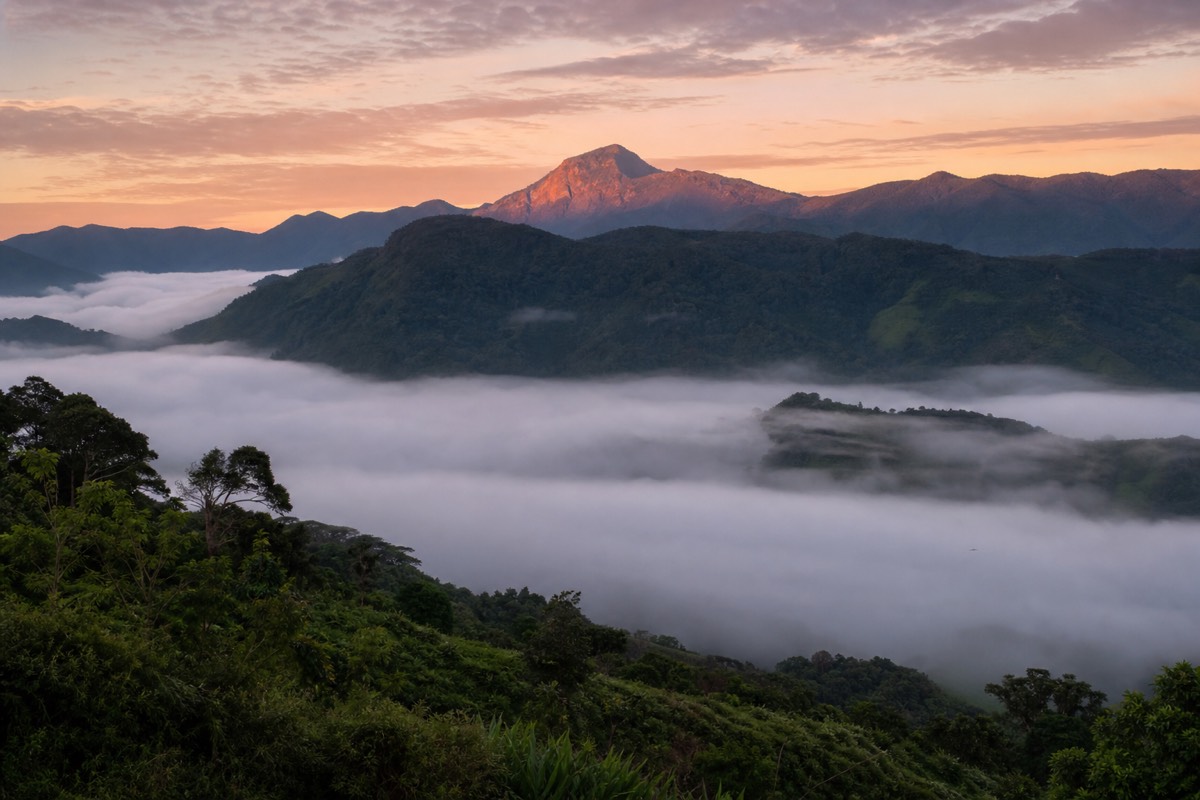
These are approximate ranges, not stopwatch figures. Costa Rica's roads climb and wind, a stretch that looks short on a map can be slow in practice, and rain, roadwork or traffic around the capital can stretch any of them. Treat the table below as a planning guide and confirm current conditions before you commit to a flight, especially in the green season when afternoon downpours slow the mountain roads.
| Region or park | From SJO (San José) | From LIR (Liberia) | Closer airport |
|---|---|---|---|
| Central Valley / San José city | about 30 minutes | about 4 to 4.5 hours | SJO |
| Arenal / La Fortuna | about 3 to 3.5 hours | about 3 hours | roughly even |
| Monteverde cloud forest | about 3.5 to 4.5 hours | about 2.5 to 3 hours | LIR, slightly |
| Manuel Antonio / Central Pacific | about 3 to 3.5 hours | about 4.5 to 5 hours | SJO |
| Guanacaste beaches / Nicoya | about 4.5 to 5.5 hours | about 1 to 1.5 hours | LIR |
| Tortuguero (canals) | about 4 hours including a boat | 6 hours or more | SJO |
| Caribbean coast (Puerto Viejo) | about 4 to 4.5 hours | 6 hours or more | SJO |
Read down the last column and the pattern is clear. San José wins the Pacific rainforest, the Caribbean and the Central Valley, which together make up most of a classic first trip. Liberia wins Guanacaste decisively and nothing else. Arenal and Monteverde are close enough from both that they should not decide your airport on their own.
The reason these times run long is worth internalizing before you book a tight connection. Costa Rica packs mountains, river valleys and single-lane bridges into a small country, so the drive rarely follows the straight line your map implies, and a route that looks like ninety minutes can take three hours of switchbacks. Traffic around San José at rush hour and heavy afternoon rain in the green season both stretch the numbers further. Build slack into any same-day plan that pairs a flight with a long transfer, and never schedule the two back to back with no margin.
Should you fly into one airport and out of the other?
Yes, and it is one of the smartest moves in Costa Rica planning. Flying into one airport and out of the other, an open-jaw ticket, lets you travel across the country in a single direction instead of doubling back. A beach-and-rainforest trip that lands in Liberia, works south and east, and flies home from San José avoids a long return drive entirely.
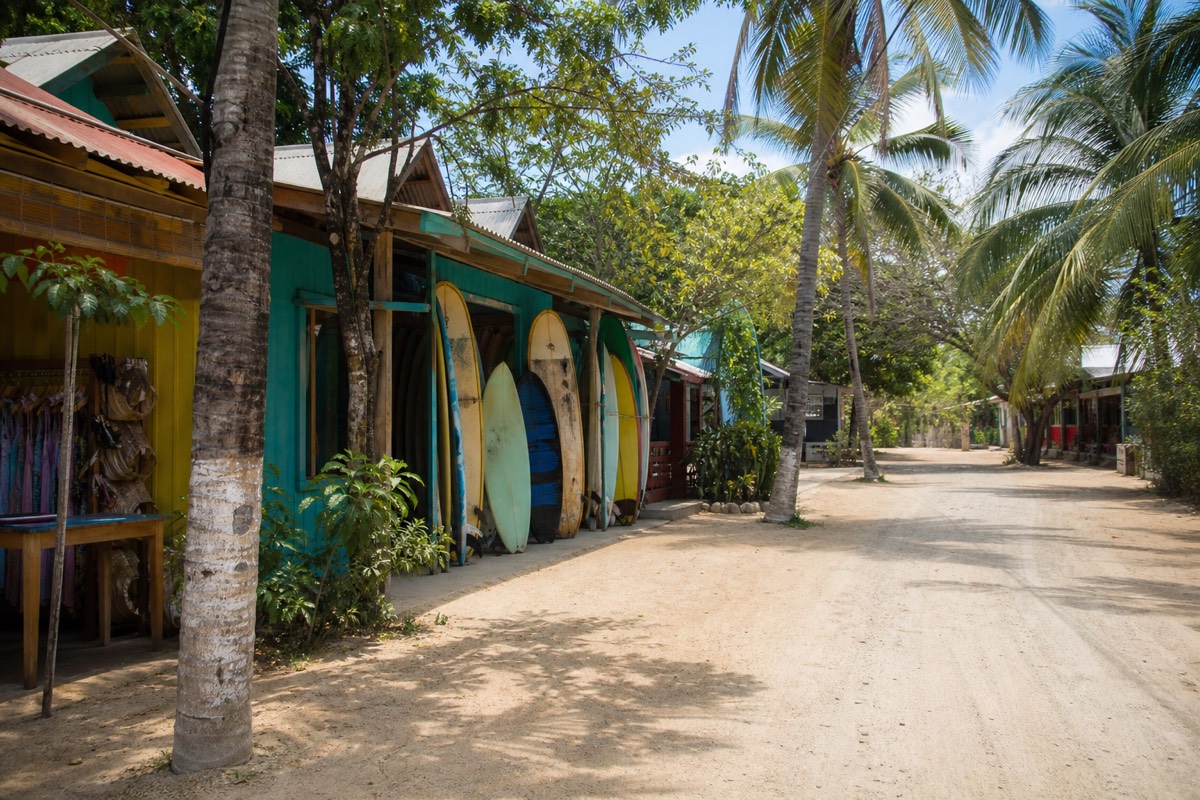
The classic version starts in Guanacaste. Land at LIR, spend the first days on the northwest beaches while you are jet-lagged and happy to do little, then move inland to Monteverde and Arenal and finish near San José, flying out of SJO. You never repeat a road. Most major airlines price an open-jaw itinerary close to a standard round trip, so the time saved usually costs little or nothing. Ground transfers between towns are the piece to line up in advance, since you are not looping back to a home base.
There is one important caveat for readers here. Our own multi-day packages are designed as loops that begin and end in San José, so they do not need an open-jaw ticket at all. For those trips, a simple round trip into SJO is cleaner and the transfers are already handled. The open-jaw trick is for independent travelers stitching a beach stay to a rainforest circuit, where the single-direction route genuinely saves a wasted day.
Which airport do our Costa Rica tours use?
All six of our packages start and finish in San José, which makes SJO the practical airport for every one of them. The Essential Costa Rica Tour with Manuel Antonio National Park spells this out, beginning and ending at Juan Santamaría Airport itself, with a shared airport shuttle built into the itinerary.
Because the routes loop back to the capital, you book a round trip into SJO and let the tour handle the ground movement in between. The Essential Costa Rica tour runs its shuttle to a fixed drop-off window on the final day, which is why it asks travelers to schedule outbound flights no earlier than mid-afternoon on the last day; that kind of detail is far easier when everyone arrives and departs through the same airport. The Costa Rica Classic 12-Day Tour by One Life Adventures follows the same logic, starting and ending in the Escazú district of greater San José before it works out to Poás, Arenal, Monteverde and the Pacific.
The 6-day Volcanoes, Cloud Forests and Zip-Lines Adventure is the one route that does not return to San José, ending instead up in Monteverde, but even that trip begins at a San José hostel and leaves onward travel to you. In short, if you are booking one of these packages, fly into San José, arrive the evening before, and you are set. There is no scenario among the six where Liberia is the better arrival airport.
Are flights, prices and schedules different between the two?
San José generally has more airlines, more frequencies and more route competition, which tends to mean cheaper and more flexible fares plus easier connections. Liberia has a thinner schedule weighted toward seasonal and resort-focused flights, so its fares can run higher or its options can dry up outside the busy dry-season months. Compare live fares for your exact dates before deciding.
Because SJO is the primary gateway, it carries the fuller year-round schedule and the deeper bench of connecting options through US and Canadian hubs. That depth is what usually keeps its fares competitive and its rebooking easier when a plan changes. If flexibility or price matters more to you than shaving an hour off a beach transfer, San José tends to be the safer bet on the airfare alone.
Liberia's schedule tracks the resort calendar. In the December to April high season it can be well served with direct flights aimed at sun-seekers; in the quieter green season those routes thin out. Fares can also sit a little higher precisely because fewer carriers compete for the same seats. None of this is fixed, and promotional routes come and go, so the honest advice is to price both airports for your real travel dates and let the numbers, plus the drive-time table above, make the call.
Do you need to spend your first night in San José?
For any trip starting at SJO, arriving the evening before and sleeping near San José is the standard, low-stress move. The airport sits only about 18 kilometres from the city, a short transfer, and a night's buffer means a delayed flight cannot cost you the first day of a tour or an early wildlife start.
Our itineraries recommend exactly this: land the day before, rest, and begin fresh. The Central Valley around San José has plenty of hotels at every price, and the short hop from the airport means you are not adding a long drive to a travel-weary evening. A first night here also lets your body adjust to the elevation, since the city sits above 1,100 metres, before you head for the heat of the coast or the humidity of the rainforest.
If your trip instead starts in Guanacaste from Liberia, the same logic applies but the first night belongs near the beaches rather than the capital. Either way, the principle holds. Build in a buffer night at your arrival end so a single flight delay never dominoes into a missed park entry or a scramble to catch up with a group. It is the cheapest insurance in trip planning, and it turns the airport question from a source of stress into a footnote.