Is Costa Rica Safe? A Practical Safety Guide for Travelers
Most visitors leave Costa Rica with nothing worse than a sunburn and a phone full of sloth photos. Here is the honest safety picture, the risks that actually matter, and how a guided trip removes several of them.

Costa Rica draws well over a million North American visitors a year to a country the size of West Virginia, and the vast majority go home without incident. That does not mean risk is zero. It means the real dangers are specific and manageable, and they are rarely the ones nervous first-timers imagine. Below is the practical picture: what the official advisory says, where the day-to-day risk actually lies, which areas are calmest, and how booking a guided route quietly closes several of the gaps.
Quick answer: Costa Rica sits at Level 2, Exercise Increased Caution, the same tier as much of Western Europe. For a tourist, the realistic risks are petty theft and ocean rip currents, not violent crime, and a guided multi-day tour reduces exposure to both.
Where Costa Rica sits on the US travel advisory scale
Advisory tier from the US State Department country page for Costa Rica, reissued April 2026; the day-to-day risks named below reflect that advisory's own guidance.
Is Costa Rica safe to visit right now?
Costa Rica is broadly safe for tourists and sits at Level 2, Exercise Increased Caution, on the US State Department's four-tier travel advisory, the same rating carried by France, Italy and the United Kingdom. The advisory, last reissued in April 2026, points to crime in general rather than any single no-go zone.
Level 2 is the second-lowest tier on a scale that runs up to Level 4, Do Not Travel. Costa Rica has no Level 3 or Level 4 areas inside its borders, which sets it apart from several countries in the wider region. The country abolished its military in 1948 and redirected that money toward education and conservation over the following decades, and it protects roughly a quarter of its national territory in parks and reserves. None of that makes it crime-free, but it does explain the stable, tourism-friendly reputation.
It helps to separate two things the word crime lumps together. Petty crime, the theft of phones, bags and unattended gear, is common and is what the overwhelming majority of affected visitors actually run into. Violent crime exists, as it does in any country, but it is far rarer against tourists and tends to cluster in specific neighborhoods and hours rather than following you around the parks. Reading the advisory with that split in mind turns a scary headline into a short, practical checklist, which is the whole point of this guide.
The official Costa Rica tourism board and the US advisory agree on the shape of the risk. Both aim your attention at theft and the ocean, which is where problems really cluster, instead of at threats that barely register here. For a first trip, that means you can relax about the country being fundamentally dangerous and instead focus your caution on a handful of concrete situations, which the rest of this page walks through one by one.
What is the real day-to-day risk for travelers?
The risk you are most likely to meet is petty theft: snatch-and-grab of phones and bags, break-ins to rental cars parked at trailheads and beaches, and belongings lifted from the sand while you swim. It is opportunistic, it targets the distracted and the loaded-down, and simple habits defeat most of it.
Rental cars are a favorite target. A car left at a quiet trailhead or a beach lot with a daypack visible on the seat is an invitation, and smash-and-grab thefts happen fast. The fix is boring and effective: travel with nothing of value left in the vehicle, ever, and treat the trunk as visible too. On the beach, the classic loss is the pile of shoes, phone and wallet left on a towel while everyone goes in the water. Take turns watching your things, or bring only what you can carry into the surf in a dry bag, and leave your passport locked at the hotel.
Crowded transit points in San José, bus terminals and busy markets, are where pickpockets and distraction thieves work. Keep your phone off the table at cafes, wear a bag across your body, and split your cash and cards so a single loss is not a trip-ending one. Because a guided package moves your luggage as a group and keeps you out of unfamiliar terminals with bags in hand, it strips away most of these exact scenarios before they can happen.
The pattern across all of these is the same, and it is worth seeing laid out. Most losses come from a short list of predictable situations, each with a fix that costs you nothing but a habit.
| Situation | The real risk | Simple fix |
|---|---|---|
| Rental car at a trailhead or beach lot | Smash-and-grab break-in | Leave nothing of value in the car, ever |
| Belongings on the sand while you swim | Opportunistic theft from the beach | Bring a dry bag, take turns watching, leave your passport at the hotel |
| Crowded San José terminal or market | Pickpockets and distraction theft | Bag across the body, phone away, cash and cards split up |
| Swimming at an unguarded beach | Rip currents, the leading cause of visitor deaths | Ask locally, swim where others do, never fight a current |
| Walking unlit streets after dark | Mugging in a few urban pockets | Take a licensed taxi or registered rideshare at night |
| Driving mountain roads at night | Accidents on steep, unpaved sections | Let a guided package handle the driving |
None of this requires paranoia. It requires the same street sense you would use in any unfamiliar city, plus a little extra care around parked cars and open beaches, which are the two spots where Costa Rica separates the careful traveler from the unlucky one.
Which parts of Costa Rica are safest?
The mainstream tourist corridor is calm. Risk concentrates in a few urban pockets of San José, especially at night, and in isolated, poorly lit spots after dark. The regions most travelers actually spend their time in, Arenal, Monteverde, the Manuel Antonio area and Tortuguero, are well-patrolled and heavily visited.
San José is fine to move through by day, and the capital has real museums and food worth a stop. After dark, take a licensed taxi or a registered rideshare rather than walking through unfamiliar neighborhoods, and skip a few downtown districts that locals themselves avoid at night. Ask your hotel which streets are which, since that local read beats any generic map.
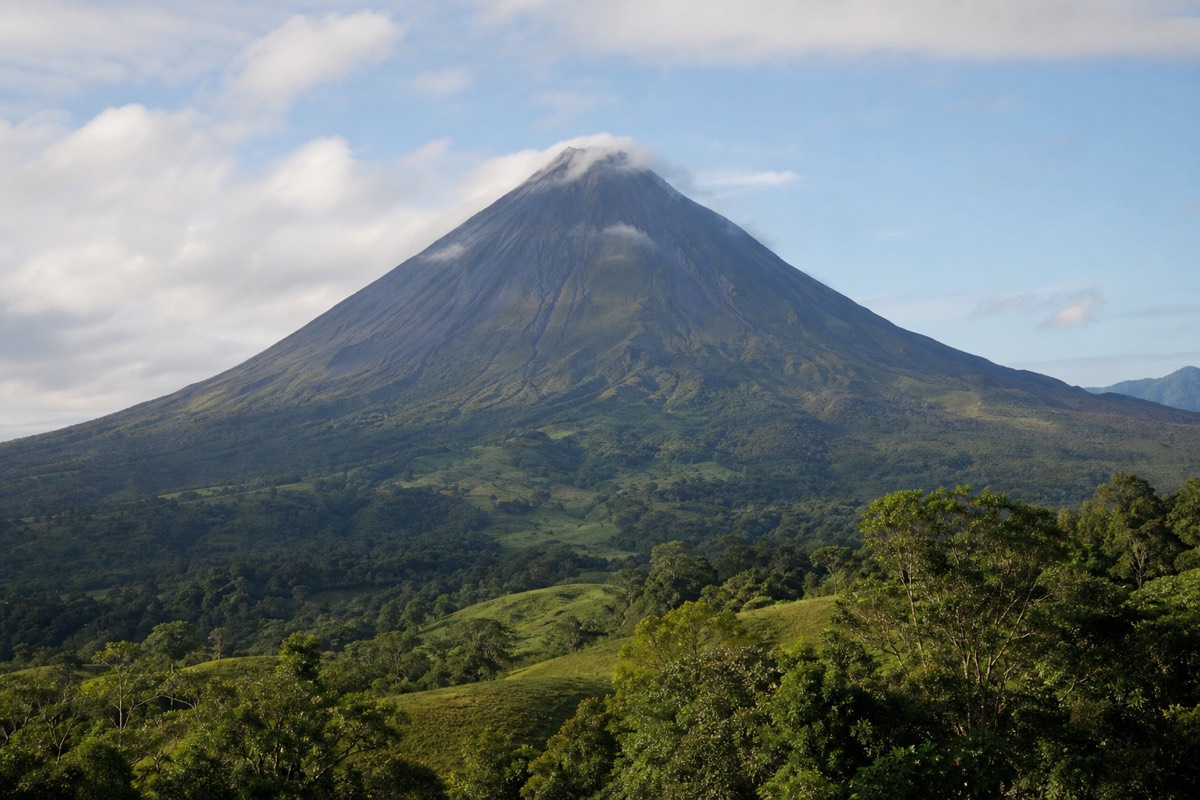
Out in the regions, the picture relaxes. La Fortuna and the area around Arenal Volcano run on tourism and feel it. Monteverde is a small mountain town. Manuel Antonio is one of the most visited places in the country, with a park that operates a daily visitor cap and timed entry. The Essential Costa Rica Tour with Manuel Antonio National Park and the Costa Rica Classic 12-Day Tour by One Life Adventures both route through this same well-worn corridor of Arenal, Monteverde and the Central Pacific, which is exactly why they feel low-stress: you are never improvising your way through the parts of the country where trouble is more likely.
Two features of the geography quietly help. Tortuguero has no road access at all and is reached only by boat or small plane, which keeps it calm and self-contained. Many of the best wildlife areas sit inside national parks with gates, rangers and set hours, so you are rarely wandering alone through anywhere sketchy. The places that call for real care are the ordinary ones: a downtown bus plaza at rush hour, a dark beach road after the restaurants close, a rental car left at an empty overlook.
Is Costa Rica safe for solo, female, and family travelers?
Yes to all three, with normal precautions. Costa Rica is one of Central America's most popular destinations for solo and female travelers and a long-standing family favorite. Its tourism infrastructure is mature, English is widely spoken in the trade, and organized tours give solo visitors built-in company and families a handled itinerary.
For solo travelers, a small-group tour solves the two hardest parts of going alone: logistics and isolation. You get company at dinner and someone watching the group's bags on transit days. Female travelers report that standard big-city caution applies, catcalling can happen and unlit, empty areas at night are best avoided, but that daytime travel through the tourist regions feels relaxed and ordinary.
Families do very well here. The parks are stroller-unfriendly but wildlife-rich, and naturalist guides turn a hike into a spotting game that keeps kids engaged. Age minimums vary by tour, so match the trip to your youngest traveler: the Essential Costa Rica tour is open to ages 10 and up, the Costa Rica Experience tour to 15 and up, and the Raft, Hike and Explore Costa Rica Adventure to 12 and up, while several packages cite child discounts in the 30 to 50 percent range. Adventure add-ons like zip-lines and night walks often carry their own age or height limits, so confirm those when you book.
For all three groups, the single biggest safety upgrade is not a gadget or an app. It is not being alone in unfamiliar logistics. A guided group means you are never the lone traveler puzzling over a night bus, never the family stranded when a rental breaks down on a mountain road, and never the solo hiker who took a wrong trail with no one expecting them back. That structure is a big part of why Costa Rica reads as an easy, welcoming country for first-timers of every stripe.
Is the water and food safe?
Tap water is safe to drink across most of Costa Rica, including the Central Valley and the main tourist towns, and food-borne illness is uncommon. The usual traveler caution applies only in a few remote coastal and rural pockets, where bottled or filtered water is the safer call.
The country's public water system is well regarded, and refilling a reusable bottle is the norm rather than a gamble. In isolated corners of the Caribbean and southern Pacific, where infrastructure is thinner, ask locally or default to filtered water. Street and small-restaurant food, the family-run sodas that serve casados and gallo pinto, is a highlight and generally very safe. Standard sense still helps: eat where there is turnover, and rinse fruit you peel yourself.
Pack a reef-safe SPF 50 sunscreen and insect repellent, both because the sun and mosquitoes are the more likely sources of discomfort than anything on your plate. A daypack with water, sun cover and bug spray handles the real day-to-day health risks better than any worry about the tap.
One more note on food. The country's produce, fish and coffee are excellent and fresh, and the biggest risk to your stomach is usually overdoing the unfamiliar richness rather than any contamination. Ease into the local diet, carry an oral rehydration sachet just in case, and you will almost certainly be fine. If you have specific dietary needs, several tours accommodate them with advance notice, so flag allergies or restrictions when you book rather than improvising on the road.
How dangerous is the ocean and wildlife?
The single most serious risk to visitors is not crime. It is the ocean. Rip currents along both coasts pull a number of US citizens to their deaths in Costa Rican surf every year, according to the State Department, often at unguarded beaches where the danger is invisible from the sand.
Rip currents are strong, narrow channels of water flowing back out to sea, and fighting one directly is what exhausts and drowns swimmers. If you are caught, do not try to swim straight back to shore against it. Swim parallel to the beach until you are out of the pull, then angle in. Better still, ask locally which beaches are safe to swim, favor spots with other people and any lifeguard presence, and treat a beautiful but empty stretch of surf as a warning rather than an invitation. This is worth reading up on before you go, and the question of whether it is safe to swim in Costa Rica deserves its own attention beyond this section.
A few beach-specific rules are worth memorizing. Never turn your back on the ocean at a surf beach, since the dangerous sets arrive without warning. Do not swim at dawn or dusk near river mouths, where both currents and crocodiles concentrate. And treat alcohol and open water as a bad mix, because a large share of drownings involve someone who overestimated a calm-looking sea. These are not exotic risks. They are the same water-safety basics that apply anywhere, made more important here by unguarded beaches and strong Pacific surf.
Wildlife is a smaller and more avoidable risk. Do not feed monkeys or coatis, which turn aggressive when habituated. Watch for crocodiles at river mouths and estuaries, and never wade or swim there. On trails, stay on the path and let a naturalist guide lead: they know where the fer-de-lance sleeps and where the sloth hangs, and going with one is both safer and vastly better for actually seeing animals. The site's own do's and don'ts for a smoother trip cover more of these small habits.
Keep the mosquito angle in mind as well, since insect-borne illness is a more realistic health concern than any predator. Dengue circulates in parts of the country, so repellent, long sleeves at dusk and lodging with screens or nets do real work. None of this should loom large over your trip. It is the same tropical-travel hygiene you would practice anywhere in the region, and paired with the water and theft habits above, it covers the overwhelming majority of what actually goes wrong for visitors here.
What do you need to enter Costa Rica?
You need a passport valid for the length of your stay and proof of onward or return travel. Costa Rican immigration can require evidence of a departure ticket before admitting you to the country at all, and travelers have been turned around at check-in for lacking one. Most Western visitors do not need a visa for a short tourist stay.
The onward-ticket rule is real and enforced unevenly, so do not treat it as optional: carry a printed or digital booking that shows you leaving the country. Check your passport's validity window against current requirements before you fly, since rules shift. There is also a modest government departure tax, around $29 per person, that many airlines now bundle into the ticket price rather than collecting at the airport, but confirm whether yours does.
Travel insurance is not a legal entry requirement for most nationalities, but it is strongly advised, and some tours make it mandatory. The Costa Rica Classic 12-Day Tour by One Life Adventures, for instance, requires full travel insurance and checks proof of it at Day 1 check-in. Given the adventure activities on most itineraries, zip-lines, rafting, hiking, a policy that covers them is money well spent.
Keep digital and paper copies of your passport, your onward ticket and your insurance policy, stored separately from the originals, so a theft is an inconvenience rather than a crisis. Note the location of the nearest embassy or consulate before you go. And build in a buffer: arriving the evening before a tour starts, as the itineraries recommend, means a delayed flight does not cost you the first day and its logistics. A little preparation removes most of the friction that turns a minor hiccup into a stressful one.
How does a guided multi-day tour lower these risks?
A guided package removes the exact situations where things go wrong. You are not driving unfamiliar mountain roads after dark, not parking a rental at an unwatched trailhead, and not decoding bus timetables with your luggage in a crowded terminal. Someone who knows the terrain handles the parts of the trip where risk actually lives.
Group transport means your bags move with the vehicle and the driver knows the roads, some of which are steep, winding and unpaved near Monteverde and the far south. Lodging is vetted rather than gambled on. Park entries are arranged in advance, which matters at places like Manuel Antonio, where timed tickets and a daily cap can otherwise trip up an independent visitor. Around water and wildlife, a naturalist guide is a safety asset as much as an educational one.
The Essential Costa Rica Tour with Manuel Antonio National Park threads the Tortuguero canals, Arenal, Monteverde and the Central Pacific into one handled route, while the Costa Rica Classic 12-Day tour adds Pacific beach time and a wildlife rescue stop. Either way, the value is not just convenience. It is that the trickiest logistics, the ones where a first-timer is most likely to slip, are already solved before you land.
There is a quieter benefit too. On a group tour you are moving with people who know the country, from the guide reading the trail to the driver reading the road, and that local knowledge is a safety net you cannot buy as an independent traveler puzzling things out in real time. It does not make you invincible, and the same theft and water precautions still apply. What it does is shrink the number of moments where a first-timer is most exposed, which is exactly where most trouble on a Costa Rica trip actually begins.