Puerto Viejo and the Caribbean Coast: A Travel Guide
Cross to Costa Rica's Caribbean side and the whole country changes key. The food, the music, the pace and even the weather calendar run differently here. This is a planning guide to Puerto Viejo, Cahuita and the southern coast, and how it fits alongside a Pacific trip.
Most Costa Rica itineraries never touch the Caribbean, and travelers who make the crossing often say it feels like a different country. The southern Caribbean coast, strung along the shore south of the port city of Limon toward the Panama border, moves to reggae and calypso, cooks with coconut milk and Scotch bonnet, and shrugs off the clock in a way the busier Pacific resorts do not. This guide walks through the culture, the towns, the coral reef, the coast's contrary weather, and the honest question of whether to add it to a Pacific-focused trip.
Quick answer: The southern Caribbean coast, centered on Puerto Viejo, Cahuita and Manzanillo, is culturally distinct from the Pacific side, with Afro-Caribbean food, music and pace, a living coral reef at Cahuita, and an opposite weather calendar that is often driest around February to March and September to October. Our tours are Pacific-side, so treat the Caribbean as a separate add-on region.
The southern Caribbean coast at a glance
Town vibes and the season windows below reflect this article's own body text and widely reported regional weather patterns, not measured rainfall; the Caribbean runs on a different calendar than the Pacific.
Where is Puerto Viejo, and what makes the Caribbean coast different?
Puerto Viejo de Talamanca sits on Costa Rica's southern Caribbean coast, in Limon province, near the Panama border and a world away from the Pacific resorts. The whole coast feels different: a distinct Afro-Caribbean culture, a slower rhythm, jungle pressing right up to the sand, and a weather pattern that runs on its own calendar rather than the country's main dry season.
Geography set this apart long before tourism did. The Caribbean lowlands were historically cut off from the Central Valley by mountains and dense forest, and the coast developed its own identity around the communities that settled here. Where the Pacific side leans toward big beach resorts and the polished circuit of national parks, the southern Caribbean stayed smaller, funkier and more local, built around a handful of laid-back beach towns rather than resort strips.
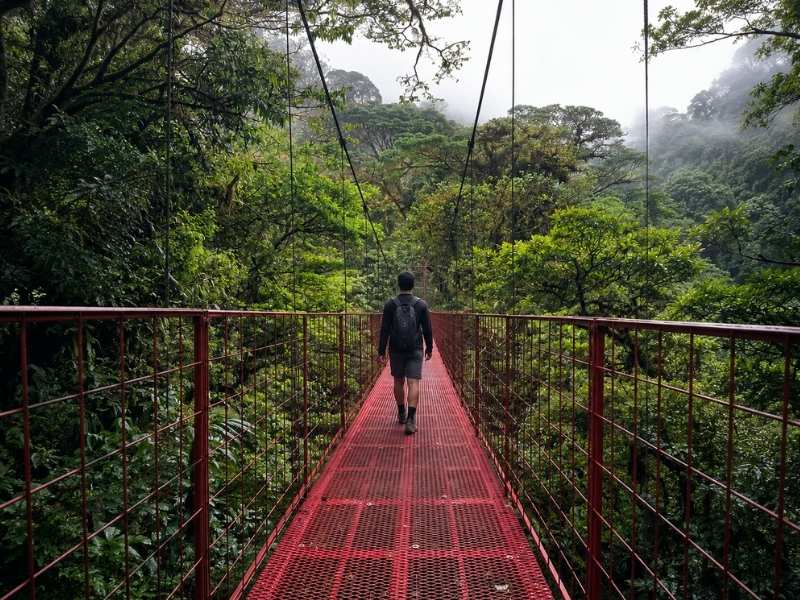
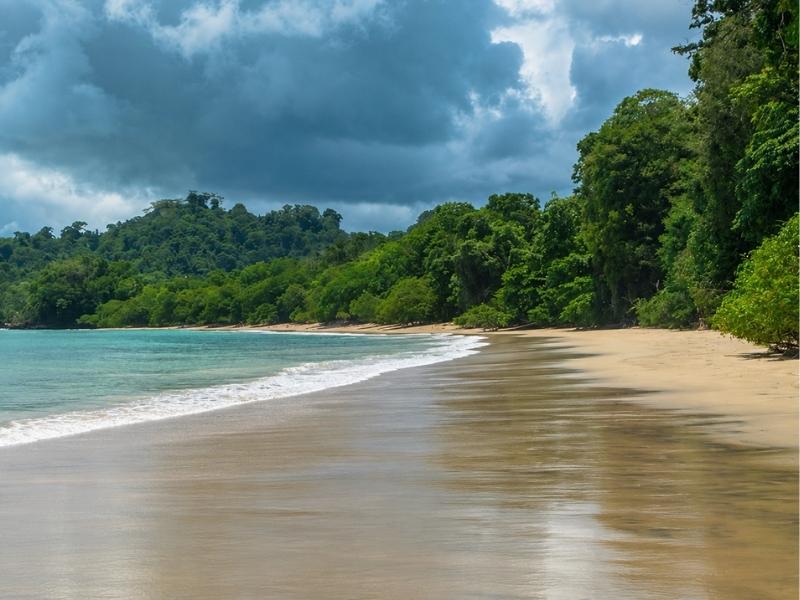
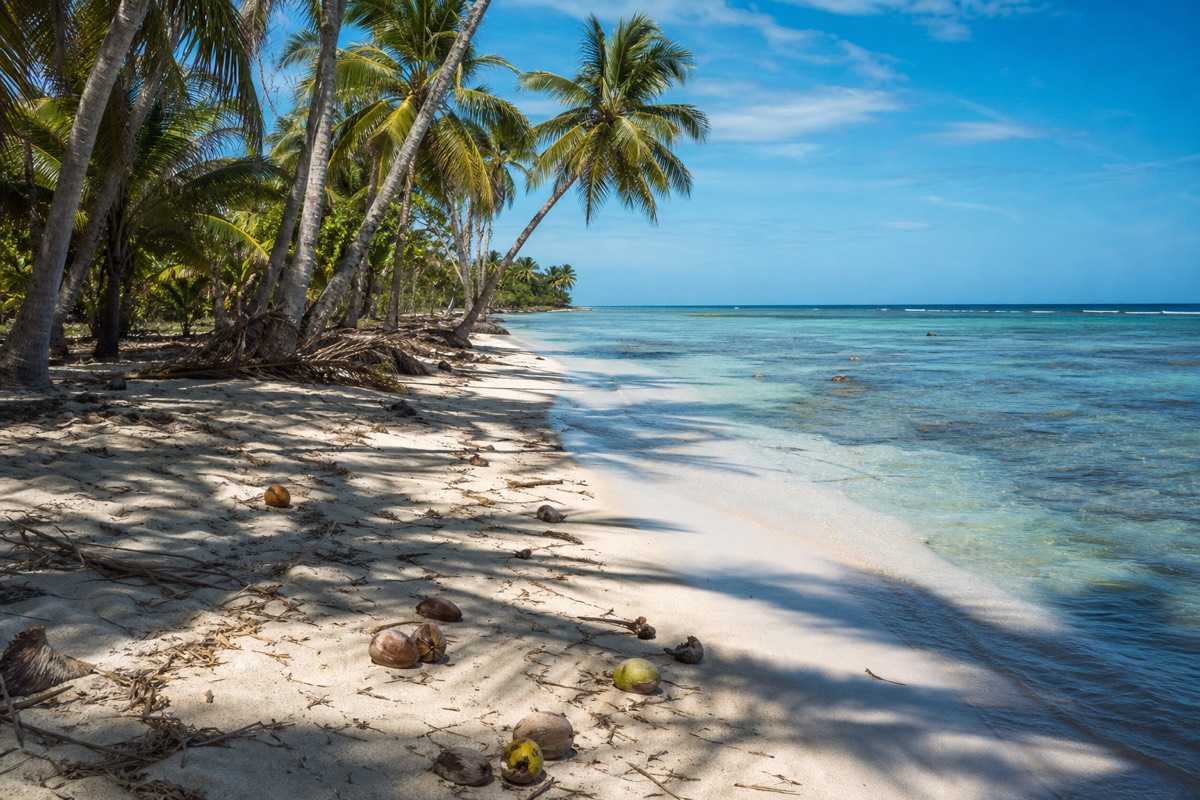
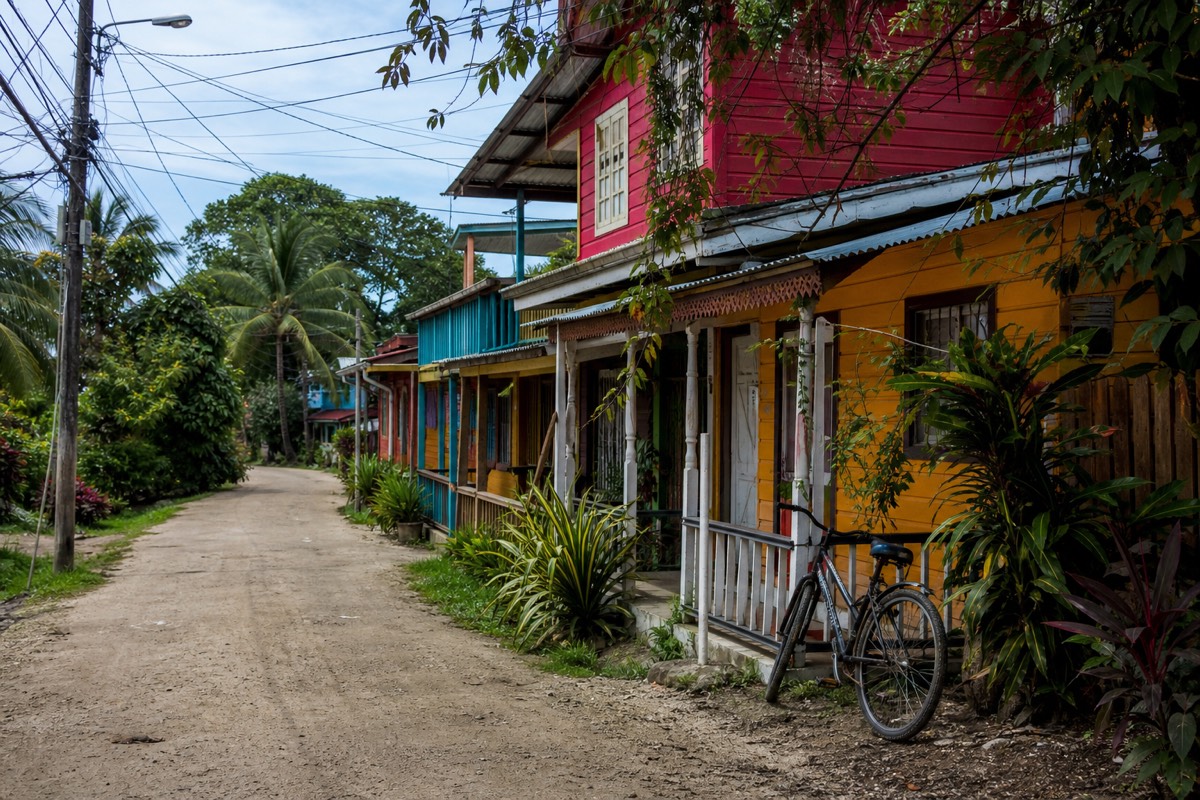
The visual change hits you first. The water tends toward turquoise over patches of reef, the beaches are often backed by thick jungle where sloths and monkeys live within earshot of the bars, and the towns themselves are low-key, painted in bright colors, run at a walking pace. Then the culture registers, in the food, the language you hear on the street, and the music drifting out of open-air kitchens. It adds up to a side of Costa Rica many visitors do not know exists, which is exactly why the people who find it tend to love it.
What is the Afro-Caribbean culture like?
The southern Caribbean carries a strong Afro-Caribbean identity, rooted in communities that trace back to Jamaican and other West Indian workers who came to the coast generations ago. You hear it in an English-based creole spoken alongside Spanish, taste it in coconut-milk cooking, and feel it in a reggae-and-calypso soundtrack that sets the region's unhurried tone.
Food is the most delicious entry point. The signature dish is rice and beans simmered in coconut milk, a world apart from the Pacific side's gallo pinto, often served with jerk-spiced chicken or fresh fish. Look for rondon, a slow-cooked coconut seafood stew whose name comes from the cook using whatever the day's catch runs down, and pati, a spiced meat pastry sold from home kitchens and roadside stands. Coconut, Scotch bonnet heat and fresh seafood define the local plate.
The soundtrack matches the kitchen. Calypso, reggae and soca spill out of beach bars, and the pace of everything, service, conversation, the passing of an afternoon, slows to match. Many locals speak a Limonese creole, an English-based dialect layered over Spanish, and the bilingual, Caribbean-inflected feel of the towns is part of the appeal. This cultural distinctness is genuine and locally rooted, not a tourist performance, which is why a few days on this coast reads as a real change of scene rather than just another beach.
Puerto Viejo, Cahuita and Manzanillo: which town is which?
Three towns anchor the southern Caribbean, each with its own character. Puerto Viejo is the lively hub, with surf, nightlife and the widest choice of food and lodging. Cahuita, to the north, is quieter and mellower, wrapped around a coral-reef national park. Manzanillo, at the southern end of the road, is the sleepiest, edged by a wildlife refuge.
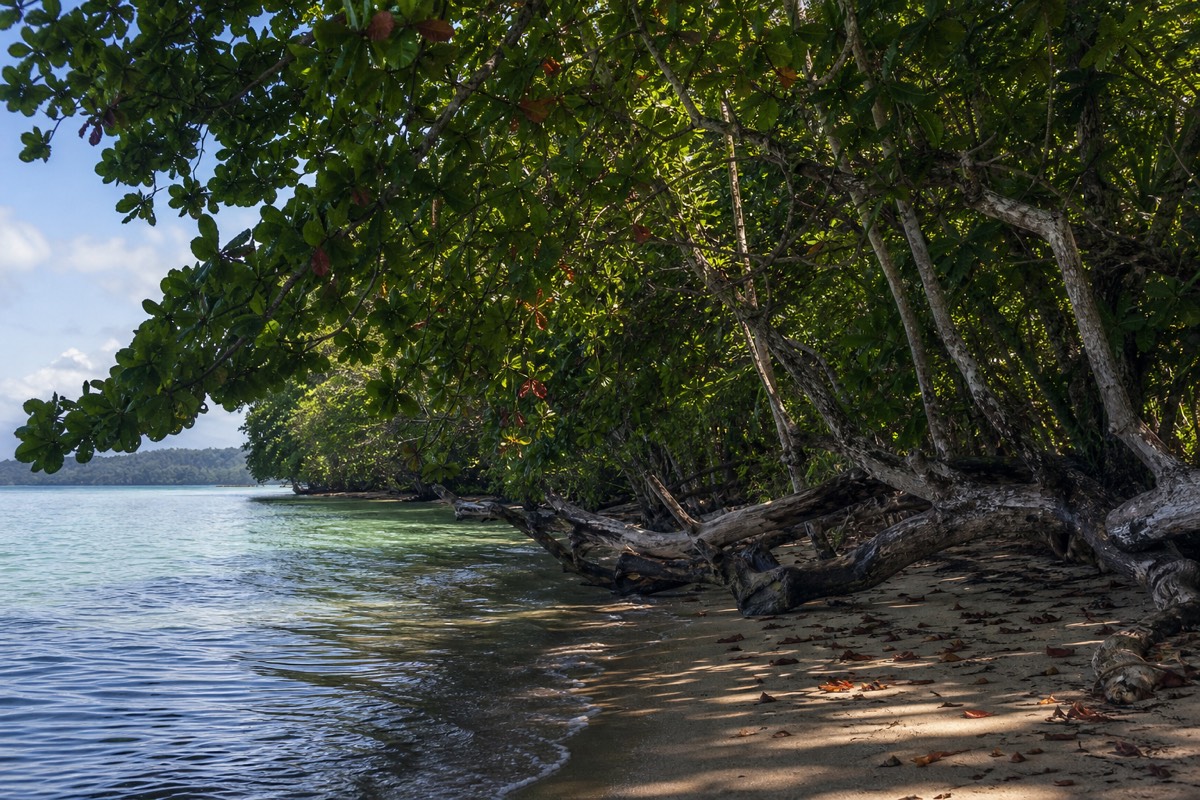
Puerto Viejo de Talamanca is where most travelers base. It is walkable and social, with beach bars, a famous reef break for experienced surfers, and easy bike access to nearby beaches like Playa Cocles and Playa Chiquita. It is the coast's engine, busiest in the evenings, and the natural launch point for day trips in either direction along the shore.
Cahuita, a short hop north, is the calmer alternative, a small town built at the edge of Cahuita National Park with its living reef and easy coastal trail. Travelers who find Puerto Viejo too lively often prefer to sleep here. Manzanillo, at the far southern end where the paved road runs out, is quieter still, a tiny village beside the Gandoca-Manzanillo Wildlife Refuge, with excellent snorkeling and a genuine end-of-the-road feel. Many visitors stay in one town and day-trip to the others, since the whole stretch is compact.
What is Cahuita National Park like?
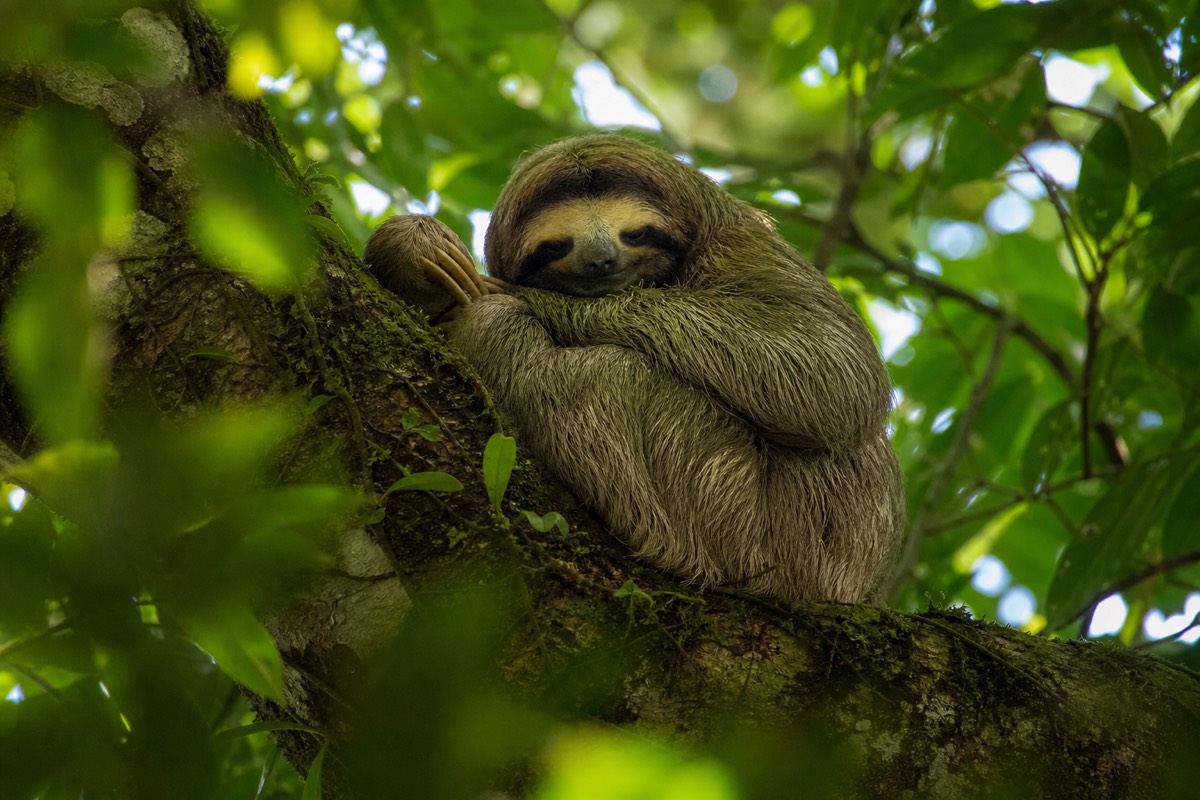
Cahuita National Park protects one of Costa Rica's few living coral reefs alongside an easy, flat coastal rainforest trail. It is a rare two-in-one: snorkeling over the reef offshore and, on the same visit, some of the country's most reliable sloth-spotting along a walkable path where monkeys, coatis and snakes are common. The town entrance traditionally runs on a donation basis.
The reef is the headline for water lovers. Snorkeling trips, generally guided to protect the coral, drift over a system that shelters tropical fish, rays and sea turtles, one of the better reef experiences on either Costa Rican coast. Reef health varies with conditions, so a local guide who knows the day's visibility is worth having, and the guided-access rules help keep the coral intact.
On land, the park's flat trail hugging the shoreline is a gift for anyone who wants wildlife without a strenuous hike. Sloths hang in the trees at an unusually easy-to-spot density, and you share the path with howler and capuchin monkeys, raccoon-like coatis, iguanas and the occasional snake. Entry at the Cahuita town access point has long been donation-based, though terms can change, so check the current arrangement when you arrive. For families and casual walkers, this combination of gentle trail and rich wildlife makes Cahuita one of the friendliest parks in the country.
When is the best time to visit the Caribbean coast?
The Caribbean coast runs on a different weather calendar than the rest of Costa Rica, without a clean single dry season. Its drier, sunnier spells often fall around February to March and again around September to October, the very stretch when the Pacific side is at its wettest. Rain here tends to come year-round in short bursts rather than a long wet season.
This offset is genuinely useful for trip planning and often surprises first-timers. The country's headline dry season, December to April, applies to the Pacific and interior, but the Caribbean does not follow the same pattern. Instead, this coast sees its more reliable, brighter windows at times that would be considered off-season elsewhere, which is why September and October, low season for much of the country, can be a sweet spot on the southern Caribbean.
The practical takeaway: if your travel dates land in the Pacific's rainy months, a few days on the Caribbean side can rescue the trip's beach time rather than double down on the wet. Treat any specific month as a general tendency and not a guarantee, since tropical weather is variable and this coast can see rain in any season. Check a current forecast close to your dates rather than assuming a fixed calendar. The broad principle holds regardless: the two coasts peak at different times, and that difference is a planning tool worth using.
Caribbean versus Pacific coast: how do they compare?
The two coasts offer different trips. The Pacific side has the polished national-park circuit, big surf and beach towns, the main resorts and the country's headline wildlife parks. The southern Caribbean is smaller, more local and culturally distinct, with a coral reef, a slower pace and an opposite weather calendar. Neither is better; they suit different travelers and different seasons.
Most visitors, and nearly all guided packages, spend their time on the Pacific and central side, because that is where the classic circuit lives: Arenal, Monteverde, Manuel Antonio and the Nicoya beaches. It is easy to reach, rich in wildlife, and set up for tourism at scale. The Caribbean side is the road less traveled, chosen for its culture, its reef and its off-calendar weather rather than for big-name parks.
| Feature | Pacific and central coast | Southern Caribbean coast |
|---|---|---|
| Vibe | Polished circuit, resorts, busy beach towns | Small, local, Afro-Caribbean, laid-back |
| Headline draws | Manuel Antonio, Arenal, Monteverde, big surf | Cahuita reef, sloths, Puerto Viejo culture |
| Best weather window | December to April dry season | Often February to March and September to October |
| Wildlife | Monkeys, sloths, hundreds of birds, big parks | Reef life, easy-access sloths, refuge wildlife |
| Tour coverage | Covered by our multi-day packages | A separate add-on region, self-arranged |
| Best for | First-timers wanting the classic circuit | Culture, reef and a change of pace |
The strongest reason to combine them is the weather offset. A trip that pairs the Pacific circuit with a Caribbean tail can dodge the worst of a wet Pacific month, since the coasts rarely have their bad weather at the same time. The strongest reason to choose one over the other is simply what you want: the greatest hits and easiest logistics on the Pacific, or culture, coral and calm on the Caribbean.
Do any tours include the Caribbean coast, and is it worth adding?
No. Our featured multi-day packages, the two paired with this guide included, run the Pacific and central circuit and do not visit the southern Caribbean coast. Puerto Viejo and Cahuita are a separate add-on region, easily reached on your own from San Jose. Whether to add it comes down to your dates, your pace, and whether the culture and reef appeal to you.
The Costa Rica Classic 12-Day Tour by One Life Adventures and the Costa Rica Experience, an 8-day rainforests-and-wildlife route operated by Intrepid Travel with the smallest group cap of the six tours, both concentrate on the Pacific and interior: Arenal, Monteverde and Manuel Antonio, with the Classic adding Poas Volcano and the Nicoya beaches at Santa Teresa. Neither crosses the mountains to Limon province, and that is by design; they are built around the country's most-visited corridor.
The good news is that the Caribbean is one of the easier regions to bolt on independently. Puerto Viejo sits roughly four to four and a half hours by road from San Jose, reachable by direct bus or private transfer, so many travelers tack on two to four Caribbean nights before or after a guided package. Do it if you want a genuine change of scene, a coral reef, easy sloth-spotting and Afro-Caribbean food, or if your Pacific dates fall in a wet stretch and you want a drier coast to balance them. Skip it if your time is tight and the classic circuit already covers your wish list. For live prices and current departures on the Pacific packages themselves, check each tour's own listing, since operators update them and dry-season seats fill early.