Poás Volcano Day Trip from San José
Poás is the volcano you can see and be back for lunch. Here is how to time the day around the crater's clouds, what the reservation rules mean, and what to pair with it in the Central Valley.
Of all the big sights within reach of the capital, Poás is the one that fits into a morning. You leave the San José area before the sun is properly up, climb into the cool highlands of the Central Valley, and stand on the rim of a working crater while the rest of the city is still at breakfast. Done right, it is one of the most efficient half-days in the country. Done wrong, you arrive to a wall of cloud and see nothing. This guide is about doing it right, and about what to fold into the day once the crater is behind you.
Quick answer: Go early, reserve ahead, and dress warm. Poás clouds over as the morning goes on, so the clearest crater views come soon after opening. Because it is an active, gas-producing crater, it uses timed-entry style access and can close on short notice, so check the current reservation rules first. At altitude it is cold and often wet, so bring layers and a rain jacket.
The Poás day trip, hour by hour
A sample early-start timeline based on the site's advice that highland craters cloud over as the morning goes on and mornings are the most reliable weather window.
Why is Poás the easiest volcano day trip from San José?
Poás is the closest genuine active crater to the capital, reached on paved roads that climb from the San José area into the Central Valley highlands. You can leave in the early morning, walk to the crater rim, and be back in the city by lunch, which is why it is the go-to volcano day trip for travelers short on time.
The geography does the work. San José sits in the Central Valley at around 1,161 meters, and the airport is only about 18 kilometers from the city, so you are already in the highlands before you start climbing. Poás rises from that same valley, close enough that the outing is a half-day rather than an expedition, on sealed roads rather than the rough tracks that guard some of the country's other volcanoes.
That accessibility is exactly what makes Poás so popular with first-timers and with anyone building a trip out of San José. You do not need a four-wheel-drive, you do not need to overnight near the mountain, and you do not need to string together a complicated route. A single early start delivers a real, steaming active crater, which is a rare thing to be able to say about any volcano.
It also pairs naturally with the rest of the Central Valley, the coffee-growing highlands that ring the capital. Because the crater visit is short, the day has room for a waterfall garden, a coffee farm or a highland lunch on the way back, which turns a single viewpoint into a full and varied day out. That combination is a large part of why Poás tops so many San José day-trip lists.
What will you see at the Poás crater?
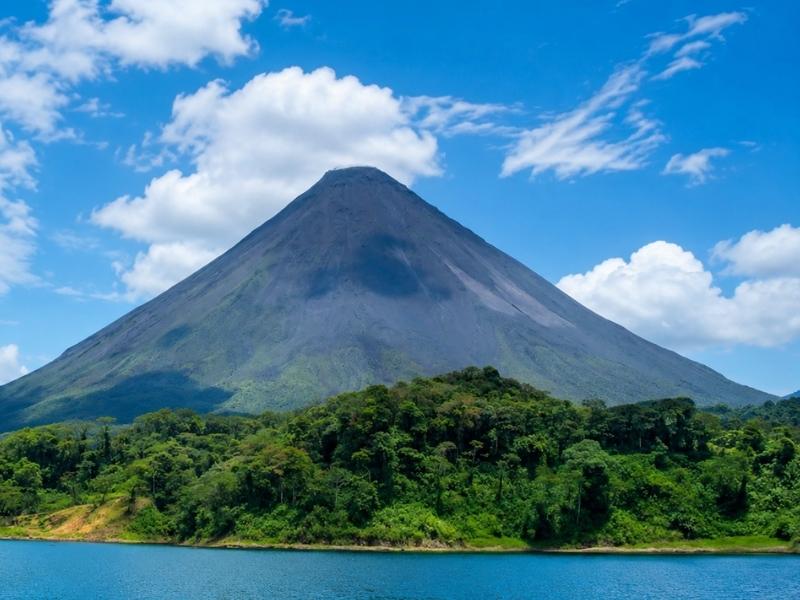
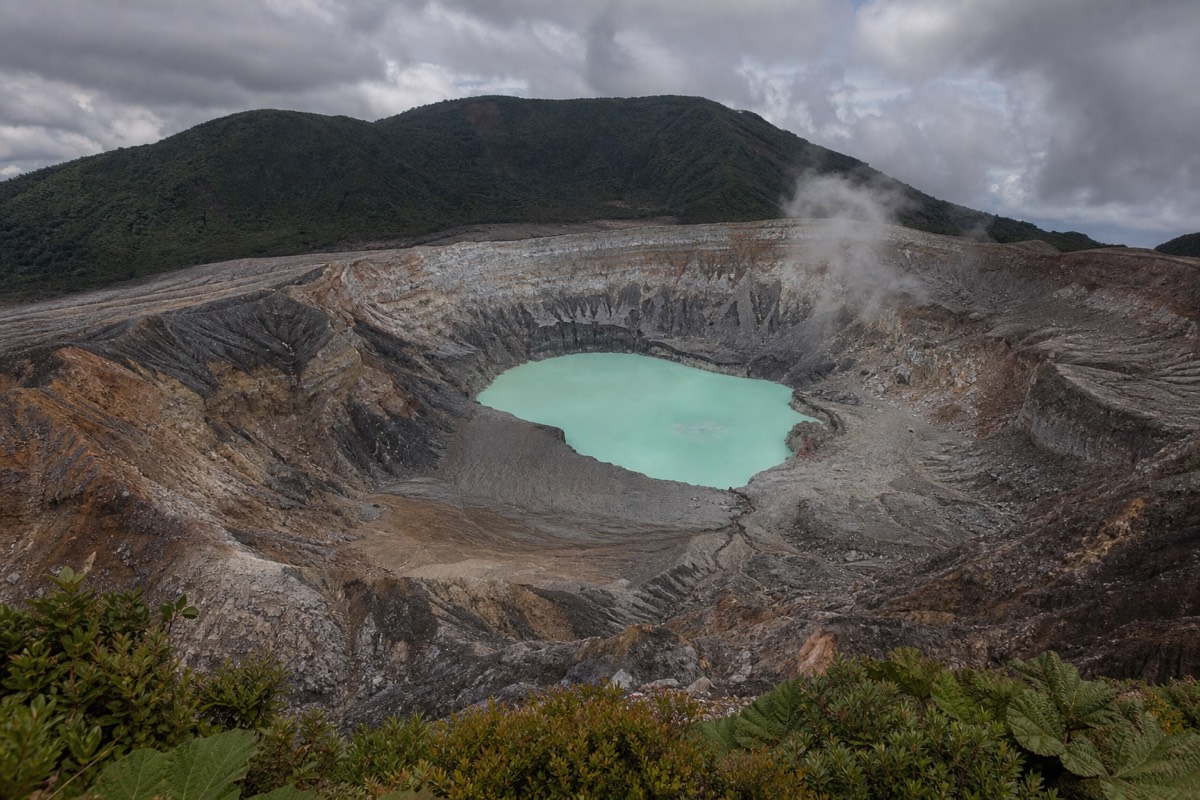
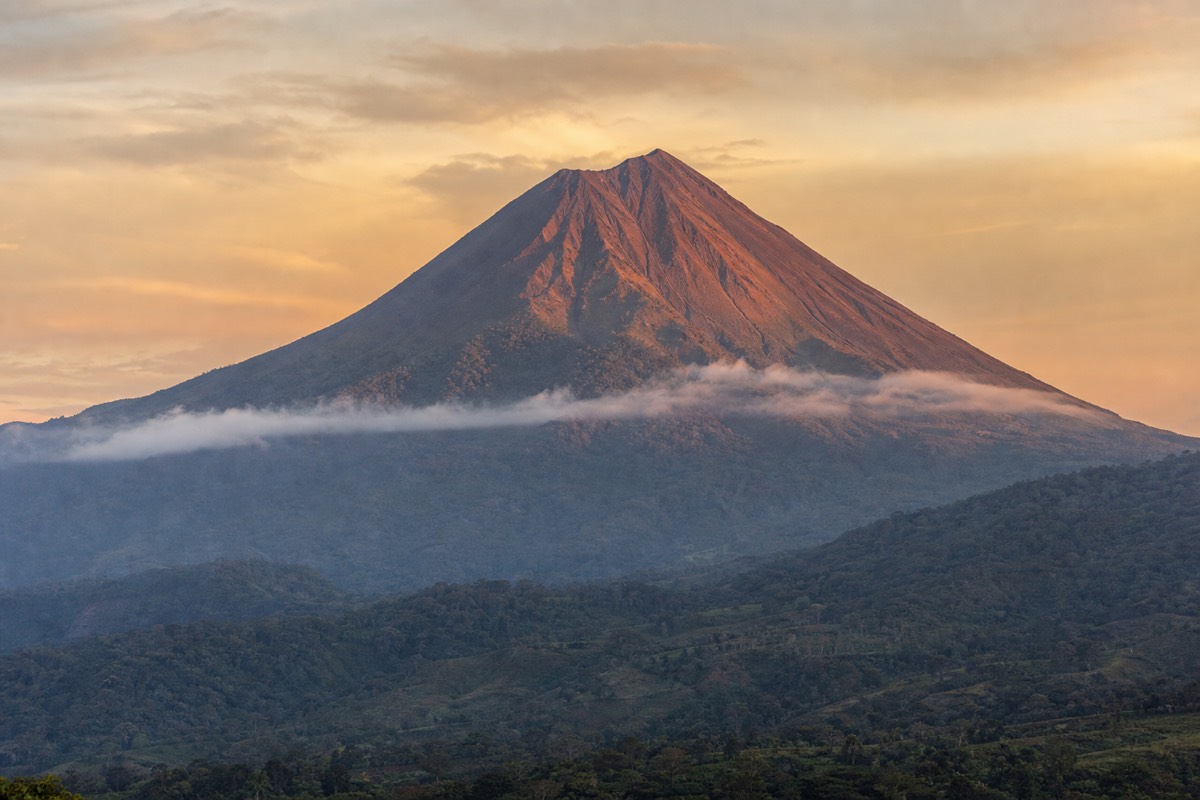
Poás holds one of the world's largest active craters, a vast bowl that steams and, depending on conditions, can hold a pale, mineral-tinted lake far below the rim. From the main viewpoint you look straight down into a working volcanic vent, which is a very different experience from admiring a cone from a distance the way you do at Arenal.
The scale is the first thing that registers. This is not a neat, small crater but a broad, deep bowl, and the size is what makes the viewpoint memorable when the weather cooperates. Steam and gas rise from the floor, a plain reminder that the volcano is active rather than dormant, and on the right morning the sight is genuinely dramatic.
The visit itself is short and gentle by design. Poás is set up around a viewpoint reached by a walk from the entrance, not a strenuous hike, which is part of why it works for families and for travelers who are not looking to climb anything. You come for the view into the crater and the strangeness of standing beside an active vent, not for a long day on the trail.
Set your expectations honestly on two fronts. First, the crater is often obscured by cloud, so the spectacular open view is a matter of timing and a little luck rather than a guarantee. Second, exactly what you see at the bottom, the presence and color of any crater lake, shifts with volcanic conditions, so treat descriptions as a range rather than a promise. What is reliable is the sense of scale and the steam, and getting there early is how you give yourself the best shot at the rest.
Do you need a reservation to visit Poás?
Poás is an active, gas-producing crater, and access to it is managed accordingly. It operates with timed-entry style access and can close on short notice when volcanic gas or activity levels rise. Rules change, so the reliable move is to check the current reservation requirements before you plan the day rather than assuming you can turn up and walk in.
The reason behind the controls is safety, not bureaucracy. Because the crater vents volcanic gas, the authorities limit how many people are present and for how long, and they can suspend visits entirely when conditions warrant. That is a genuine hazard-management measure, and it means a Poás visit is not always available on demand, especially at short notice in the busy season.
For an independent traveler, the practical implication is to sort access in advance and to have a backup plan for the rare day the crater is closed. Confirm the current reservation and entry rules through an official source such as the Costa Rica tourism board close to your travel dates, since specifics can shift between seasons. Building the trip around an early arrival also helps, because the earliest slots line up with both the best weather and the calmest crowds.
This is one of the clearest cases where a guided visit removes friction. On a tour, the access, timing and any required entry arrangements are handled as part of the package, so the reservation logistics that can trip up a solo visitor simply are not your problem. Both of the tours this site runs that include Poás fold the crater visit into a planned early-morning stop, which sidesteps the guesswork entirely.
When should you go, and what should you wear?
Go as early as the access rules allow, because cloud builds over the Poás crater as the morning goes on and the clearest views come soon after opening. Dress for cold, wind and damp: at this altitude the highlands are chilly and often wet even when San José below is warm, so bring layers and a rain jacket.
The timing rule is the single most important thing to get right, and it is not a marginal effect. Highland craters like Poás tend to be clearest in the early morning, then disappear behind cloud as the day warms and moisture rises, often well before midday. The same pattern runs through the site's general weather advice for the country: mornings are the reliable window, and the afternoons bring the cloud and rain. Arrive late and you may look out over a white blank where the crater should be.
The clothing rule surprises people who packed only for the beach. The Central Valley already sits above a kilometer in elevation, and Poás rises well beyond that, so the air at the rim is cold, the wind bites, and mist or drizzle is common. A warm layer, a rain jacket or poncho, and closed shoes make the difference between an enjoyable morning and a miserable one. Even in the dry season, do not assume the highlands will feel tropical.
Two more small habits pay off. Bring water and a snack, since an early start often beats the on-site options being fully open, and carry a little cash for entry fees or a roadside coffee on the way back. Check the forecast the evening before, but do not let a cloudy prediction cancel the plan outright, because the early-morning window can still hand you a clear crater before the day closes in. The timeline in the planner above shows how the hours typically fall.
| Time of day | What is happening | Your move |
|---|---|---|
| Before dawn | Cool, clear highland air | Leave the San José area and climb toward the crater |
| Early morning | Best odds of an open crater view | Be on the rim as close to opening as possible |
| Mid-morning | Cloud builds; the crater can vanish | Finish the viewpoint, start moving on |
| Late morning to afternoon | Often clouded or drizzly up high | Drop to a lower-elevation stop like a waterfall garden or coffee farm |
What else can you combine with Poás in the Central Valley?
Because the crater visit is short, most travelers pair Poás with a second Central Valley stop on the way back. The usual companions are the La Paz Waterfall Gardens on the road down, and the coffee farms of the surrounding highlands, both of which sit at lower, warmer elevations than the crater itself.
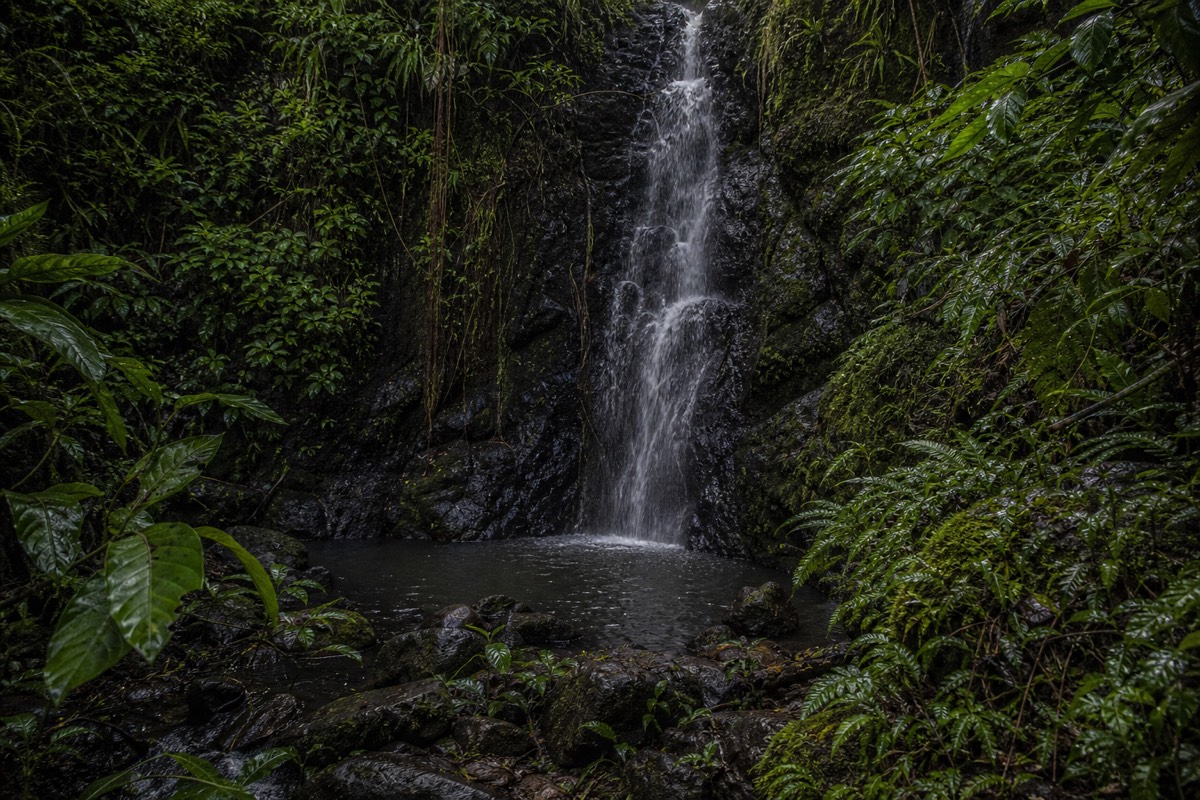
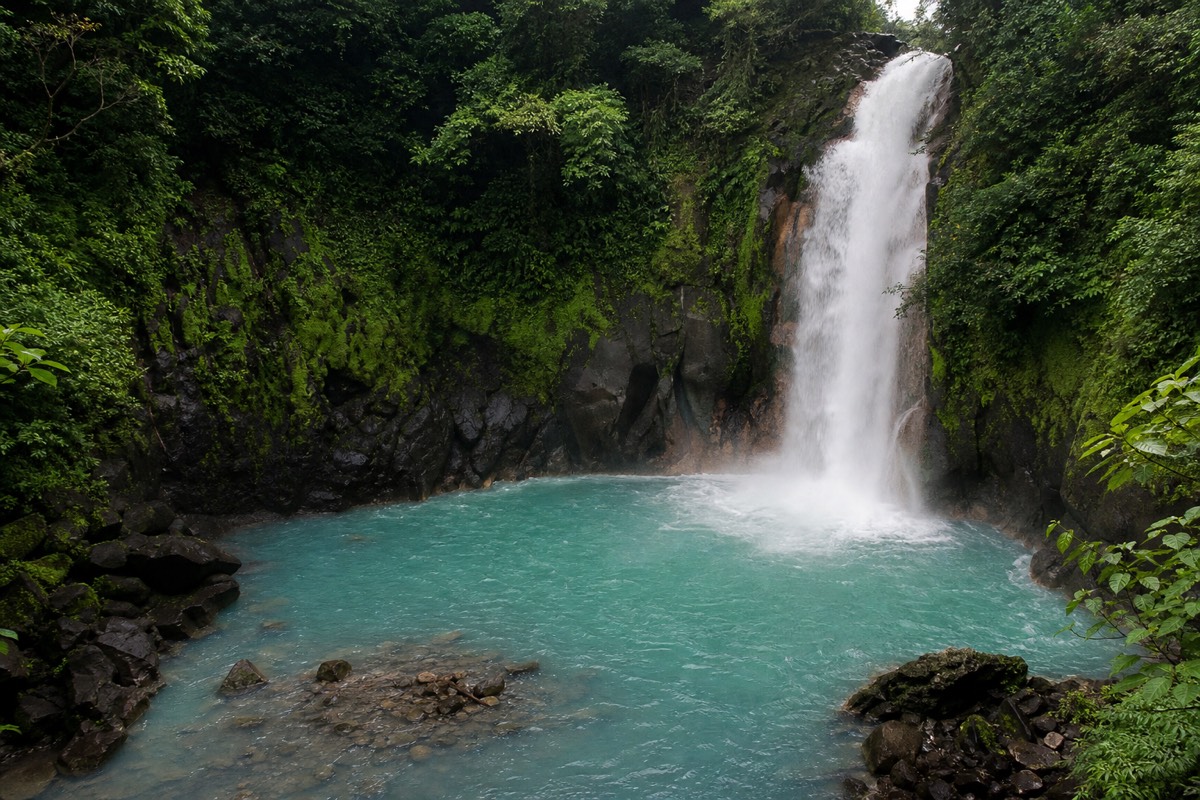
La Paz is the classic pairing. The road that descends from the Poás area passes a series of waterfalls, and the twelve-day Costa Rica Classic tour builds in a roadside view of the lower cascades as it continues north. The waterfall gardens make an easy, scenic follow-on to the crater, dropping you into greener, milder surroundings after the cold rim, and they fill the middle of the day nicely once the cloud has closed in up top.
Coffee is the other natural theme. The Central Valley is the country's coffee heartland, and the highlands around the capital are dotted with farms that run visits and tastings. Several of this site's tours lean into this on their volcano routes, stopping at a coffee cooperative in the Sarapiquí area with hands-on activities like a tortilla-making lesson and a local lunch. A farm visit rounds out a Poás morning with something warm, indoors and grounded in how the region actually lives.
If you have the appetite for more, the Central Valley rewards a slow drive back: highland towns, roadside produce stands and viewpoints over the coffee slopes. The key is sequencing, and it follows the weather. See the crater first while it is clear, then work downhill to the waterfalls, the coffee farms and the valley as the cloud settles over the peak behind you. That order gives you the volcano at its best and a soft, varied landing for the rest of the day.
Should you do Poás on your own or as part of a tour?
A standalone day trip suits travelers based in San José who want just the crater and the flexibility to time it themselves. A guided visit suits anyone who would rather have the access, timing and driving handled, and it is the natural choice if Poás is one stop on a longer trip rather than a one-off outing from the capital.
Doing it yourself has real appeal if you are already in San José with a free morning. You control the start time, you can turn back if the forecast is grim, and the drive is short and paved. The trade-offs are the ones covered above: you own the reservation logistics, you carry the risk of a short-notice closure, and you handle the early-morning navigation into the highlands on your own.
A guided trip trades that flexibility for certainty. The access and any timed entry are arranged, the driver knows the road and the early start, and the crater is slotted into a plan that already accounts for the weather window. For a first-time visitor, or for anyone who would rather not gamble a precious morning on getting the logistics exactly right, that is a fair trade, and it is why so many travelers meet Poás on a tour rather than a self-drive.
There is also a bigger-picture reason to let a tour carry Poás. If the volcano is part of a wider Costa Rica trip rather than the whole point of the day, folding it into a multi-day route is simply more efficient than driving out and back from the capital. That is exactly how the two tours on this site that include Poás treat it, and it is worth understanding how they do it.
How do our multi-day tours fold Poás into a bigger loop?
The two tours here that include Poás treat the crater as an early highlight on the drive north rather than a separate day trip. Both the six-day Volcanoes trip and the twelve-day Classic walk the Poás rim in the morning, then carry on toward Sarapiquí, Arenal and beyond, which saves you a dedicated out-and-back from San José.
The six-day Volcanoes, Cloud Forests and Zip-Lines Adventure, the lowest-priced trip on the site at around $544 with a perfect five-star rating, starts in San José and climbs straight to the Poás crater on its first push north. From there it drops to a Sarapiquí coffee cooperative for a hands-on tortilla lesson and lunch, continues to Arenal, and finishes in the Monteverde cloud forest. Poás is the opening highlight of a route that packs a lot into a short, budget-friendly trip.
The twelve-day Costa Rica Classic Tour by One Life Adventures, the most complete route on the site at around $2,546 with a 4.9 rating, opens the same way. It begins near San José, takes in the Poás crater-rim walk, then passes the La Paz waterfalls and a Sarapiquí wildlife rescue centre before reaching the Arenal hot springs and, eventually, the Pacific coast. Here Poás is the first act of a long and varied journey, folded in on the way rather than bolted on as an extra.
Both approaches make the same point. When Poás is one beat in a larger route, the reservation rules, the early start and the mountain driving are handled for you, and the crater becomes a highlight rather than a logistics puzzle. For the wider picture of how Poás stacks up against the country's other volcanoes, the guide to Costa Rica's volcanoes compared sets them side by side, and the deeper look at the region to the north lives in the Arenal Volcano and La Fortuna travel guide.