Costa Rica's Volcanoes: Arenal, Poás and Irazú Compared
Costa Rica gives a visitor a real choice of volcanoes, and they are not interchangeable. Here is how Arenal, Poás, Irazú and Rincón de la Vieja actually differ, and which ones the tours fold in.
Ask which volcano to see in Costa Rica and the honest answer is that it depends what you want from it. One is a picture-book cone with hot springs at its feet. Another is a giant steaming crater you can drive close to on a morning from the capital. A third stands higher than the rest above the Central Valley, and a fourth hides in the geothermal northwest. They reward different trips, and only two of them sit on the routes this site runs. This guide lays them side by side so you can match the volcano to your plan.
Quick answer: For the full experience with hikes, waterfalls and hot springs, base yourself at Arenal, which every tour on this site visits. For the easiest look into a large active crater, take a morning trip to Poás near San José, which the six-day Volcanoes trip and the twelve-day Classic both include. Irazú and Rincón de la Vieja are add-ons you arrange on your own.
Costa Rica's main volcanoes at a glance
Comparison drawn from the site's own tour routes and published facts; only Arenal and Poás appear on the six tours this site lists.
Which volcanoes can you actually visit in Costa Rica?
Four volcanoes make up the realistic short list for a visitor: Arenal, the iconic cone in the northern lowlands; Poás, a huge active crater within a morning of San José; Irazú, the high summit above the Central Valley; and Rincón de la Vieja, the geothermal one out in the northwest. Each suits a different kind of trip.
Costa Rica has many more volcanoes than these, but most sit deep in protected wilderness or lack the access that makes a casual visit practical. The four above are the ones travelers genuinely choose between, because each has a real way in and a distinct experience attached. Arenal and Poás are the two that the tours on this site actually reach, so they get the most detail here.
It helps to think in terms of what you are after. If you want the volcano to be the base for a whole cluster of activities, Arenal is the answer, and it is already built into every itinerary. If you want the volcano to be a single dramatic morning near the capital, Poás is the natural pick. Irazú scratches the same day-trip itch from San José but sits higher and colder, and Rincón de la Vieja belongs to a Guanacaste trip in the northwest rather than the standard loop.
None of these is a technical climb. Costa Rica's volcano experiences are about reaching a viewpoint, a crater rim or a trail through the forest and geothermal features around the mountain, not summiting a peak. That accessibility is a big part of why the country's volcanoes headline so many trips, and it is why a first-time visitor can see a genuine active crater without any mountaineering. Poás Volcano has its own dedicated day-trip guide for the details of that specific outing.
How do Costa Rica's main volcanoes compare?
The four differ most in three ways: what you actually see, how easy they are to reach, and whether a tour on this site visits them. Arenal is the all-round base every trip includes, Poás is the accessible active crater near the capital that two tours reach, and Irazú and Rincón de la Vieja are self-arranged add-ons rather than parts of these itineraries.
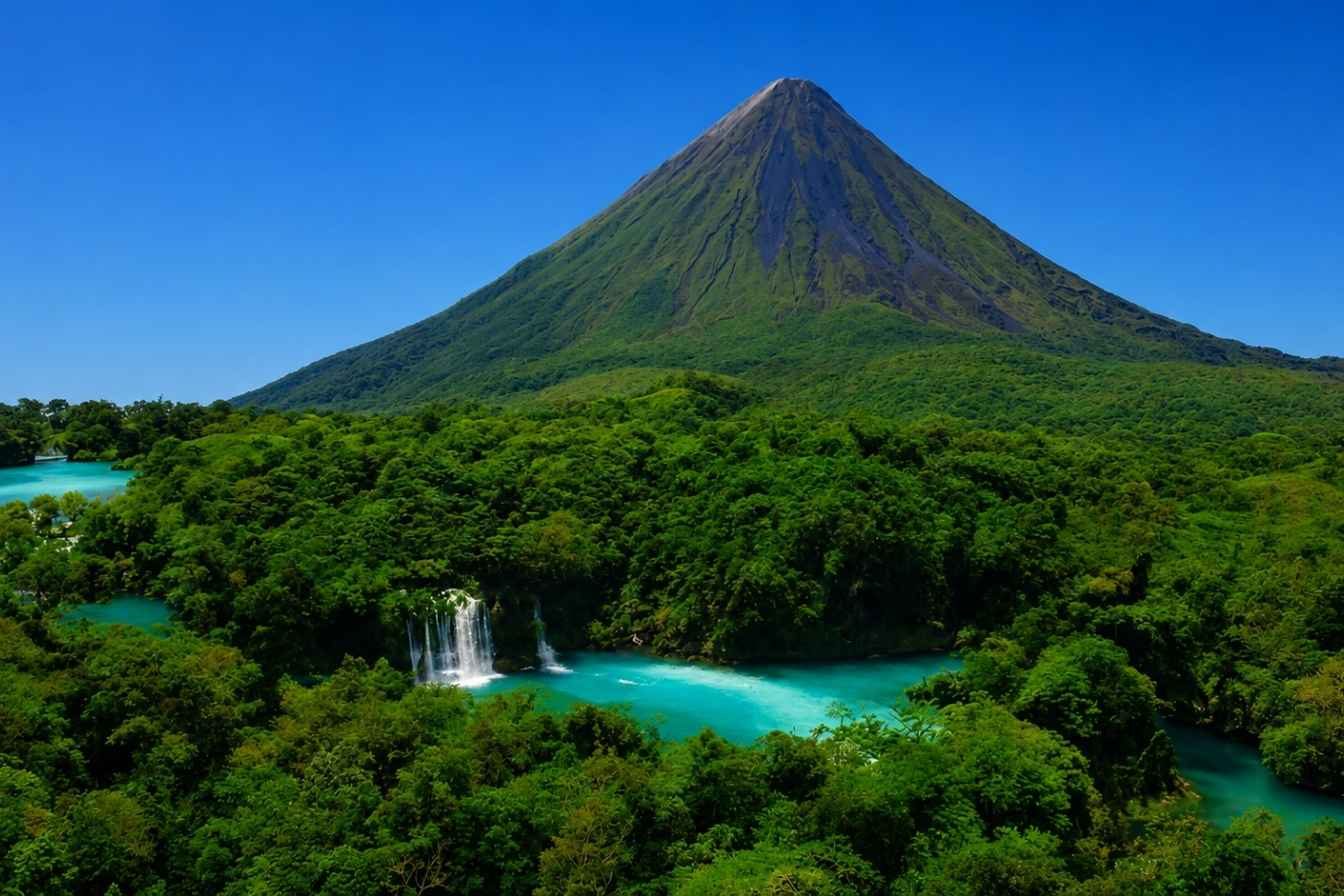
The table below sets them next to each other. Where the site's own tours give firm ground, the entries are specific. Where they do not, the entry stays general on purpose, because inventing a precise figure for a mountain no tour here visits would be exactly the kind of made-up detail this site refuses to publish.
| Volcano | What you see | Access | Day trip from | Site tour that visits |
|---|---|---|---|---|
| Arenal | The classic cone, old lava fields, forest and hot springs; resting since 2010 | Easy national-park trails from La Fortuna | La Fortuna (its own base) | All six tours |
| Poás | One of the world's largest active craters, with steaming vents | Paved approach, timed-entry style access, occasional gas closures | San José and the Central Valley | 6-day Volcanoes and 12-day Classic |
| Irazú | High summit craters overlooking the Central Valley | Road climbs near the top; check current access | San José and the Central Valley | None on this site |
| Rincón de la Vieja | Geothermal fields and forest trails in the northwest | Guanacaste national park; check current access | Guanacaste and the Liberia area | None on this site |
Read the last column as the practical filter. If you are traveling on one of these packages, Arenal is guaranteed and Poás comes with the Volcanoes or Classic trips. Irazú and Rincón de la Vieja are worth knowing about, and worth adding if you have independent days in the right regions, but they are not part of the standard route this site sells.
Arenal: the iconic cone and activity hub
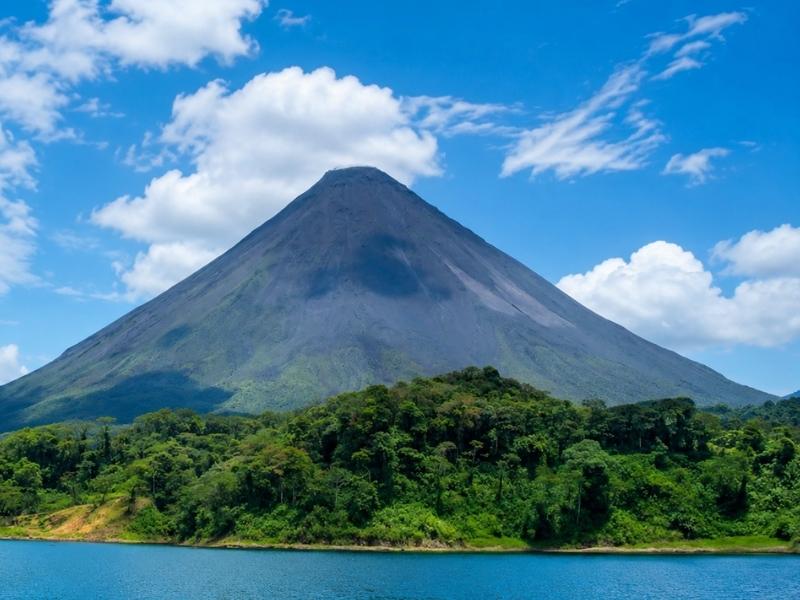
Arenal is the volcano most people picture when they think of Costa Rica: a near-perfect cone rising over the town of La Fortuna. It stopped its long active period in 2010 and now rests, so you come for the shape, the old lava fields and the geothermal hot springs at its base rather than for glowing eruptions.
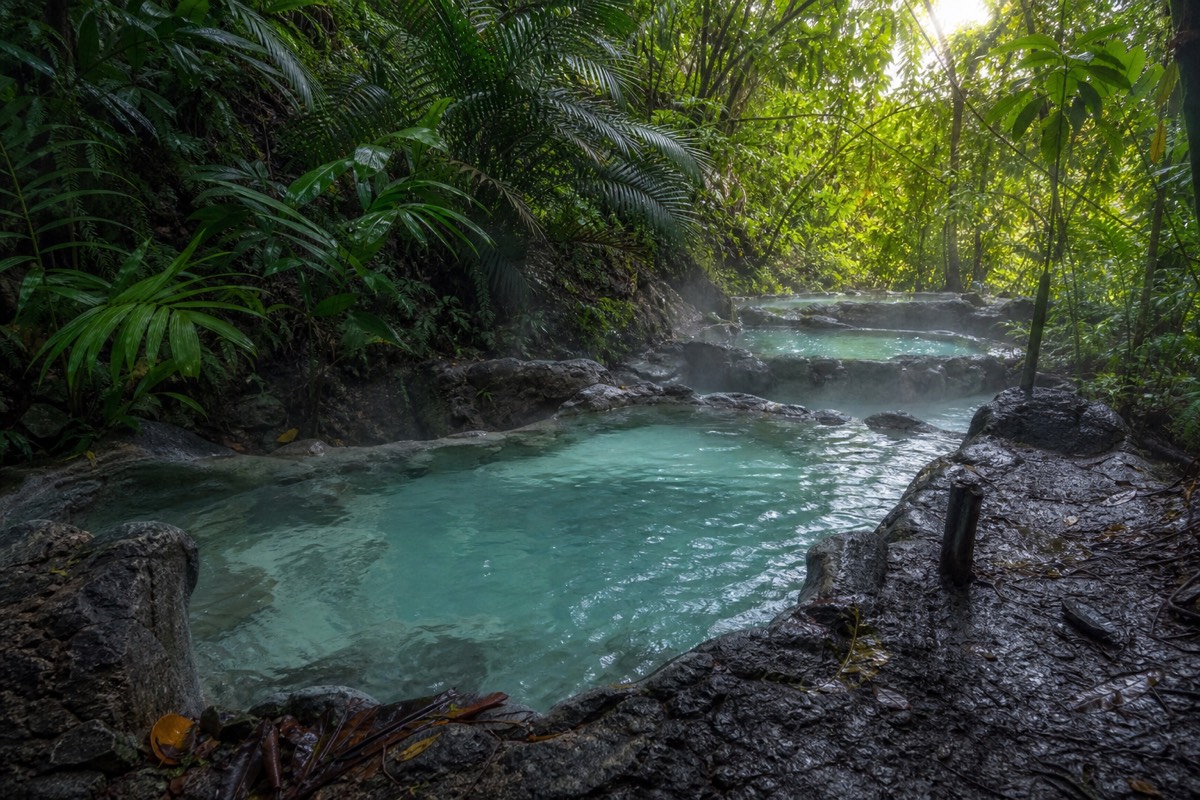
From 1968 to 2010 Arenal was one of the most active volcanoes in the region, and that history is written into the landscape. A guided walk in Arenal Volcano National Park crosses the lava field left by the 1968 eruption, with the forest slowly reclaiming it and a guide explaining the tectonics underfoot. The summit is often hidden in cloud, which the tours tell travelers honestly in advance, so the experience leans on the base, the fields and the hot springs rather than a guaranteed clear-cone photo.
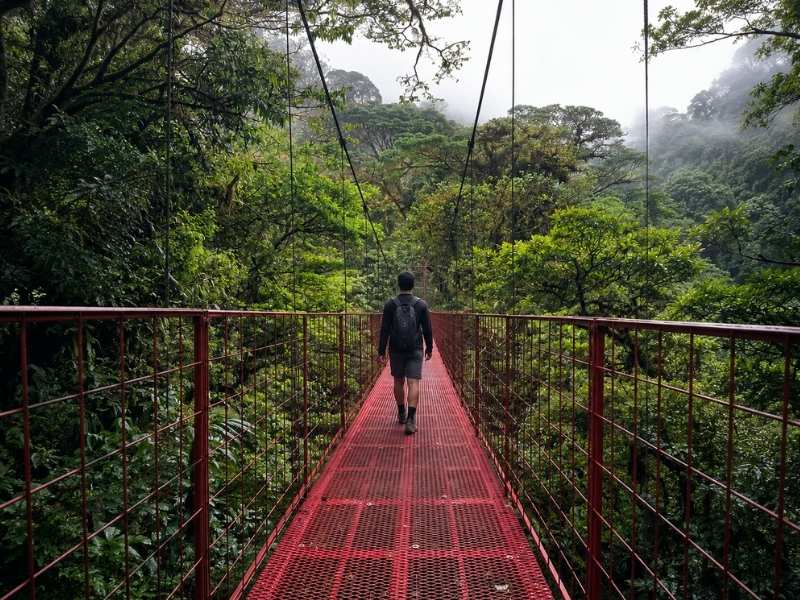
What sets Arenal apart from the other three is that the volcano is a hub, not just a viewpoint. La Fortuna wraps a whole menu of activities around it: waterfalls, hanging bridges, zip-lines, rafting and the famous geothermal soaks fed by the same volcanic system. That is why every tour on this site, from the cheapest to the longest, builds in an Arenal stay, and why the region gets its own full write-up in the Arenal Volcano and La Fortuna travel guide.
For a comparison, then, Arenal is the volcano to choose when you want the mountain to organize your days rather than fill a single morning. You do not pick it for an active crater view, since it no longer erupts and its summit hides in cloud. You pick it for the whole package that has grown up at its feet, which is a different and, for most first trips, more rewarding proposition.
Poás: the accessible active crater near San José
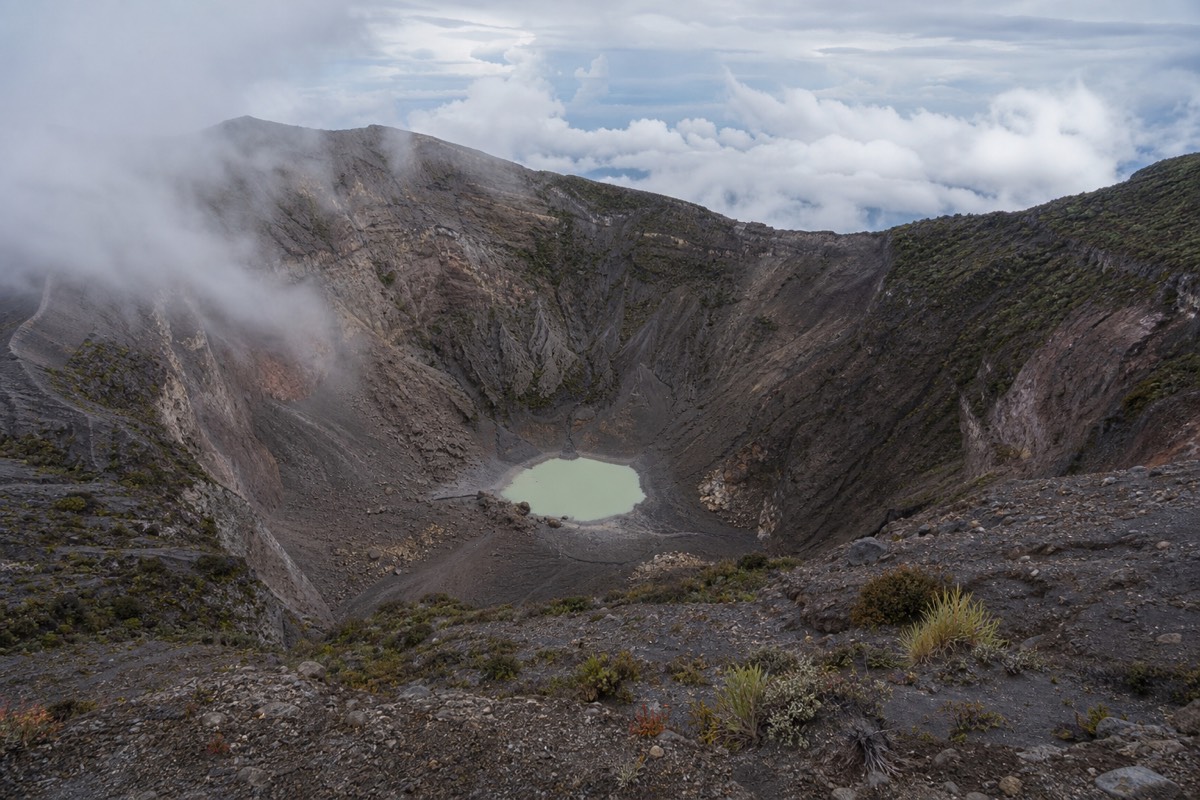
Poás is the volcano to see if you want a genuine active crater without a hard journey. It holds one of the world's largest active craters, a vast steaming bowl, and it sits close enough to San José for a half-day visit on paved roads. Both the six-day Volcanoes trip and the twelve-day Classic walk its crater rim.
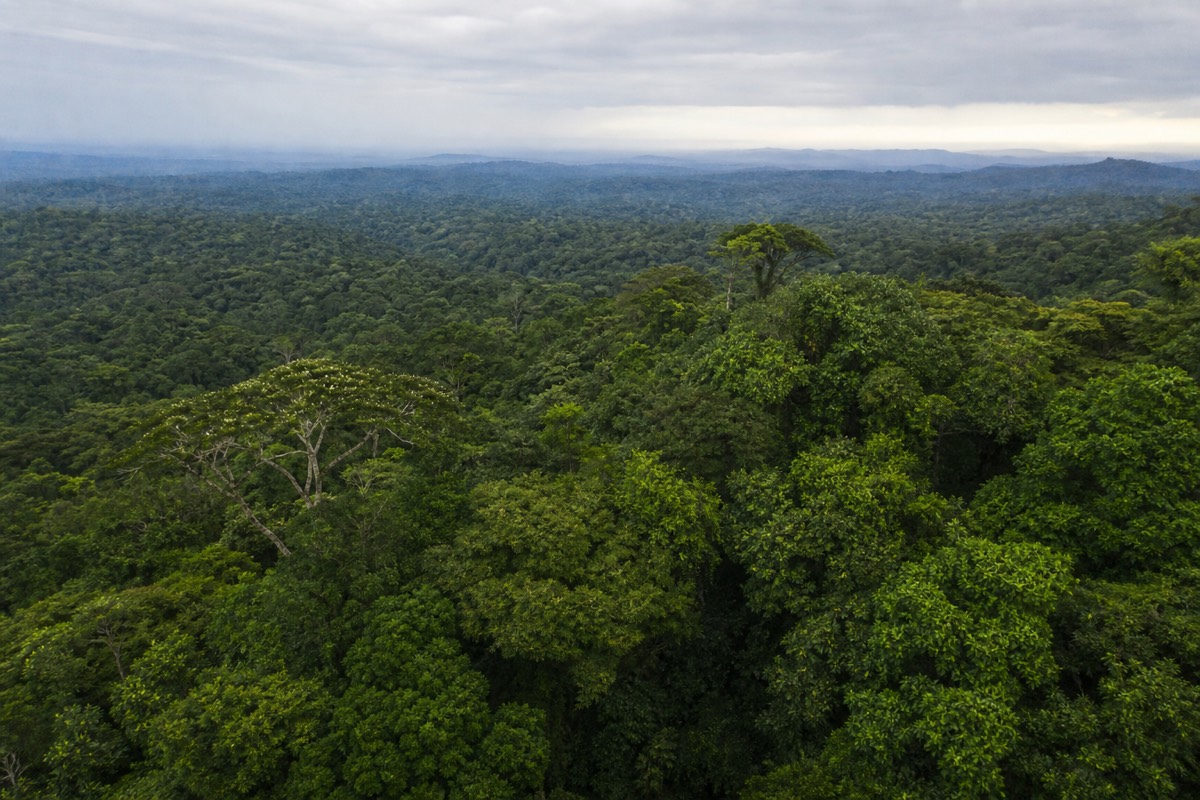
Where Arenal is about the cone and its base, Poás is about looking straight down into a working crater. On a clear morning the viewpoint delivers a wide, steaming bowl that is genuinely different from anything the other volcanoes on this list offer at such close range. The catch is the weather: cloud tends to build over the crater as the morning goes on, so an early arrival is the whole game, a point the dedicated Poás Volcano day trip guide covers in full.
Access is the other headline. Because Poás is an active, gas-producing crater, it operates with timed-entry style access and can close on short notice when volcanic gas levels rise. That is a safety measure, not a formality, so the right move is to check the current reservation and access rules before you plan a visit rather than assuming you can simply turn up. On a guided tour this is handled for you, which removes the guesswork.
On the site's routes, Poás comes early. The twelve-day Costa Rica Classic Tour by One Life Adventures opens with a Poás crater-rim walk before heading north, and the six-day Volcanoes, Cloud Forests and Zip-Lines Adventure does the same on its way toward the lowlands. In both cases the crater is a morning highlight folded into a bigger loop, which is often the most efficient way to see it without carving out a separate day trip.
Irazú and Rincón de la Vieja: the ones the tours skip
Irazú and Rincón de la Vieja round out the choice, but neither sits on the six tours this site runs. Irazú is generally cited as the country's highest volcano and, like Poás, makes a Central Valley day trip from San José. Rincón de la Vieja is the geothermal one out in Guanacaste, better paired with a northwest beach trip.
Irazú appeals to travelers who want a second high-altitude crater near the capital. It stands above the Central Valley and, on a clear day, is known for sweeping highland views. Because no tour on this site visits it, this guide will not invent a specific elevation, crater dimension or view claim for it, in keeping with the site's rule against publishing figures it cannot stand behind. If Irazú interests you, confirm its current access, hours and conditions with the official Costa Rica tourism board before building a day around it.
Rincón de la Vieja belongs to a different corner of the country entirely. It sits in the northwest, within reach of Liberia and the Guanacaste coast, and it is known for geothermal features and forest trails rather than a single dramatic crater view. It fits a trip built around the Pacific beaches of Guanacaste and the Nicoya Peninsula far better than the standard Arenal-to-coast loop, which is one reason it does not appear on these itineraries.
The honest takeaway is that these two are real options but sideline ones for a first, tour-based visit. If your trip runs on one of this site's packages, you will meet Arenal for certain and Poás if you choose the Volcanoes or Classic route, and that pairing already covers the two most distinct volcano experiences the country offers. Irazú and Rincón de la Vieja are there for repeat visitors and independent travelers with days to spare in the right regions.
Which volcano is best for first-timers?
For a first trip, the strongest pairing is Arenal plus Poás. Arenal gives you the base, the hikes, the waterfalls and the hot springs across a two-night stay, while Poás gives you a genuine active crater in a single accessible morning. Between them they cover the two most distinct volcano experiences in the country.
If you can only slot in one, let your trip shape decide. A traveler who wants variety and comfort, several activities and an evening soak, is happiest with Arenal, and it is unavoidable anyway since every tour here includes it. A traveler set on peering into a live, steaming crater should make sure Poás is on the plan, which means choosing a route that includes it or adding a day trip from San José.
What tips the decision for many first-timers is effort. Arenal asks for a couple of nights in the region to be worth it, while Poás can be done as a half-day. Getting both, on a route that stops at Poás on the way north to Arenal, is the efficient path and exactly the sequence two of this site's tours follow. That way the crater is not a separate expedition but a highlight along the drive.
Skip the temptation to chase all four on a single trip. Irazú and Rincón de la Vieja pull you in opposite directions from the core loop, and cramming them in usually costs you the early mornings and unhurried pace that make the volcanoes worth seeing in the first place. Two volcanoes done well beat four rushed, and Arenal with Poás is the pairing that does it.
How do the multi-day tours fit volcanoes into a bigger loop?
The tours treat volcanoes as anchors within a wider route rather than as standalone outings. The twelve-day Costa Rica Classic and the six-day Volcanoes trip both open with a Poás crater-rim walk on the way north, then settle into Arenal as a base, which turns two separate volcano trips into one smooth arc.
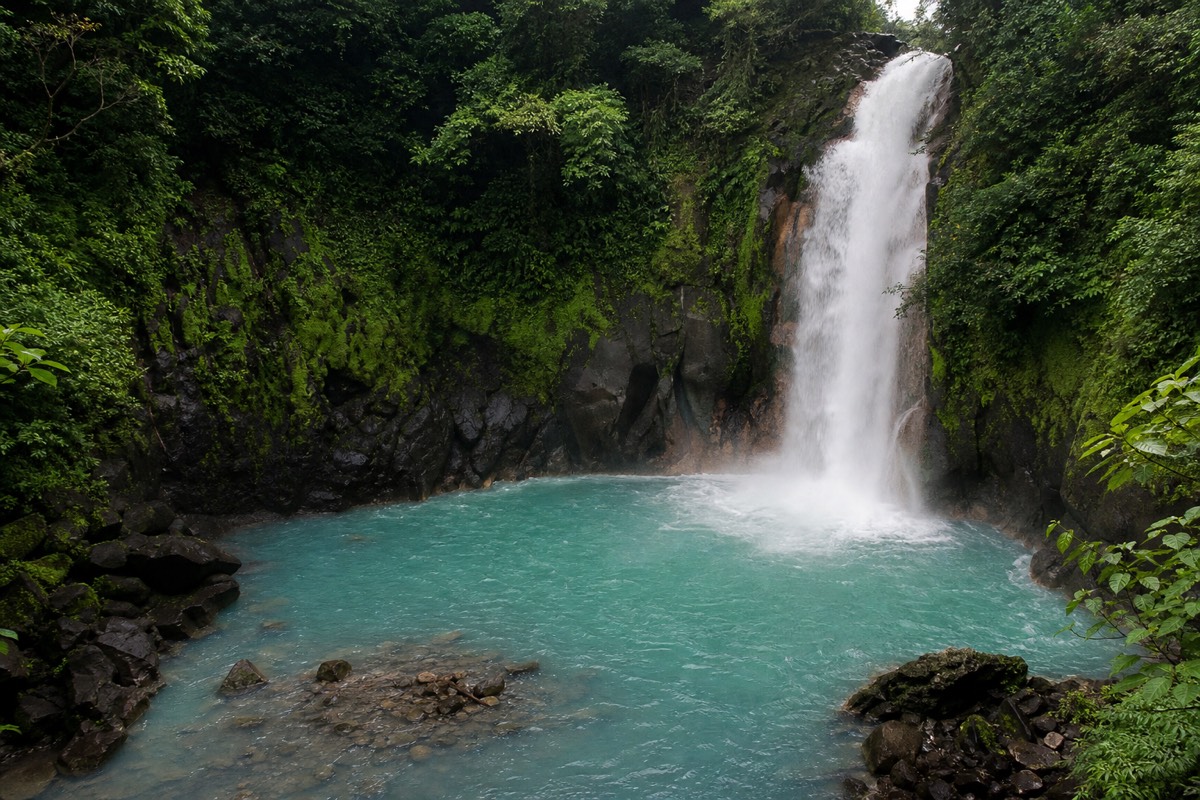
The twelve-day Costa Rica Classic Tour by One Life Adventures, the most complete route on the site at around $2,546 with a 4.9 rating, starts near San José and climbs to the Poás crater before continuing to a roadside view of the La Paz waterfalls, a wildlife rescue stop in Sarapiquí and an El Choyín hot-springs evening in the Arenal area. Poás here is the opening act of a trip that eventually reaches the Pacific beaches, so the crater and the cone bookend the volcanic part of the journey.
The six-day Volcanoes, Cloud Forests and Zip-Lines Adventure, the cheapest trip on the site at around $544 and holder of a perfect five-star rating, does the same crater-first move on a tighter schedule. It runs San José to Poás to a Sarapiquí coffee cooperative to Arenal, then finishes in the Monteverde cloud forest. For a budget-minded traveler who still wants a real active crater and the iconic cone in one trip, this is the efficient package, and it explains why the site cites its strong booking record and rating so often.
The broader lesson holds across the portfolio. Folding a volcano into a multi-day loop, rather than driving out and back for a single one, saves you days and removes the logistics of Poás reservations, mountain roads and the Lake Arenal crossing. If your priority is seeing the country's headline volcanoes without building each as its own expedition, a guided route that stitches them into the drive north is the path of least friction, and it is exactly what these two tours are built to do.